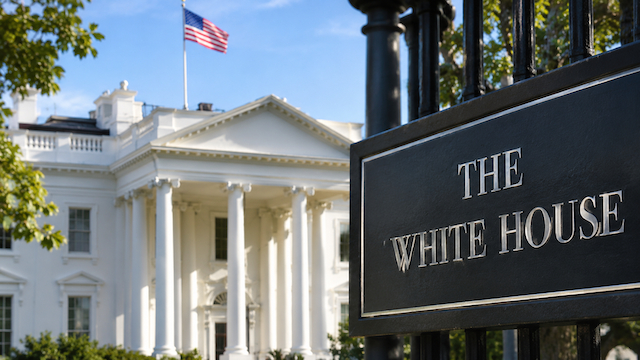
The Trump administration has directed federal agencies to obtain White House approval before allowing employees to agree to testify before Congress, establishing a new layer of review as Democrats prepare to take control of the House and Senate in January.
The directive, issued Monday in a one-page memorandum signed by White House counsel Will Scharf, requires agencies to receive clearance from both the White House Counsel’s Office and the White House Office of Legislative Affairs before federal employees commit to appearing before congressional committees.
Axios first reported the memorandum, which could affect how lawmakers obtain testimony from administration officials during congressional investigations.
The political news that affects your wallet, your rights and your vote, broken down in plain language. Free in your inbox.
The order comes as the incoming Democratic majority prepares to exercise greater oversight of the Trump administration. Congressional oversight is the authority lawmakers use to investigate federal agencies, examine government spending and determine whether laws are being properly enforced.
Under the new directive, federal agencies must coordinate with the White House before agreeing to provide employee testimony. The requirement places the White House at the center of decisions that agencies previously could coordinate directly with congressional committees.
The memorandum does not establish that every request for testimony will be denied. However, it gives the White House an opportunity to review proposed appearances before agencies make commitments to Congress.
The directive also raises questions about how the administration will respond when congressional committees seek testimony from officials involved in controversial policies, government contracts or decisions made by senior administration officials.
Congress has several tools to investigate the executive branch, including public hearings, document requests and subpoenas. A subpoena is a legally enforceable demand requiring someone to provide testimony or records.
Although the executive branch can assert certain legal protections over sensitive information, the White House does not have unlimited authority to prevent federal employees from cooperating with Congress.
Executive privilege, for example, allows a president to seek confidentiality for certain executive branch communications. However, the privilege is not absolute, and disputes over its application can be challenged in court.
The new memorandum does not resolve how the administration would handle employees who receive congressional subpoenas or whether the White House would attempt to block testimony after a committee issues a legally binding demand.
Those questions could become increasingly significant once Democrats assume control of congressional committees.
With control of both chambers, Democrats will have greater authority to schedule oversight hearings, request government records and authorize investigations into executive branch activities.
Committee chairs can also pursue subpoenas, although the procedures for issuing them vary by committee.
The White House has an established role in coordinating executive branch communications with Congress, particularly when testimony involves sensitive national security information, privileged communications or administration policy.
The new requirement goes further by directing agencies to seek approval before employees agree to testify, rather than leaving those arrangements solely to individual departments.
The practical effect will depend on how the White House applies the policy, including whether requests are approved promptly, delayed or rejected.
Federal employees may also face different legal obligations depending on whether they are appearing in an official capacity, responding to a subpoena or making protected disclosures about alleged government misconduct.
Federal whistleblower protections generally prohibit retaliation against employees for certain lawful disclosures of wrongdoing. However, those protections do not automatically authorize the disclosure of classified information or eliminate legal restrictions on privileged communications.
The administration’s directive does not itself repeal those protections.
The next major test could come when the new Congress begins holding oversight hearings in January. If congressional committees request testimony and the White House refuses to authorize appearances, lawmakers could pursue subpoenas and other enforcement measures.
Such disputes could ultimately require courts to determine whether particular demands for testimony are legally enforceable and whether the administration has a valid basis for withholding information.
For now, the memorandum establishes a new approval process for federal employee testimony, placing additional authority in the White House as congressional oversight of the Trump administration is expected to intensify.