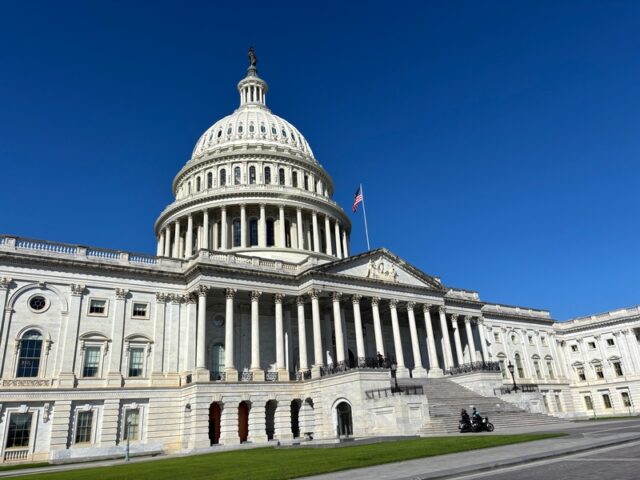
The week ahead brings Congress back for its second week of the lame duck session with less than a month before federal funding runs out on Dec. 11, while state election offices finish certifying Nov. 3 results and the Supreme Court prepares a December argument calendar that includes a major voter registration case.
For the week ahead, the Senate is scheduled to convene Monday, Nov. 16, at 3 p.m., according to the Senate’s floor schedule. The temporary spending law that has kept the government open since Oct. 1 expires Dec. 11, and none of the 12 annual spending bills for the 2027 budget year has become law. The American Subcontractors Association, which tracks Congress for its members, reported that another short term extension is increasingly likely, which would push major spending decisions to the next Congress. Any agency left without funding when the current law runs out would face a shutdown.
Senators are also expected to keep working on the American Affordability and Jobs Act of 2026, a permitting overhaul meant to speed approvals for energy projects that would also make new data centers cover their own energy costs. The bill cleared a key procedural vote 73 to 25 on Nov. 9, and The Hill reported that it is likely to pass the Senate in the weeks ahead. House Minority Leader Hakeem Jeffries has criticized the bill. Congress is also trying to finish the annual defense policy bill, known as the National Defense Authorization Act, and Republicans are weighing one last budget reconciliation package before Democrats take control of both chambers in January. Reconciliation is a special process that lets certain tax and spending bills pass the Senate with a simple majority instead of the 60 votes most bills need.
The political news that affects your wallet, your rights and your vote, broken down in plain language. Free in your inbox.
The Supreme Court has no arguments scheduled in the week ahead. It finished its November arguments on Nov. 10 and returns to the bench Nov. 30, according to the court’s December argument calendar. The first day includes Crowther v. Board of Regents of the University System of Georgia, which asks whether Title IX, the federal law banning sex discrimination at schools that receive federal money, lets school employees sue over discrimination on the job. The U.S. Court of Appeals for the 11th Circuit, which covers Georgia, Florida and Alabama, held that it does not, breaking with eight other appeals courts.
On Dec. 8, the court hears Republican National Committee v. Mi Familia Vota, an appeal of a ruling that struck down two Arizona election laws passed in 2022. The justices will decide whether the National Voter Registration Act, the 1993 federal law that sets rules for registering voters, stops Arizona from requiring documents proving citizenship from people who register using the state form, and whether it bars the state from canceling the registrations of suspected noncitizens within 90 days of a federal election. The U.S. Court of Appeals for the Ninth Circuit ruled that both Arizona laws conflict with the federal law. Because that federal law applies nationwide, the ruling could shape how every state handles registrations and voter rolls ahead of federal elections. On Dec. 9, the court hears Department of Homeland Security v. D.V.D., a challenge to the administration’s deportations of migrants to countries other than their own.
In the states, the week ahead starts with North Carolina lawmakers returning Nov. 16 for a lame duck session scheduled through Nov. 19. Republicans are weighing veto overrides, including one on an elections bill that would cut early voting in primaries from 17 days to 10, before Democrats take over the state House in January.
The week ahead also brings certification deadlines for the Nov. 3 results in several states. Florida’s Elections Canvassing Commission is scheduled to certify statewide results Nov. 17, according to the Florida Department of State’s results reporting timeline. In Texas, local canvasses must be completed by Nov. 17, and the state canvass runs Nov. 21 through Dec. 7, according to the Texas secretary of state’s office. North Carolina’s State Board of Elections is set to certify statewide results Nov. 24, Carolina Journal reported.
In Louisiana, voters in the 5th and 6th congressional districts, along with local races including St. Tammany Parish sheriff, face Dec. 12 runoff elections. In person and mail registration for those runoffs has closed, but online registration stays open until Nov. 21, according to the Louisiana secretary of state’s 2026 elections calendar. Early voting runs Nov. 28 through Dec. 5.
Voters with questions about registration, runoffs or certification can confirm dates with their state or local election office.