Poli Alert Politics & Civics
Related Articles



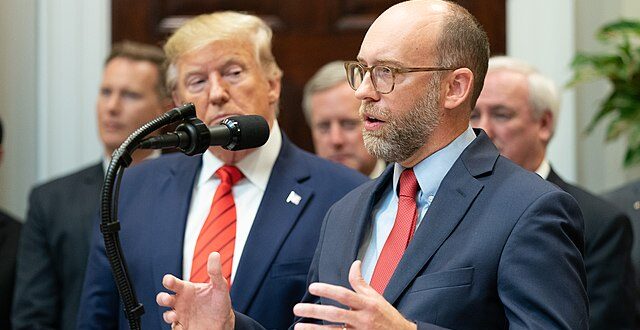
President Donald Trump is moving to give the White House greater control over National Institutes of Health grants after a tense Oval Office meeting in which budget chief Russell Vought criticized the agency for funding research priorities he said conflict with the administration’s agenda.
Trump has directed Vought to draft an executive order that would create a board to review NIH grant awards, according to reporting published after the meeting. The proposed board would include Vought and NIH Director Jay Bhattacharya, potentially giving political appointees a direct role in deciding which federally funded biomedical research projects receive money.
The proposal follows a Friday Oval Office discussion in which Vought argued that NIH was continuing to fund what he described as “woke” initiatives despite Trump administration efforts to eliminate what the president considers “equity-related” spending.
Three people familiar with the meeting told The Washington Post that Vought and other officials discussed creating a commission to review NIH grants. Bhattacharya, a Trump appointee who leads the agency, defended the NIH’s grant-making process during the discussion.
The White House has not publicly released the proposed executive order or detailed how the proposed board would operate.
NIH Says Existing Grants Will Continue
An NIH spokesperson declined to comment on the Oval Office meeting but said Friday that the agency would not rescind existing grant funds.
“There will be no rescissions to NIH grant monies. All NIH grant monies will be spent,” the spokesperson said.
That statement addresses existing awards, while the reported executive-order proposal would affect the process for approving and reviewing grants going forward.
NIH grant awards are governed by formal notices of award that establish the legal terms and conditions of federal funding. NIH policy also allows the agency to withhold or terminate support in specified circumstances involving compliance with award requirements.
The distinction could become important if the administration seeks to give political officials a broader role in determining which research projects qualify for federal funding.
Vought Has Targeted NIH Funding
The dispute reflects a broader effort by Vought, director of the Office of Management and Budget, to reshape federal spending and give the administration greater control over grant-making.
Vought has previously criticized NIH grants that he considers wasteful or inconsistent with administration priorities. In a July 2025 interview with CBS News, he said the agency needed a “dramatic overhaul” and that officials would have to examine its grants “line by line.”
The administration has already changed NIH funding priorities.
Last year, NIH terminated or cut hundreds of millions of dollars in research funding involving minority, gay and transgender health issues. The agency has also changed its grant-making process and reduced awards in some areas, including women’s health, according to reporting cited by The Washington Post.
NIH continues to operate under congressional appropriations and statutory restrictions. For fiscal year 2026, Congress enacted legislation providing funding to the agency and establishing conditions on how some NIH funds can be used.
Fight Over Who Controls Scientific Funding
The proposed board could intensify an existing dispute over how much authority the White House should have over federal research decisions.
Vought told lawmakers in June that the administration did not intend to cancel grants arbitrarily but argued that political officials should have the ability to stop funding when they determine that a project conflicts with administration policy.
Bhattacharya has taken a different position on the agency’s funding responsibilities. In testimony before House appropriators in March, he said NIH would spend its full congressional allocation on what he called “excellent science.”
The issue also comes amid litigation over the administration’s handling of NIH grants. Scientists have sued NIH, alleging that the agency has screened or terminated research based on subjects and viewpoints that officials associate with diversity, gender identity and climate change. The administration has disputed those claims, and the legal challenges remain ongoing.
The proposed changes would also come as NIH announces new research investments. On Monday, the agency announced more than $88 million for biomedical research infrastructure and several initiatives focused on human-based research technologies.
For now, no executive order creating the proposed grant-review board has been publicly issued. The next step is for Vought to draft the order and for the administration to determine whether and how to implement the proposed changes.
The dispute nevertheless marks another effort by the Trump administration to reshape how one of the federal government’s largest biomedical research agencies decides which scientific work receives taxpayer funding.