Poli Alert Politics & Civics
Related Articles

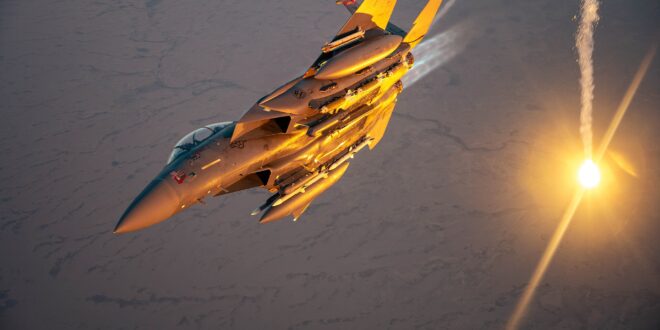
U.S. forces have rescued the second crew member from a downed F-15E Strike Eagle in Iran, concluding a high-risk recovery mission that officials described as one of the most complex search-and-rescue operations of the conflict.
Two U.S. officials said late Saturday that the airman — who had been missing since the jet was shot down Friday — was recovered safely, though injured.
President Donald Trump called the operation “an Easter miracle,” praising U.S. forces for what he described as “strong, decisive” action.
High-risk rescue in hostile territory
The two-seat fighter jet was downed over Iran, with both crew members ejecting before impact. One was rescued shortly after the crash, while the second — a weapons systems officer — remained missing for more than a day.
Officials said the recovery required a coordinated operation involving special operations forces and multiple aircraft operating inside contested airspace.
Trump said he ordered “dozens” of aircraft to support the mission, which ultimately succeeded without any reported American fatalities.
CIA deception campaign played key role
A senior administration official said the Central Intelligence Agency conducted a deception operation to aid the rescue.
According to the official, the agency spread disinformation suggesting the missing airman had already been located and was being moved on the ground, creating confusion among Iranian forces.
While attention was diverted, U.S. intelligence assets were able to pinpoint the airman’s location — described as concealed in mountainous terrain — and relay coordinates to military planners.
The U.S. Department of Defense then executed the extraction mission, with CIA providing real-time intelligence support, the official said.
Conflicting claims from Iran
Iranian state and semi-official media disputed the U.S. account, with outlets linked to the Islamic Revolutionary Guard Corps claiming the rescue attempt failed.
Iranian officials also said multiple U.S. aircraft — including UH-60 Black Hawk helicopters and a C-130 Hercules — were destroyed during the operation, though U.S. officials have not confirmed those claims.
Earlier, Iranian authorities had offered rewards for the capture of the missing pilot, raising concerns about the risks if he were located first by Iranian forces.
Earlier incidents underscored danger
The rescue followed the loss of the F-15E, believed to be the first U.S. fighter jet shot down inside Iran during the current conflict.
Separately, an A-10 Thunderbolt II was struck during the broader operation and later crashed after reaching Kuwaiti airspace. The pilot ejected safely.
The incidents highlighted the growing risks to U.S. aircraft operating over Iran, challenging earlier perceptions of uncontested American air superiority.
Strategic and political impact
Trump framed the rescue as a major military success, saying it demonstrated “overwhelming Air Dominance.”
But the downing of the aircraft — and the need for a complex recovery operation — has intensified scrutiny of the administration’s handling of the conflict.
Military analysts say the episode underscores both the capabilities and vulnerabilities of U.S. forces in a high-threat environment.
What comes next
The successful rescue removes a potential flashpoint — the capture of a U.S. service member — but broader tensions remain high as the conflict continues.
With air operations expanding and Iranian defenses proving capable of targeting advanced U.S. aircraft, the risk of further escalation remains significant.