Poli Alert Politics & Civics
Related Articles



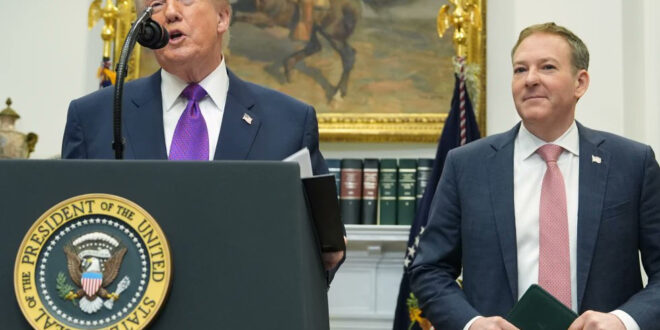
President Donald Trump announced Thursday that the Environmental Protection Agency will rescind its 2009 endangerment finding, a landmark determination that has served as the legal foundation for nearly all federal limits on greenhouse gas pollution.
The repeal would upend most U.S. policies aimed at addressing climate change by eliminating the finding that greenhouse gases such as carbon dioxide and methane endanger public health and welfare.
“We are officially terminating the so-called endangerment finding, a disastrous Obama-era policy,” Trump said at a White House news conference. “This determination had no basis in fact — none whatsoever. And it had no basis in law.”
The EPA first issued the endangerment finding in 2009 following a 2007 Supreme Court decision that determined the agency had authority under the Clean Air Act to regulate greenhouse gases. The ruling acknowledged that the harms associated with climate change are “serious and well recognized.”
The finding has underpinned regulations on emissions from vehicles, power plants and oil and gas facilities and has required companies to report greenhouse gas pollution.
Trump and EPA Administrator Lee Zeldin said repealing the finding would amount to “the largest deregulatory action in American history.” The administration also announced it would eliminate all federal greenhouse gas emissions standards for vehicles covering model years 2012 through 2027 and beyond.
“We are repealing the ridiculous endangerment finding and terminating all additional green emissions standards imposed unnecessarily on vehicle models and engines,” Trump said.
The EPA will continue regulating pollutants that directly affect air quality, including carbon monoxide, lead and ozone.
Legal and scientific battle ahead
Environmental and public health groups quickly condemned the move and signaled plans to challenge it in court.
The American Lung Association and the American Public Health Association said they would sue, calling the repeal unlawful. The Natural Resources Defense Council said it is preparing a legal challenge, and the American Geophysical Union said the decision “is a rejection of established science.”
Former President Barack Obama, whose administration issued the endangerment finding, said in a statement that rescinding it would leave Americans “less safe, less healthy and less able to fight climate change.”
The U.S. Climate Alliance — a coalition of states led by California Gov. Gavin Newsom and Wisconsin Gov. Tony Evers — called the repeal unlawful and contrary to scientific evidence.
Climate scientists note that the last 11 years have been the hottest on record globally. Last year was the third-warmest in modern history, according to the European Union’s Copernicus Climate Change Service.
Legal experts say the administration faces a steep challenge in court, in part because of the Supreme Court’s 2007 precedent recognizing the EPA’s authority to regulate greenhouse gases.
Michael Gerrard, founder of the Sabin Center for Climate Change Law at Columbia University, said courts typically require detailed justification when an agency reverses a longstanding position.
“Usually, what the courts require when an agency takes a stark change in its position is a good explanation of that with a lot of documentation behind it,” Gerrard said.
Meghan Greenfield, a partner at Jenner & Block who oversaw EPA Supreme Court litigation during the Biden administration, said the administration must also demonstrate it followed proper rulemaking procedures.
“You only get to the interesting legal issues once you make sure that you dotted your I’s and crossed your T’s,” she said, noting that such rules often take years to complete.
As of late Thursday, the EPA had not published the final text of the repeal.
Broader climate retreat
The move marks the Trump administration’s most sweeping effort yet to roll back federal climate policy. The United States formally exited the 2015 Paris Agreement for a second time last month and is expected to withdraw from the United Nations Framework Convention on Climate Change.
The administration has also canceled billions of dollars in clean energy funding, though some of those actions have been blocked in court, and has moved to extend the lifespan of several coal-fired power plants.
Interior Secretary Doug Burgum said repealing the endangerment finding would revive the coal industry.
“CO₂ was never a pollutant,” Burgum said Wednesday on Fox Business. “The whole endangerment thing opens up the opportunity for the revival of clean, beautiful American coal.”
If courts ultimately uphold the repeal, it could dramatically reshape U.S. climate policy for years to come. But with multiple lawsuits expected, the fate of the endangerment finding — and the federal government’s authority to regulate greenhouse gases — may once again rest with the Supreme Court.