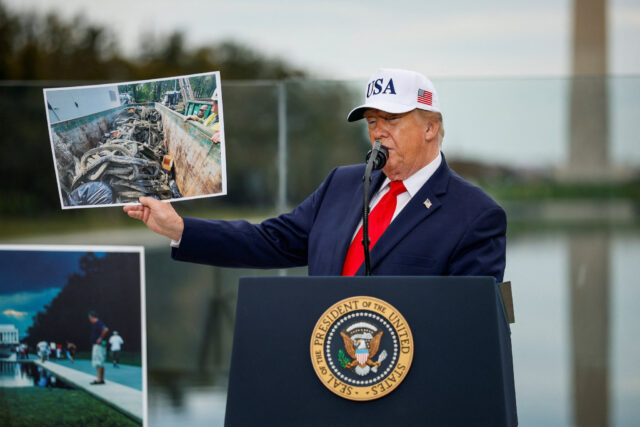
Speaking Monday, November 2, on the eve of Election Day, Trump devoted a significant portion of his remarks to the renovation of the iconic Washington landmark, turning what was supposed to be a final political pitch into an extended presentation about his administration’s construction projects around the nation’s capital.
Trump spent more than 20 minutes discussing the reflecting pool and other renovation efforts before turning his attention to the midterm elections.
The overall speech lasted approximately 54 minutes, with Trump discussing everything from the pool’s pipes and water features to its paint, landscaping and algae problems.
The political news that affects your wallet, your rights and your vote, broken down in plain language. Free in your inbox.
The unusual setting came as Republicans faced the possibility of losing control of Congress, with Democrats campaigning heavily on affordability, rising energy costs and dissatisfaction with Trump’s handling of the economy.
The reflecting pool has become a controversial project for Trump’s second administration. In April, Trump announced plans to renovate the historic landmark, promising a quick turnaround and an initial price tag of approximately $1.5 million.
The project was supposed to be completed in time for the nation’s July Fourth celebrations. Instead, the renovation encountered delays, and the newly applied blue coating began peeling. Algae also appeared in the water, forcing workers to drain the pool again and undertake additional repairs.
The final cost has also grown substantially beyond Trump’s original estimate. The Washington Post reported that the project exceeded $14 million, while Reuters placed the cost above $16 million.
The administration initially blamed vandalism for the damage. Federal prosecutors later attributed the problems to faulty workmanship and dropped the criminal case against David Hearn, a former Olympic athlete who had been accused of damaging the pool. A judge subsequently dismissed the case.
Trump continued promoting the renovation during Monday’s appearance, using the event to highlight what he described as improvements to Washington.
He also discussed other projects, including plans for a massive triumphal arch, renovations to a public golf course and the National Garden of American Heroes.
Only after spending considerable time discussing those projects did Trump turn toward the election.
He attacked Democratic candidates, described them as dangerous extremists and defended his administration’s record. He also discussed the war with Iran and argued that his administration had made progress on the economy, including tax cuts and energy prices.
Trump acknowledged the historical difficulty sitting presidents face during midterm elections, saying his administration had given Republicans a strong opportunity to maintain control of Congress.
Democrats were spending the final hours of the campaign making their case in traditionally Republican areas, emphasizing voter frustration over the cost of living and Trump’s economic record.
The contrast between the two parties’ closing messages was particularly visible Monday. While Democrats focused on economic concerns and congressional control, Trump chose to spend much of his final public appearance promoting a renovation project that had already attracted national scrutiny.
The 2026 midterm elections will determine whether Republicans retain control of Congress or Democrats gain the power to reshape the legislative agenda and increase oversight of Trump’s administration.
For voters heading to the polls Tuesday, November 3, the election will decide who controls the House and Senate for the remainder of Trump’s term.