


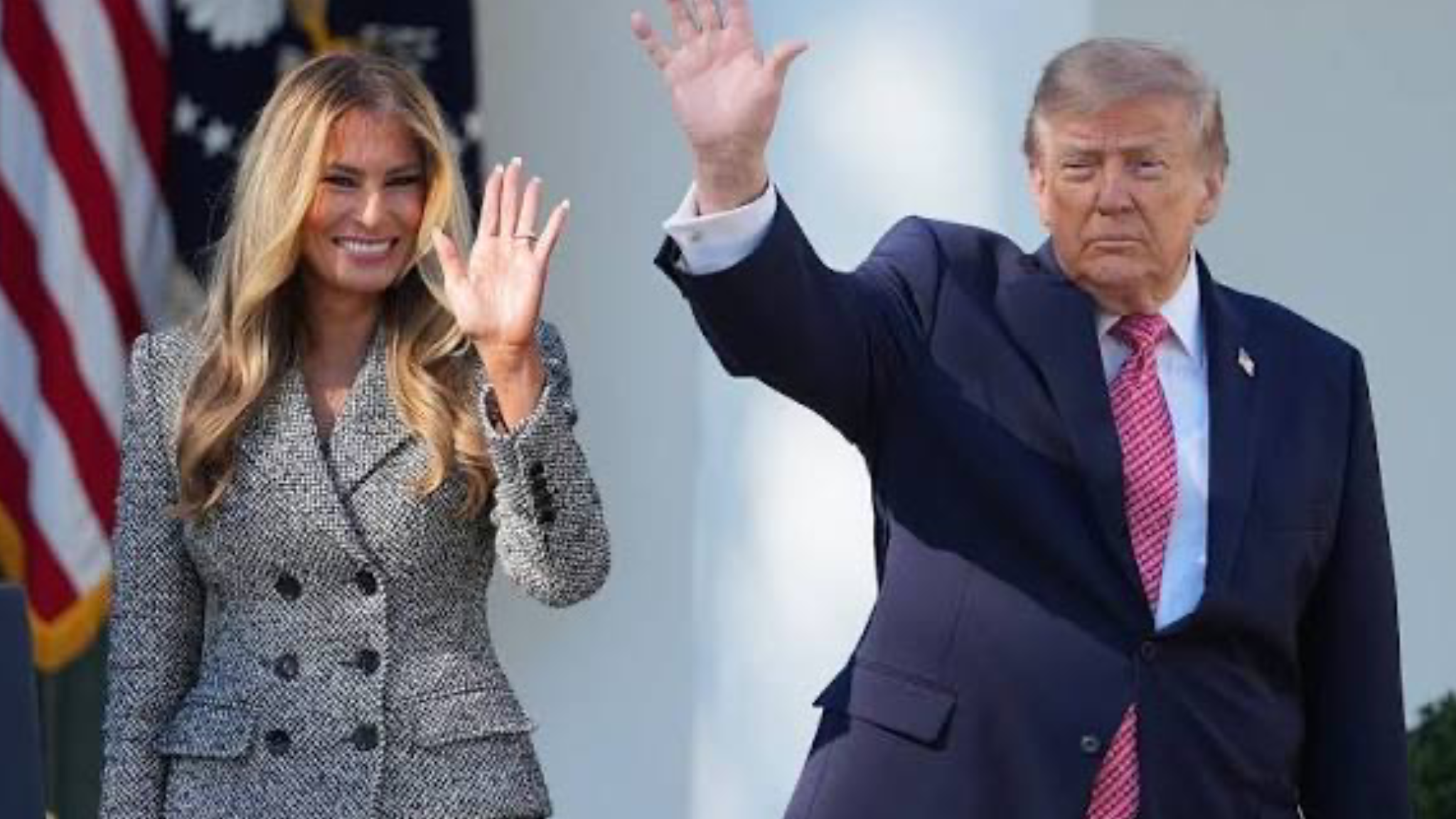
Trump signed an executive order Monday creating a women’s health division at the National Institutes of Health, with first lady Melania Trump at his side in the White House Rose Garden. The National Institutes of Health, known as NIH, is the federal agency that funds and runs most of the country’s medical research.
The order also creates a White House Women’s Health Task Force, led by chief of staff Susie Wiles and Health and Human Services Secretary Robert F. Kennedy Jr. The White House says the goal is to close research gaps and modernize care for women and girls at every stage of life, from childhood through pregnancy, menopause and aging.
Melania Trump opened the ceremony with a speech, saying the order “establishes a new standard for women’s health in America.” She said she shaped it through meetings with physicians, White House officials and Kennedy, and that the task force would hold its first working session later that day. She also signed the order after her husband did, though a first lady’s signature carries no legal weight.
Trump gave his wife credit for the idea. “Who the [expletive] wouldn’t have a women’s health division?” he said. “Melania said, ‘They don’t have it.'”
That claim does not match the record. NIH has had an Office of Research on Women’s Health since 1990, an office members of Congress have described as the only federal office fully dedicated to women’s health. The White House did not explain how the new women’s health division will differ from that office.
According to the White House, the order targets areas where research has fallen behind, including endometriosis, maternal health, mental health, infertility, menopause and Alzheimer’s disease, conditions that only affect women or hit women harder.
What the order does not include is money. The Associated Press reported that it sets no specific funding goals, leaving open how a new division and task force will be paid for.
The White House fact sheet also says the order rescinds the prior administration’s women’s health initiatives, saying the aim is to move beyond research and into better clinical care. It does not name them, but the Biden administration had created the White House Initiative on Women’s Health Research and, in March 2024, signed an executive order directing federal agencies to expand women’s health research, alongside a $200 million NIH effort to close research gaps.
The signing follows a rocky stretch for women’s health research under this administration. In April 2025, the administration moved to cut funding for the Women’s Health Initiative, NIH’s largest and longest running study of women’s health, then reversed course days later after an outcry from researchers. That same year, lawmakers pushed back after information on clinical trials and funding opportunities was removed from the Office of Research on Women’s Health website.
Trump noted that the order arrives in October, which is Breast Cancer Awareness Month.
