Poli Alert Politics & Civics
Related Articles


Hours after the U.S. Supreme Court struck down his sweeping global tariffs, President Donald Trump unleashed a blistering attack on the six justices who ruled against him — including two conservative jurists he appointed during his first term.
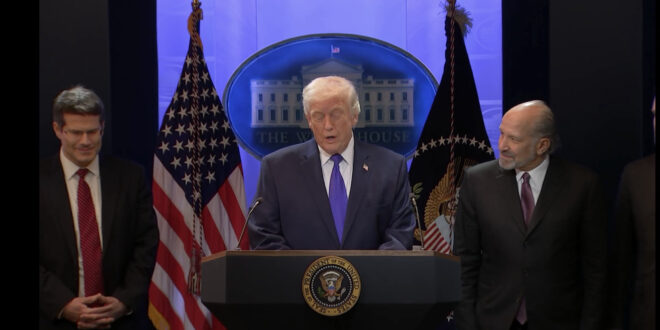
Speaking to reporters Friday, Trump said he was “ashamed of certain members of the court,” accusing the majority of undermining his presidency and betraying conservative principles.
“You can’t knock their loyalty,” Trump said of the court’s three liberal justices, whom he described as an “automatic no.” “That’s one thing you can do with some of our people.”
Conservative defectors draw Trump’s ire
The majority opinion was written by John Roberts, who was joined by the court’s three liberals and two Trump appointees, Neil Gorsuch and Amy Coney Barrett.
The court ruled that the International Emergency Economic Powers Act, or IEEPA, does not authorize a president to unilaterally impose tariffs — a central pillar of Trump’s trade strategy.
Asked whether he regretted nominating Gorsuch and Barrett, Trump declined to answer directly but said their decision was “an embarrassment to their families.”
He also alleged — without evidence — that the court had been “swayed by foreign interests,” calling the justices in the majority “fools” and “lap dogs for the RINOs and the radical left Democrats.”
Praise for Kavanaugh, warnings to the court
Trump reserved praise for his third Supreme Court nominee, Brett Kavanaugh, who wrote the principal dissent arguing that IEEPA does permit tariffs and outlining alternative statutes the president could use to impose duties.
“He’s a genius,” Trump said of Kavanaugh. “His stock is going way up.”
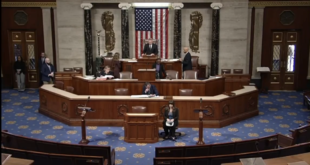
The ruling sets up an unusual dynamic ahead of Trump’s State of the Union address on Tuesday, an event Supreme Court justices traditionally attend.
Trump said the justices remain invited but drew a distinction between the camps.
“The six who ruled against us are barely invited,” he said. “The three dissenters are happily invited. But I couldn’t care less if they come.”
A Supreme Court spokesperson did not immediately respond to a request for comment.
Presidents and the court: a fraught history
Presidents have long criticized Supreme Court rulings they oppose, though Trump’s remarks stood out for their personal tone.
After the court struck down Joe Biden’s student loan forgiveness plan in 2023, Biden called the decision “wrong” and said the majority had misread the Constitution. In 2024, he described the court’s ruling granting presidents immunity for official acts as a “terrible disservice.”
In 2010, Barack Obama publicly criticized the court’s decision in Citizens United v. Federal Election Commission during his State of the Union address. Justice Samuel Alito, seated in the chamber, visibly shook his head — and has not attended a State of the Union since.
Trump himself has repeatedly attacked the court when it ruled against him. After the justices declined to hear a Texas-backed lawsuit seeking to overturn his 2020 election loss, he said the court had shown “No Wisdom, No Courage!”
A complicated legacy
Despite his anger, Trump’s three Supreme Court appointments reshaped the judiciary. Since Barrett’s confirmation in 2020, the court’s 6–3 conservative majority has overturned Roe v. Wade, ended affirmative action in higher education, curtailed federal regulatory power and expanded gun rights.
One architect of Trump’s judicial strategy during his first term was Leonard Leo, a longtime conservative legal activist. The two have since had a public falling-out.
After a lower court ruled against Trump’s tariffs last year, Trump blamed Leo, calling him a “sleazebag” and accusing him of betraying the movement.
“They don’t help me much,” Trump said of his judicial appointees in a 2023 speech. “They vote against me too much — but that’s one of those little things in life, right?”