Poli Alert Politics & Civics
Related Articles



The Trump administration has moved to halt the nation’s first reparations program that provides financial assistance to Black residents affected by decades of housing discrimination, joining an ongoing lawsuit that argues the initiative violates the U.S. Constitution.
The U.S. Department of Justice filed court documents Tuesday seeking to block Evanston, Illinois’ reparations program, which has distributed millions of dollars to eligible residents since its launch in 2021. Federal officials argue the program unlawfully allocates benefits based on race, violating the Equal Protection Clause of the Constitution.
The challenge marks a significant escalation in the national debate over reparations and reflects the Trump administration’s broader opposition to race-based government programs.
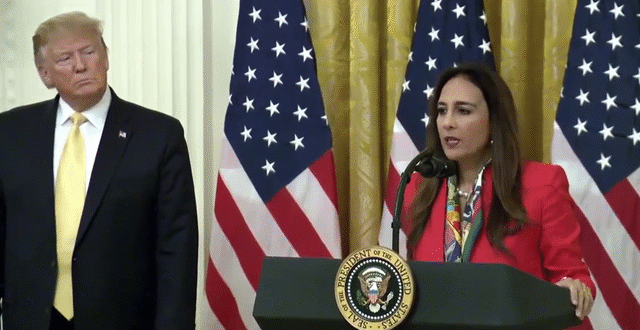
“This program discriminates on the basis of race,” Assistant Attorney General Harmeet Dhillon of the Justice Department’s Civil Rights Division said in a statement. “There are sound ways for a city to remedy past discrimination or direct resources to its most vulnerable citizens and neighborhoods. Simply handing out money based on race, however, is not the answer.”
Evanston’s reparations initiative was established to address the lasting effects of discriminatory housing practices that city leaders say harmed Black residents between 1919 and 1969. The city allocated $20 million to the effort, funded primarily through revenue generated by a local tax on legal marijuana sales.
Eligible recipients can receive up to $25,000 for housing-related expenses, including home repairs, mortgage assistance, down payments and property-related fees. More than $7 million has already been distributed to hundreds of residents.
The federal government’s intervention comes in support of a lawsuit filed in 2024 by six plaintiffs who argue the program unlawfully prioritizes race over individual harm.
Michael Bekesha, an attorney representing the plaintiffs, said the city failed to establish a direct connection between recipients and specific acts of discrimination committed by Evanston.
“Reparations programs aren’t new, but they’ve always been connected to specific harms suffered by specific individuals,” Bekesha said. “In Evanston, there is no connection between the individuals receiving the money and any action taken by the city.”
Supporters of the program strongly reject that characterization.
Robin Rue Simmons, the former Evanston alderwoman who spearheaded the initiative and now chairs the committee overseeing the funds, said the program was specifically designed to address documented harms caused by decades of redlining and discriminatory housing policies.
“Evanston has set a new precedent,” Simmons said. “It has shown that racial reparations are possible.”
According to city officials, Black families were systematically excluded from wealth-building opportunities through housing restrictions and discriminatory lending practices that affected generations of residents. Supporters argue the program serves as a targeted remedy for those historical injustices.
The legal challenge arrives as reparations efforts continue to gain attention nationwide. Since 2020, several states — including California, New York and Maryland — along with cities such as Boston, Detroit and Philadelphia, have established commissions or task forces to study reparations proposals.
However, Evanston remains the only U.S. municipality to implement and distribute direct financial benefits as part of a formal reparations program.
The Trump administration’s position represents a sharp contrast with policies supported by former President Joe Biden, who backed congressional efforts to study reparations. It also diverges from recent international efforts, including a United Nations resolution encouraging nations to consider reparative measures related to slavery and colonialism.
Simmons said the federal government’s move appears designed to discourage other communities from pursuing similar programs.
“This lawsuit and the federal government’s involvement are intended to send a message,” she said. “But the need to address historic harms remains.”
A court decision could have far-reaching implications for reparations efforts nationwide and determine whether governments can legally design programs that specifically address the legacy of racial discrimination.