Poli Alert Politics & Civics
Related Articles

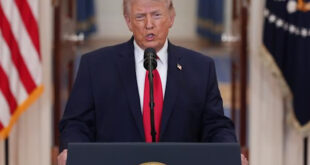
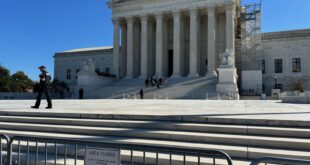
Donald Trump on Thursday removed Pam Bondi as attorney general, a dramatic shakeup at the U.S. Department of Justice that follows months of internal friction over politically sensitive investigations and the department’s independence.
Todd Blanche will serve as acting attorney general, according to a person familiar with the decision.
The dismissal caps a turbulent 14-month tenure for Bondi, who faced growing pressure from both the White House and Congress as she navigated competing demands to assert control over the Justice Department while maintaining its traditional independence.
Clash over control of the Justice Department
At the center of Bondi’s ouster were longstanding tensions over how aggressively the Justice Department should pursue investigations tied to Trump’s political priorities.
Trump had repeatedly signaled — both publicly and privately — that he wanted the department to take a more assertive posture toward political adversaries. But prosecutors and career officials have historically been bound by evidentiary standards and internal guidelines designed to shield charging decisions from political influence.
Those competing pressures placed Bondi in a difficult position: balancing loyalty to the president with institutional norms that limit direct political intervention in criminal investigations.
People familiar with internal discussions said Trump grew increasingly frustrated that the department had not delivered outcomes he viewed as aligned with his agenda.
Epstein files become political flashpoint
Bondi’s handling of records tied to Jeffrey Epstein emerged as a defining controversy of her tenure.
The issue gained traction not only among Democrats but also within Trump’s political base, where skepticism over the Justice Department’s transparency fueled criticism of Bondi’s leadership.
That pressure intensified in March, when the House Oversight Committee voted to subpoena Bondi to testify under oath about the department’s handling of the case — an extraordinary move that included support from several Republicans.
The subpoena underscored the extent to which concerns about the department’s actions had crossed party lines, complicating Bondi’s standing within the administration.
Congressional scrutiny and legal uncertainty
Bondi had been scheduled to sit for a deposition on April 14, though her removal introduces new uncertainty about whether that testimony will proceed and under what conditions.
Legal experts note that while a subpoena attaches to the office, changes in leadership can complicate compliance, particularly when executive privilege or ongoing investigations are at issue.
The standoff highlights a broader constitutional tension between congressional oversight authority and executive branch control over law enforcement.
Erosion of support inside GOP
While Trump’s dissatisfaction played a central role, Bondi’s support among congressional Republicans had also begun to weaken.
The bipartisan subpoena vote signaled a rare public break, and some GOP lawmakers had privately raised concerns about her handling of high-profile matters and the political fallout that followed.
At the same time, Trump continued to publicly praise Bondi’s loyalty — a dynamic that reflected a widening gap between private frustration and public messaging.
Potential successors and shifting strategy
Before the firing, Trump had discussed replacing Bondi with Lee Zeldin, a close political ally who currently leads the Environmental Protection Agency.
Zeldin has been a key figure in advancing Trump’s policy agenda and is viewed by some allies as a more aggressive advocate for the president’s priorities.
No permanent replacement has been announced, leaving Blanche in charge on an interim basis.
Return to a more assertive personnel approach
Bondi’s dismissal also signals a shift in Trump’s management style during his second term.
After initially seeking to avoid the high turnover that defined his first administration, Trump has recently shown a greater willingness to remove senior officials.
That shift follows other high-level changes, including the replacement of Kristi Noem at the Department of Homeland Security, suggesting a broader recalibration of leadership across key agencies.
Implications for DOJ independence
The firing is likely to intensify debate over the independence of the Justice Department — a long-standing norm intended to insulate federal law enforcement from political pressure.
Former officials and legal scholars have warned that efforts to align prosecutorial decisions with political objectives could erode public trust in the department and raise questions about the rule of law.
At the same time, presidents retain broad authority to appoint and remove executive branch officials, including the attorney general, underscoring the structural tension between political accountability and institutional independence.
With Blanche serving in an acting capacity, immediate questions remain about the direction of ongoing investigations, the department’s posture in politically sensitive cases and the administration’s timeline for naming a permanent successor.
Bondi’s removal also leaves unresolved disputes with Congress, particularly over oversight of the Epstein case, setting the stage for potential legal and political clashes in the weeks ahead.