Poli Alert Politics & Civics
Related Articles
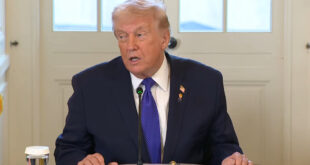
President Donald Trump on Monday blamed actor and filmmaker Rob Reiner’s outspoken opposition to him for Reiner’s killing, issuing an unsubstantiated and incendiary claim as authorities were still investigating the apparent homicide — a remark that drew condemnation from Republicans and Democrats alike and underscored the president’s continued willingness to weaponize tragedy for political grievance.
Reiner, 78, and his wife, Michele Singer Reiner, were found fatally stabbed Sunday at their home in the Brentwood neighborhood of Los Angeles. Police have said the couple’s son, Nick Reiner, was taken into custody early Monday as the investigation continued. Authorities have not publicly established a motive.
Despite the ongoing investigation, Trump used a post on his social media platform to assert — without evidence — that Reiner and his wife were killed “reportedly due to the anger he caused others” through what the president called an “incurable” condition he labeled “Trump Derangement Syndrome.”
Trump claimed Reiner “drove people CRAZY” through his criticism of the president and suggested the filmmaker’s political opposition provoked violence — a conclusion not supported by law enforcement statements.
The post marked a stark departure from the traditionally restrained role presidents have played in moments of national tragedy and drew unusually direct criticism from members of Trump’s own party.
Kentucky Republican Rep. Thomas Massie denounced the president’s comments as unacceptable.
“Regardless of how you felt about Rob Reiner, this is inappropriate and disrespectful discourse about a man who was just brutally murdered,” Massie wrote on X. “I challenge anyone to defend it.”
Georgia Republican Rep. Marjorie Taylor Greene, whom Trump has recently branded a “traitor” over policy disagreements, also rejected the framing.
“This is a family tragedy, not about politics or political enemies,” Greene wrote on X.
The White House did not respond to questions about the criticism or calls for Trump to delete the post. Official White House accounts amplified the president’s remarks.
Reiner, the son of legendary entertainer Carl Reiner, was among the most influential filmmakers of his generation, directing This Is Spinal Tap, The Princess Bride, When Harry Met Sally…, Stand by Me, Misery and A Few Good Men. He was also one of Hollywood’s most vocal Democratic activists, campaigning for liberal candidates and causes for decades.
Reiner was an outspoken Trump critic, calling him “mentally unfit” and “the single-most unqualified human being” to hold the presidency in a 2017 interview with Variety.
Trump’s response to Reiner’s death fits a broader pattern in which the president has framed political opponents as enemies and, at times, commented dismissively or mockingly when violence has befallen them. After Paul Pelosi, the husband of former House Speaker Nancy Pelosi, was attacked with a hammer in his San Francisco home in 2022, Trump publicly joked about the assault.
That history has fueled accusations of hypocrisy following Trump’s response earlier this year to the killing of conservative activist Charlie Kirk, which the president described as “the tragic consequence of demonizing those with whom you disagree.” His administration subsequently sought consequences for individuals who criticized or celebrated Kirk’s death.
Former Trump attorney Jenna Ellis pointed to the contrast.
“The Right uniformly condemned political or celebratory responses to Charlie Kirk’s death,” Ellis wrote on X. “This is not the appropriate response and should be condemned by everyone with any decency.”
Trump has made retribution against political adversaries a central theme of his political identity, both during his campaign for a second term and throughout his return to office. He has repeatedly framed criticism of him as a form of moral or psychological defect, language that has alarmed critics who argue it further erodes political norms and risks legitimizing hostility toward opponents.
When Trump spoke at Kirk’s memorial service earlier this year, he underscored that worldview, declaring: “I hate my opponent.”
Los Angeles police have released few details about the Reiner investigation, cautioning that the case remains active and that conclusions about motive would be premature.