Poli Alert Politics & Civics
Related Articles
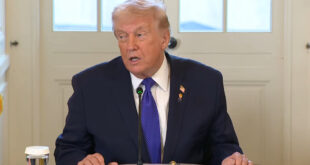

President Donald Trump used a rare prime-time address from the White House on Wednesday to argue that Democrats are responsible for Americans’ economic struggles, delivering a 17-minute speech that was billed as an economic update but often sounded more like a campaign rally.
Speaking rapidly from the Diplomatic Room, Trump declared that inflation has been tamed, wages are rising and the nation is on the brink of historic growth — claims that clash with recent government data and voter surveys showing persistent anxiety about the cost of living.
“Tonight, after 11 months, our border is secure, inflation has stopped, wages are up, prices are down, our nation is strong,” Trump said near the end of his remarks. “America is respected and our country is back, stronger than ever before.”
Trump also promised $1,776 checks for active-duty troops, suggesting the funds would come from tariff revenue — money Congress has not appropriated. The president has also floated $2,000 payments to all Americans and additional farm aid from the same revenue source.
“The checks are already on the way,” Trump said, offering no details on timing or congressional approval.
Little empathy, familiar blame
For Republicans hoping the president might strike a more empathetic tone toward Americans struggling with high prices, the address offered little reassurance. Trump insisted the economy is thriving and placed blame squarely on Democrats and his predecessor, whom he referenced repeatedly.
“It’s not the Republicans’ fault. It’s the Democrats’ fault,” Trump said.
The framing echoed a familiar theme of Trump’s presidency: that he inherited an economic “mess” and that Democrats are hypocritical for focusing on affordability.
“After just one year we have achieved more than anyone could have imagined,” Trump said, adding that job growth is strong and crime is down.
Claims clash with data
While Trump displayed graphics showing declines in gas and grocery prices, many Americans say everyday costs remain high.
On Tuesday, the Labor Department reported that the unemployment rate rose to 4.6%, its highest level since 2021, when the country was still grappling with the COVID-19 pandemic. And while inflation has cooled from its peak, wage gains have not consistently kept pace with housing, health care and food costs.
Trump recently gave himself an “A-plus-plus-plus-plus-plus” grade for his economic stewardship — an assessment at odds with public opinion. A Quinnipiac University poll released Wednesday found roughly one-third of Americans rate the economy as excellent or good. A POLITICO survey conducted last month found nearly half of respondents struggle to afford necessities such as groceries, utilities, housing and transportation.
Still, Trump insisted he is “bringing our economy back from the brink of ruin.”
Political backdrop
The address was Trump’s first prime-time speech from the White House since June, when he announced U.S. strikes on Iranian nuclear facilities. It comes as Republicans grow uneasy after a series of electoral underperformances that have raised concerns about the party’s hold on Congress.
Democrats recently scored decisive victories in the New Jersey and Virginia gubernatorial races after centering their campaigns on affordability. Earlier this month, Republicans narrowly held a Tennessee House seat that Trump won comfortably in 2024, with cost-of-living issues again dominating the race.
Trump teased upcoming housing reforms but offered no specifics, saying he would announce “aggressive” plans in the new year. He also claimed his nominee for Federal Reserve chair would lower interest rates and reduce mortgage costs — powers traditionally insulated from direct White House control.
Contrast with Vance
The president’s remarks stood in sharp contrast to comments Vice President JD Vance made Tuesday in Pennsylvania, where Vance emphasized personal experience with financial hardship and sought to connect with voters struggling to pay their bills.
“I remember what it’s like when you have to choose between putting food on the table or getting the prescription that you need,” Vance said.
Trump, by contrast, leaned heavily on assertions that the economy is already booming — and on attacks against Democrats — previewing a midterm message likely built less on shared pain than on insisting voters are better off than they feel.