Poli Alert Politics & Civics
Related Articles


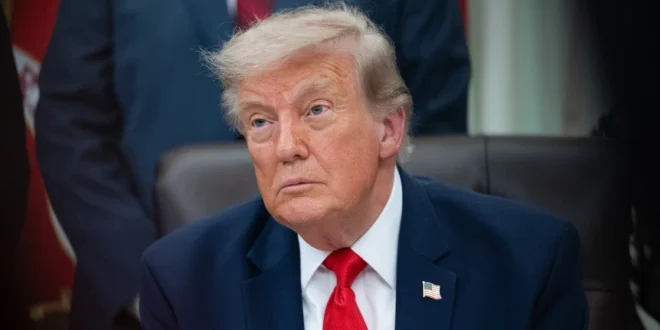
President Donald Trump announced Thursday that negotiators have reached an agreement aimed at ending the war in Gaza, saying Hamas has agreed to disarm and Israel will withdraw its forces from the Palestinian territory under a phased plan backed by the United States.
The announcement marks a significant development nearly nine months after a U.S.-brokered ceasefire was signed but largely stalled over disagreements surrounding Hamas’ disarmament, Israeli military withdrawal and the future governance of Gaza.
“The agreement will be carried out in carefully structured phases,” Trump wrote on social media. “As disarmament is completed, Israeli forces will withdraw, and the International Stabilization Force will work with a new Palestinian police force to take responsibility for Gaza being safe for its residents and its neighbors.”
Despite the announcement, major questions remain over implementation, timelines and whether both sides will ultimately fulfill the agreement’s terms.
Phased disarmament planned
According to U.S. and Board of Peace officials who briefed reporters on condition of anonymity, the agreement follows Trump’s previously proposed 20-point peace framework.
The plan calls for Hamas to surrender its weapons, dismantle its tunnel network, transfer governing authority to a technocratic Palestinian administration and allow an international stabilization force to help maintain security while reconstruction begins.
Israeli forces would gradually withdraw from Gaza as each phase is completed.
On Friday, a Hamas official said the group had reached an agreement regarding disarmament, widely viewed as the most difficult element of the negotiations.
Israel, however, did not publicly confirm it had accepted the arrangement.
Officials said Gaza’s police force is expected to begin transferring weapons to the Board of Peace-backed administration within two weeks. However, they cautioned that the police force represents only a small portion of Hamas’ armed capabilities and does not include most of the organization’s fighters or heavy weapons.
The surrender of larger weapons systems and the dismantling of Hamas’ military infrastructure, including its extensive tunnel network, is expected to occur over a much longer period estimated at between 200 and 350 days.
Israel consulted throughout negotiations
A U.S. official said Israeli leaders were consulted throughout the negotiations and that the agreement does not require Israel to make commitments beyond those already included in Trump’s original ceasefire framework.
Under the proposal, Israel would withdraw its military from Gaza and permanently halt airstrikes as Hamas completes disarmament.
The official warned that Trump would be “very, very disappointed” if Israel failed to uphold its commitments under the agreement.
Trump met Tuesday at the White House with Israeli Prime Minister Benjamin Netanyahu, though neither leader publicly discussed details of the negotiations following the meeting.
Israel’s mission to the United Nations declined immediate comment after Trump’s announcement.
Iran remains a factor
Administration officials acknowledged Iran remains an unpredictable factor despite its diminished influence following the U.S.-Israeli military campaign launched earlier this year.
According to one U.S. official, Tehran advised Hamas against accepting the deal but currently lacks the capacity to provide significant support because of its ongoing confrontation with the United States.
Hamas has historically rejected demands to surrender its arsenal, viewing armed resistance as central to its identity under its founding charter.
Earlier this month, however, the group announced it had dissolved its governing administration in Gaza and was preparing to transfer civilian authority to a United Nations-backed technical committee as part of the broader ceasefire process.
War’s toll remains severe
The conflict began after Hamas-led militants attacked southern Israel on Oct. 7, 2023, killing about 1,200 people and taking 251 hostages.
Israel’s subsequent military campaign has killed more than 73,000 Palestinians, according to Gaza’s Health Ministry, including those killed after the ceasefire took effect.
Israeli forces currently control more than half of Gaza, while hundreds of thousands of Palestinians remain displaced in temporary shelters and heavily damaged urban areas.
Although Trump characterized the agreement as a breakthrough, officials acknowledged the lengthy implementation schedule and unresolved political issues mean significant challenges remain before the war can be fully brought to an end.