Poli Alert Politics & Civics
Related Articles
The Trump administration’s response to the mass shooting at Brown University was swift — and wrong.
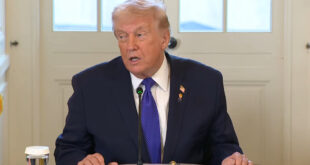
President Donald Trump announced Saturday night that the shooter was in custody, a claim he reversed less than 20 minutes later. The error was not an isolated misstep, but the latest example of a growing pattern in Trump’s second term in which senior administration officials have publicly released premature or inaccurate information during national emergencies, only to walk it back hours later as facts emerge.
An analysis of recent high-profile attacks — including the Brown University shooting, the fatal shooting of two National Guard members in Washington, D.C., and the assassination of conservative activist Charlie Kirk — shows repeated instances in which the administration amplified incorrect claims at moments when the public was seeking clarity and reassurance from federal leaders.
Brown University shooting
Less than two hours after gunfire erupted inside Brown University’s engineering building Saturday, killing two people and wounding nine others, Trump posted on Truth Social that the “suspect is in custody.”
The statement echoed an initial alert from the university that later proved inaccurate. Trump quickly reversed course, writing that campus police had “reversed their previous statement” and that no suspect was in custody.
But confusion continued into Sunday.
FBI Director Kash Patel posted on X that federal agents had helped detain a “person of interest” in a hotel room in Coventry, Rhode Island, crediting a lead from Providence police. Roughly 12 hours later, authorities released the individual, and Providence police publicly contradicted Patel’s account, saying the tip had not originated with them.
Police said the investigation remained active and that no suspect had been identified.
The White House stood by Patel despite the reversal.
“The President has full faith and confidence in his entire law enforcement team,” spokeswoman Abigail Jackson said Monday, even as local officials sought to correct the record.
National Guard shooting in Washington, D.C.
Confusion similarly followed last month’s shooting of two National Guard members in Washington, D.C., an attack that killed 20-year-old Sarah Beckstrom and seriously wounded Andrew Wolfe.
Homeland Security Secretary Kristi Noem initially announced the shooting in a post on X — then deleted it within moments before reposting the same message minutes later. Attorney General Pam Bondi added to the confusion by referring to the victims as members of the “DC National Guard,” when in fact they were members of the West Virginia National Guard deployed in the capital.
Bondi’s office later said she was referring to the location of the deployment, not the unit itself.
Noem also inaccurately claimed the suspect, Afghan national Rahmanullah Lakanwal, had entered the United States “unvetted.” Reporting later showed Lakanwal had undergone extensive background screening during his work with a CIA-directed Afghan unit and was formally granted asylum earlier this year by U.S. Citizenship and Immigration Services, part of Noem’s department.
At a House hearing, Noem acknowledged Lakanwal had been vetted but argued the process was insufficient — a reframing that stopped short of correcting her initial public claim.
Charlie Kirk assassination
After the assassination of conservative activist Charlie Kirk at a Utah campus event in September, Patel again prematurely announced on social media that the suspect was “in custody,” only to later say the person had been released after questioning.
Authorities later arrested a different suspect, Tyler Robinson, who faces multiple state charges.
Patel defended his actions days later, arguing transparency outweighed precision in fast-moving situations.
“Could I have worded it a little better? Sure,” Patel said. “But do I regret putting it out? Absolutely not.”
Trump on Monday praised Patel’s performance across multiple investigations, saying law enforcement had acted with “record time,” even as local and state officials continued to correct federal statements.
A broader pattern
Experts and former officials note that early confusion is common during unfolding emergencies. But they also warn that repeated errors from top federal officials can undermine public trust, complicate investigations and politicize moments that demand restraint.
Trump, who has long favored speed and dominance in public messaging, has increasingly used social media as his primary conduit for emergency information — often ahead of law enforcement briefings or verified facts.
The result, critics say, is a recurring cycle: premature certainty, public reversal, and an administration that rarely acknowledges fault.
As violent incidents mount and scrutiny intensifies ahead of the 2026 midterms, the administration’s approach raises a central question: whether accuracy or narrative control will guide its response when the next crisis strikes.