Poli Alert Politics & Civics
Related Articles
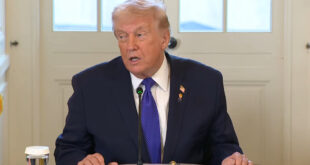

Senate Republicans on Tuesday voted to begin debate on the SAVE America Act, a sweeping election overhaul backed by President Donald Trump, setting up what leaders in both parties expect to be a prolonged and contentious fight on the Senate floor.
The procedural vote passed 51-48, with Lisa Murkowski, R-Alaska, joining Democrats in opposition. Sen. Thom Tillis, R-N.C., did not vote.
Senate Majority Leader John Thune, R-S.D., has promised “an extended debate” on the legislation, though he has acknowledged Republicans lack the votes needed to ultimately pass the bill.
Bill faces steep odds in Senate
The legislation remains subject to the Senate’s 60-vote threshold to overcome a filibuster — a hurdle Republicans are not expected to clear given unified Democratic opposition.
“It’s a naked attempt to rig our elections,” Senate Minority Leader Chuck Schumer, D-N.Y., said ahead of the vote. “We’re ready to be here all day, all night, as long as it takes to ensure the powers of voter suppression do not win the day.”
Thune has said Republicans do not have the support needed to sustain a “talking filibuster” or to deploy the so-called nuclear option to change Senate rules.
What the SAVE Act would do
The SAVE America Act would significantly reshape federal election rules, including:
-
Requiring proof of citizenship — such as a passport or birth certificate — to register to vote
-
Mandating photo identification to cast ballots, including for mail voting
-
Allowing the Department of Homeland Security to flag suspected noncitizens to states for removal from voter rolls
Republican leaders have emphasized voter ID requirements as a widely supported provision.
“Pretty much everything you do in your daily life involves showing an ID,” Thune said. “We certainly ought to be able to apply them to something as important as voting.”
Democrats signal unified resistance
Democrats have framed the legislation as an effort to restrict voting access and have pledged to block it.
Schumer said Democrats’ opposition is not to voter ID itself but to what they describe as broader provisions that could suppress turnout.
“Our objection is it’s a voter suppression bill,” he said.
Trump influence and proposed changes
Trump has called the SAVE Act his “No. 1 priority” and has pushed for additional provisions beyond the House-passed version, including stricter limits on mail voting.
Sen. Eric Schmitt, R-Mo., said he plans to introduce amendments aligned with Trump’s preferences. Those changes, however, would also require 60 votes to advance.
Internal GOP tensions emerge
The debate has also exposed divisions within the Republican conference.
Sen. Mike Lee, R-Utah, urged conservative activists to consider primary challenges against Republicans unwilling to pursue more aggressive tactics to pass the bill.
“If your senators don’t support using the talking filibuster to pass the SAVE America Act, you might need to replace them,” Lee wrote on social media.
Thune pushed back on that approach, warning it could undermine Republican control of the Senate.
“I prefer to have our fights with Democrats,” he said. “We may not agree on everything, but I’m way more in favor of ensuring that we have Republicans holding these seats … than handing them to Democrats.”
Extended debate ahead
Because the House transmitted the bill as a legislative “message,” the Senate was able to begin debate with a simple majority vote. That process could stretch for days — potentially into nights and the weekend — as lawmakers clash over amendments and messaging.
Despite the extended debate, the bill’s path forward remains uncertain, with both parties using the floor fight to sharpen their arguments ahead of upcoming elections.