Poli Alert Politics & Civics
Related Articles



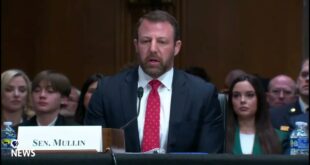
A key Senate committee voted 8-7 Thursday to advance President Donald Trump’s nominee to lead the Department of Homeland Security, sending Sen. Markwayne Mullin to the full Senate despite sharp partisan divisions and concerns over his conduct.
The vote by the Senate Homeland Security Committee came one day after a contentious confirmation hearing that raised questions about Mullin’s temperament and qualifications. The panel is split between eight Republicans and seven Democrats.
In a notable break from his party, Sen. John Fetterman voted with Republicans to advance the nomination, ensuring Mullin clears the committee. Without his support, the nomination would have stalled.
GOP Chairman Opposes Nominee
Despite the Republican majority, committee chair Sen. Rand Paul voted against Mullin, citing concerns about his behavior during the hearing.
“Senator Mullin tried to justify a violent attack on me. Now he wants to lead ICE and Border Patrol? You cannot restore law and order with someone who has an anger problem,” Paul said in a social media post.
Paul’s opposition underscored fractures within the GOP, though they were not enough to derail the nomination.
Democratic Opposition, One Defection
All other Democrats on the panel opposed Mullin, including ranking member Sen. Gary Peters, who argued Mullin lacks the experience and transparency needed to lead the sprawling agency.
“He has failed to be forthright and transparent,” Peters said ahead of the vote. “Sen. Mullin also showed that he doesn’t have the experience or the temperament to lead this critical department.”
Fetterman defended his decision to support Mullin, emphasizing the need for leadership at DHS following the departure of outgoing Secretary Kristi Noem.
“We need a leader at DHS,” Fetterman said, adding that his vote was based on a “constructive working relationship” with Mullin and concerns about national security.
High-Stakes Confirmation Ahead
Mullin now heads to the full Senate, where he will need a simple majority — 51 votes — for confirmation. A vote has not yet been scheduled but could take place as soon as next week. Trump has indicated he wants Mullin confirmed by March 31.
If confirmed, Mullin would take charge of the Department of Homeland Security at a turbulent moment. The agency is facing mounting scrutiny over immigration enforcement policies, operational strains tied to the ongoing conflict in Iran, and disruptions at airports following a lapse in DHS funding that began Feb. 14.
Broader Implications
The narrow committee vote highlights the political and operational challenges surrounding DHS leadership, as lawmakers grapple with balancing security demands and oversight concerns.
Mullin’s confirmation battle is expected to draw further scrutiny on the Senate floor, where divisions within both parties could shape the final outcome.