Poli Alert Politics & Civics
Related Articles



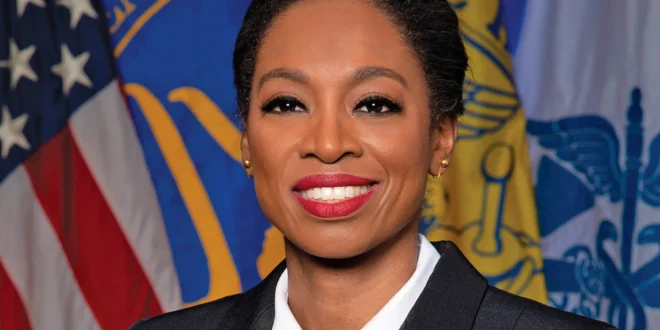
The Senate on Wednesday confirmed Dr. Erica Schwartz as director of the Centers for Disease Control and Prevention, giving the nation’s leading public health agency its first permanent leader in nearly a year as it confronts rising infectious disease outbreaks and renewed debate over vaccine policy.
The Senate approved Schwartz’s nomination in a 51-44 vote that largely fell along party lines. Sen. Tim Kaine, D-Va., joined Republicans in supporting the nomination after previously opposing former CDC Director Susan Monarez.
Schwartz, who served as deputy surgeon general during President Donald Trump’s first administration, succeeds a series of acting directors who have overseen the agency since Health and Human Services Secretary Robert F. Kennedy Jr. dismissed Monarez in August 2025 after just 29 days in office.
Before joining the Trump administration, Schwartz served as a Navy physician and chief medical officer for the U.S. Coast Guard.
Leadership arrives amid public health challenges
Schwartz assumes leadership of the CDC as the agency responds to multiple public health crises, including the highest number of U.S. measles cases in 35 years and a growing outbreak of cyclosporiasis, a parasitic illness linked to shredded iceberg lettuce.
She also takes over as federal health officials grapple with increasing vaccine hesitancy, an issue some public health experts say has intensified amid policy changes and rhetoric from Kennedy, a longtime vaccine critic.
Federal law required the Trump administration to nominate a permanent CDC director by March after Jay Bhattacharya began serving as acting director in February while simultaneously leading the National Institutes of Health. Schwartz’s nomination arrived about one month after that statutory deadline.
As CDC director, Schwartz will oversee the nation’s response to disease outbreaks, approve vaccine recommendations and guide federal public health policy.
Senators pressed Schwartz on agency independence
Although Schwartz was viewed by many health experts as a conventional choice to lead the CDC, her confirmation hearing raised questions about how independently she would operate under Kennedy’s leadership.
During the hearing last month, Schwartz repeatedly stated that vaccines are safe and effective but declined to directly address several of Kennedy’s controversial vaccine policy decisions or say whether she would oppose them.
Sen. Bill Cassidy, R-La., chairman of the Senate Health, Education, Labor and Pensions Committee and a physician, challenged Schwartz over whether she would push back if political considerations conflicted with scientific evidence.
“We need a CDC director that will actually stand up to crazy, stupid things being said that undermine faith in immunization,” Cassidy said during the hearing.
Cassidy ultimately supported Schwartz after additional conversations with her and colleagues familiar with her work.
“I am confident that she knows what she is doing and will stand against those who do not,” Cassidy said during a committee meeting in July.
Vaccine policy remains under scrutiny
Cassidy also cited recent changes to a CDC webpage discussing vaccines and autism as evidence of progress following discussions with the Department of Health and Human Services.
Since November, the webpage had stated that research had not ruled out a connection between childhood vaccines and autism despite decades of scientific studies finding no evidence of such a link. The revised webpage now also notes that researchers have not identified the root causes of autism, though the earlier language remains.
Schwartz faced criticism from some public health advocates who argued she failed to clearly commit to insulating the CDC from political influence.
The National Public Health Coalition, an advocacy organization composed of former CDC employees, opposed her nomination after the hearing.
“The public needed to hear clear commitments about how she would protect CDC guidance from political pressure,” the group said in a statement. “Too often, her stated commitments were incomplete, vague, or missing.”
The Department of Health and Human Services defended Schwartz’s testimony, saying critics were unfairly demanding that she speculate on policy matters outside the scope of her nomination.
Kennedy’s leadership continues to draw attention
Kennedy has reshaped federal vaccine policy since taking office, including changes to the childhood immunization schedule that were later blocked by a federal judge.
He also replaced the members of the CDC’s Advisory Committee on Immunization Practices with a new panel that includes several members who have expressed skepticism about COVID-19 vaccines.
Monarez testified before Congress last year that Kennedy dismissed her after she declined to pre-approve vaccine recommendations favored by the administration.
Schwartz sought to reassure lawmakers during her confirmation hearing that scientific evidence would remain her guiding principle.
“As CDC director, my sacred responsibility is to provide the American people with public health guidance that is clear, honest and evidence-based,” she told senators. “I will never betray the science.”