 Poli Alert Politics & Civics
Related Articles


The U.S. Supreme Court delivered a major setback to President Donald Trump on Friday, ruling 6–3 that he exceeded his authority when he imposed sweeping global tariffs under a law reserved for national emergencies.
The justices held that Trump’s broad tariffs on imports from dozens of countries were not authorized by the International Emergency Economic Powers Act, a 1977 statute known as IEEPA. The ruling invalidates large portions of Trump’s tariff regime, though it leaves others intact and does not bar him from pursuing tariffs under different laws.
The decision triggered an immediate rally in financial markets and raised the prospect that companies could seek refunds for billions of dollars already paid.
Why the court ruled against Trump
Writing for the majority, John Roberts said the Trump administration failed to show that Congress ever intended IEEPA to authorize tariffs.
“The president asserts the extraordinary power to unilaterally impose tariffs of unlimited amount, duration, and scope,” Roberts wrote. But the administration, he added, “points to no statute” in which Congress clearly granted that power under IEEPA.
“As such,” Roberts concluded, “we hold that IEEPA does not authorize the president to impose tariffs.”
Roberts was joined by the court’s three liberal justices and two conservatives, Neil Gorsuch and Amy Coney Barrett.
Justices Clarence Thomas, Brett Kavanaugh, and Samuel Alito dissented.
Which tariffs are struck down — and which remain
The ruling knocks out two major categories of Trump’s tariffs imposed under IEEPA:
-
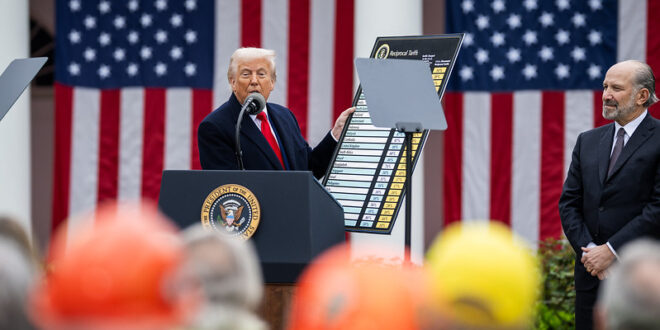
“Reciprocal” tariffs, ranging from 34% on imports from China to a 10% baseline tariff on goods from most other countries
-
A 25% tariff on certain goods from Canada, China and Mexico, which the administration justified as punishment for failing to curb fentanyl trafficking
However, the decision does not affect tariffs Trump imposed under other statutes, including levies on steel and aluminum that relied on national security authorities.
Trump could attempt to reimpose some tariffs using different laws, though those efforts could face fresh legal challenges.
Trump reacts, markets cheer
The White House initially declined to comment but announced that Trump would hold a press conference later Friday. Trump was speaking to a group of governors when he learned of the ruling and called it a “disgrace,” according to two people familiar with the exchange. He also said he had a “backup plan.”
As recently as Thursday, Trump had warned that invalidating the tariffs would hurt the country.
“Without tariffs, this country would be in such trouble right now,” he said.
Investors disagreed. Stocks jumped sharply following the decision.
Refunds and legal fallout
The ruling opens the door for companies that paid the tariffs to seek refunds from the Treasury Department. The court did not directly rule on how refunds should be handled, but Kavanaugh warned in dissent that the financial consequences could be significant.
“The Court says nothing today about whether, and if so how, the Government should go about returning the billions of dollars that it has collected from importers,” he wrote.
As of mid-December, the tariffs had raised roughly $130 billion, according to U.S. Customs and Border Protection.
Business groups welcomed the decision.
“These new tariffs were arbitrary, unpredictable, and bad business,” said Victor Schwartz, whose New York-based wine and spirits importer sued over the duties. “Thankfully, courts at every level recognized these duties for what they were: unconstitutional government overreach.”
The small-business group We Pay the Tariffs called for a “full, fast and automatic” refund process, warning that prolonged delays could bankrupt companies.
Broader implications for presidential power
The case underscored constitutional limits on executive authority over trade. The Constitution assigns tariff-setting power to Congress, though lawmakers have delegated portions of that authority to presidents through statute.
Before Trump, no president had ever used IEEPA to impose tariffs. Lower courts struck down the policy in two separate cases that were later consolidated at the Supreme Court.
Roberts also referenced the court’s “major questions doctrine,” which requires clear congressional authorization for actions with vast economic and political impact — a doctrine the court previously used to block Joe Biden’s student loan forgiveness plan.
Though that portion of Roberts’ opinion did not command a majority, the outcome reinforced growing judicial skepticism of unilateral presidential economic power.

