Poli Alert Politics & Civics
Related Articles
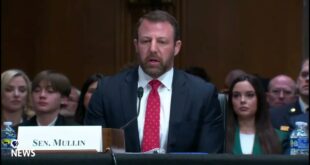


The Department of Defense has asked the White House to approve a funding request exceeding $200 billion to sustain and expand the U.S. war effort in Iran, according to administration officials, setting the stage for a major political battle in Congress over the cost and scope of the conflict.
The proposed supplemental package — still under internal debate — would far exceed the costs of the administration’s airstrike campaign to date and instead focus on replenishing depleted weapons stockpiles and accelerating production of critical munitions used in the ongoing U.S.-Israeli military operations, officials familiar with the planning said.
If formally submitted, the request would rank among the largest wartime funding appeals in recent history and test lawmakers’ appetite for continued U.S. involvement in a conflict that has already drawn significant domestic and international scrutiny.
War costs surge as munitions supplies dwindle
The war in Iran has rapidly consumed U.S. military resources, with costs surpassing $11 billion in the first week alone, according to multiple officials. Over the past three weeks, U.S. and Israeli forces have carried out thousands of strikes, placing intense strain on precision-guided weapons inventories and exposing limits in the U.S. defense industrial base.
Much of the proposed funding would be directed toward expanding production capacity for advanced munitions, as well as replenishing existing stockpiles critical to maintaining global military readiness.
The effort inside the Pentagon has been led by Deputy Defense Secretary Steven Feinberg, who has prioritized strengthening domestic weapons manufacturing and addressing supply chain bottlenecks that have slowed production.
Officials said Feinberg’s team developed multiple funding scenarios over recent weeks, ranging in size and scope, as the administration evaluates what might be politically viable.
White House weighing options amid political risk
It remains unclear how much funding the White House will ultimately request from Congress. Some administration officials have expressed skepticism that a package of this magnitude could secure approval, particularly given divisions on Capitol Hill and broader concerns about the war.
The Office of Management and Budget has raised objections internally to large defense spending proposals, including earlier discussions about a $1.5 trillion overall defense budget sought by President Donald Trump.
The White House has not publicly commented on the Pentagon’s latest request.
Congress faces steep hurdles
Any supplemental funding bill would face significant obstacles in Congress, where public support for the war remains uncertain and lawmakers are divided along both partisan and ideological lines.
Democrats have been sharply critical of the administration’s handling of the conflict and are expected to oppose a large funding package. Republicans have broadly signaled support for the war effort but have yet to coalesce around a legislative strategy capable of overcoming the Senate’s 60-vote threshold.
Sen. Tom Cotton, R-Ark., has urged the administration to include additional funding for intelligence operations as part of the package, highlighting competing priorities within the national security framework.
The looming debate is expected to become a focal point for broader opposition to the war.
“If the administration asks for more money, there will be a big political fight because all the anti-war sentiment will focus on that request,” said Mark Cancian, a defense expert at the Center for Strategic and International Studies.
Comparisons to Ukraine war funding
The scale of the proposed request would surpass prior wartime appropriations in recent years. By comparison, Congress approved roughly $188 billion in funding for Ukraine following Russia’s invasion, according to federal oversight data.
Trump had previously criticized that spending during his campaign, pledging to curb U.S. involvement in overseas conflicts — a position that now contrasts with the administration’s escalating financial commitment to the Iran war.
Industrial limits complicate strategy
Even if Congress approves additional funding, experts caution that the U.S. defense industry may struggle to quickly meet increased demand.
Production of advanced weapons systems is constrained by workforce shortages, limited manufacturing capacity and supply chain challenges for specialized components.
“Just throwing lots of money into the industrial base doesn’t necessarily get you things sooner,” said Elaine McCusker, a former Pentagon budget official. “But you’re definitely not going to get it sooner if you don’t.”
These constraints raise questions about how quickly additional funding could translate into tangible battlefield capabilities.
Broader implications
The funding request represents a critical inflection point for the war effort and for U.S. defense policy more broadly. It will force lawmakers to weigh the costs of sustained military engagement against competing domestic priorities and growing political fatigue with overseas conflicts.
The outcome could shape not only the trajectory of the Iran war but also the future of U.S. military spending and industrial preparedness.
Next steps
The White House is expected to continue internal deliberations before deciding whether to send a formal request to Congress. If it does, lawmakers could face a contentious debate over funding levels, oversight provisions and the broader strategy for U.S. involvement in the conflict.