Poli Alert Politics & Civics
Related Articles

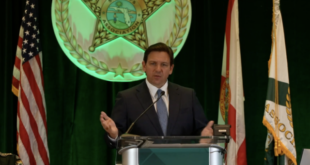
Defense Secretary Pete Hegseth said Friday that the U.S. military has launched a comprehensive investigation into a deadly strike last month on an elementary school in Iran, a move that signals a possible shift toward examining whether American forces were responsible for the attack.
Speaking at a Pentagon news conference, Hegseth did not explicitly acknowledge U.S. responsibility for the Feb. 28 strike in the southern Iranian city of Minab, which Iranian officials say killed at least 175 people, most of them children. But he emphasized that the investigation would seek to establish the facts surrounding the incident.
“The truth matters,” Hegseth told reporters.
The announcement comes as mounting evidence suggests the strike may have been carried out by the U.S. military, according to reporting and independent analysis of the attack. The Pentagon rarely conducts investigations into operations conducted by other countries’ militaries, further fueling speculation about U.S. involvement.
Independent officer assigned to investigation
Hegseth said a general officer from outside United States Central Command — the military command responsible for operations across the Middle East — has been assigned to lead the investigation.
The decision to appoint an investigator outside Central Command appears intended to ensure the review is conducted independently from senior commanders who could potentially face scrutiny if the strike is determined to have targeted the school mistakenly.
“The command investigation will take as long as necessary to address all the matters surrounding this incident,” Hegseth said.
A preliminary review of the strike was completed March 6, according to Tim Hawkins, a Navy captain and Pentagon spokesman. The following day, Charles “Brad” Cooper, the commander of Central Command, ordered the full investigation.
Hawkins declined to confirm whether opening the investigation amounted to an acknowledgment that the United States was responsible for the strike, saying additional details are being withheld “to preserve the integrity of the investigative process.”
Military command investigations can take months and typically involve interviews with personnel involved in the operation, as well as reviews of communications, surveillance data and targeting intelligence.
Evidence suggests mistaken target
Investigative reporting indicates the Shajarah Tayyebeh Elementary School may have been mistakenly included on a U.S. targeting list and misidentified as a military site.
Video footage reviewed by munitions experts appears to show a Tomahawk cruise missile striking a building near the school — a weapon typically launched from naval vessels by the United States Navy.
Satellite imagery suggests the school had once been part of a naval installation but had been separated from the base since 2015. By 2017, images show a playground and other features consistent with an active school campus.
Nearby buildings appear to be affiliated with the Islamic Revolutionary Guard Corps, an elite branch of Iran’s military.
Trump claims disputed
The strike quickly became politically charged in Washington after President Donald Trump suggested that Iran itself may have been responsible for the attack.
Trump said Monday that Iran possesses Tomahawk missiles and speculated that its own military could have carried out the strike.
But defense analysts note that Tomahawk missiles are used by the United States and a limited number of close allies. Israel, the only known U.S. partner conducting strikes against Iran during the conflict, does not operate the missile.
White House press secretary Karoline Leavitt said Tuesday that Trump was expressing his opinion but would accept the military’s findings once the investigation is complete.
Pentagon stresses civilian protection
Hegseth, who previously served in the Army National Guard, stopped short of repeating Trump’s claims about Iranian responsibility and instead stressed that the U.S. military does not deliberately target civilians.
“There’s only one entity in this conflict between us and Iran that never targets civilians,” Hegseth said. “We don’t target, Iran does.”
Still, the Pentagon has faced scrutiny in past conflicts after operations intended to strike militant targets instead killed civilians.
In 2015, U.S. aircraft struck a hospital run by Médecins Sans Frontières in Kunduz, Afghanistan, killing about 30 patients and staff. Investigators later concluded U.S. personnel did not realize they were hitting a medical facility.
A 2021 drone strike in Kabul also killed 10 civilians, including children, after U.S. forces mistakenly believed they were targeting a militant transporting explosives.
Investigations into those incidents eventually acknowledged the mistakes, though military officials determined the strikes did not constitute war crimes because they were not intentional.
Additional forces headed to the region
The investigation comes as the Pentagon prepares to send additional military forces to the Middle East as fighting between the United States and Iran continues.
Among the units expected to deploy in the coming days is an amphibious task force of roughly 5,000 personnel, including the 31st Marine Expeditionary Unit, according to two U.S. officials who spoke on condition of anonymity because of the sensitivity of the plans.