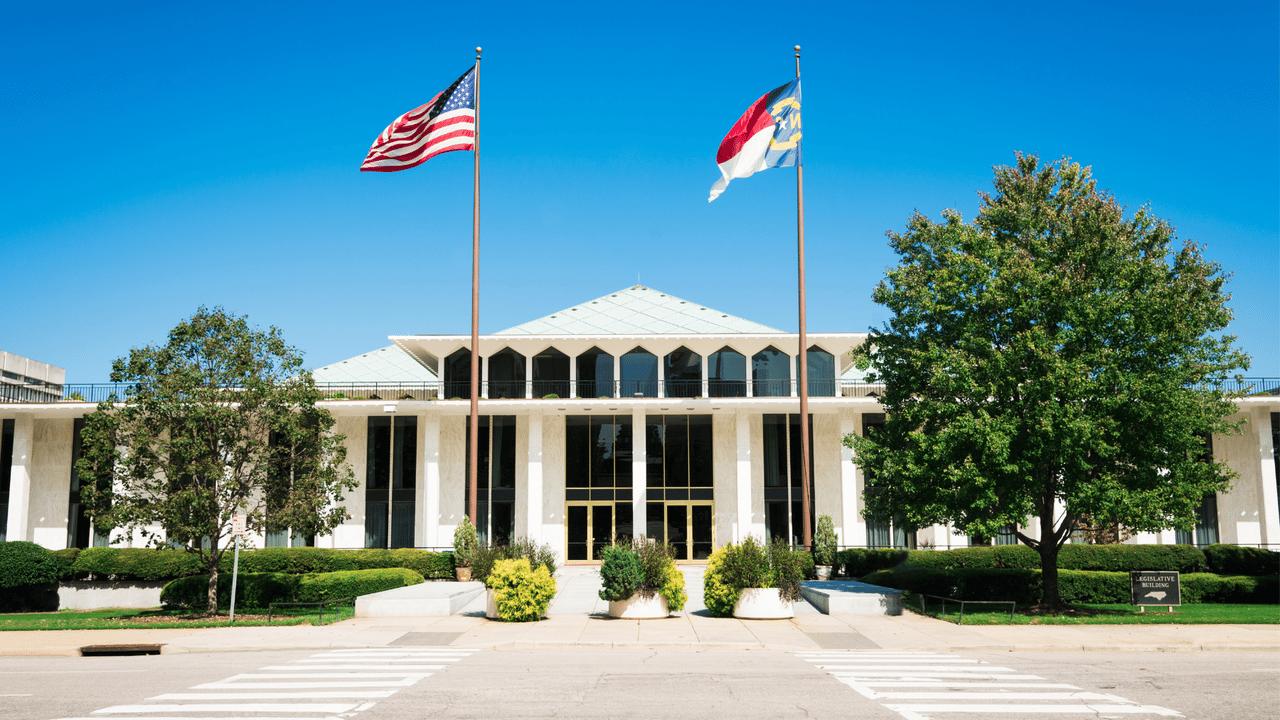
North Carolina’s Republican led legislature returns Monday, November 30, for the final stretch of its lame duck session, the last weeks before Democrats take control of the state House in January for the first time since 2011.
A lame duck session is a meeting of lawmakers held after an election but before the newly elected members take office. Under the schedule the legislature adopted, this final period could run through December 18, according to Carolina Journal.
The session that opened November 16 produced only one day of real votes. On November 17, lawmakers passed Senate Bill 177, a set of budget corrections that includes $40 million for school bus fuel costs, and House Bill 1249, a list of appointments that names Rep. Mike Schietzelt a special Superior Court judge starting December 31, Carolina Journal reported.
The political news that affects your wallet, your rights and your vote, broken down in plain language. Free in your inbox.
The biggest question left is whether House Republicans will try to override any of Democratic Gov. Josh Stein’s vetoes. A veto override is a vote that lets lawmakers turn a bill the governor rejected into law anyway. In North Carolina it takes three fifths of the members present and voting in each chamber.
Four vetoed bills are still eligible for a House override vote. Senate Bill 50 would allow people to carry a concealed handgun without a permit, and the Senate has already voted to override that veto. House Bill 958 would change how elections are run, including cutting the early voting period for primaries from 17 days to 10, letting the state auditor run audits after elections in randomly chosen counties, and allowing voters to challenge other people’s early ballots for up to three days after Election Day. House Bill 377 makes changes to the court system, and House Bill 437 deals with public camping and drug free zones. The Senate could also finish an override of House Bill 171, which would ban diversity, equity and inclusion programs in state government; the House has already overridden that veto.
The vote math is tight. Republicans hold 71 of the 120 House seats. If every member votes, an override needs 72, leaving the party one vote short, Carolina Journal reported. When three Republicans were absent on November 17, only 68 were present, and House leaders held no override votes that day.
House Speaker Destin Hall, a Caldwell County Republican, told reporters after the November 17 votes, “I expect we’ll take up at least one or more of them.”
Other unfinished business includes House Bill 328, which would regulate intoxicating hemp products and has stalled over disagreements among House Republicans, and Senate Bill 730, the Ratepayer Protection Act, which deals with who pays for the power costs of data centers. Lawmakers also have not written the rules for the property tax limit that voters added to the state constitution on November 3. Mitch Kokai of the John Locke Foundation, a conservative think tank, told Carolina Journal that lawmakers “ought to pass enabling legislation for the property tax levy limits amendment that voters just approved with 60% of the vote.”
Kokai also said, “I don’t know that even Republican legislative leaders have solid plans for the rest of this year.”
House Democratic Leader Robert Reives of Chatham County, expected to become speaker in January, said at a November 10 news conference that the lame duck session “is the first opportunity to show what kind of atmosphere we’re going to have next year.”
Any bill that clears an override vote in both chambers before the session ends becomes law without the governor’s signature. Bills that do not get an override vote by the time this legislature’s term ends die, and the new legislature would have to start over. The North Carolina General Assembly posts its daily calendars and votes for the public.