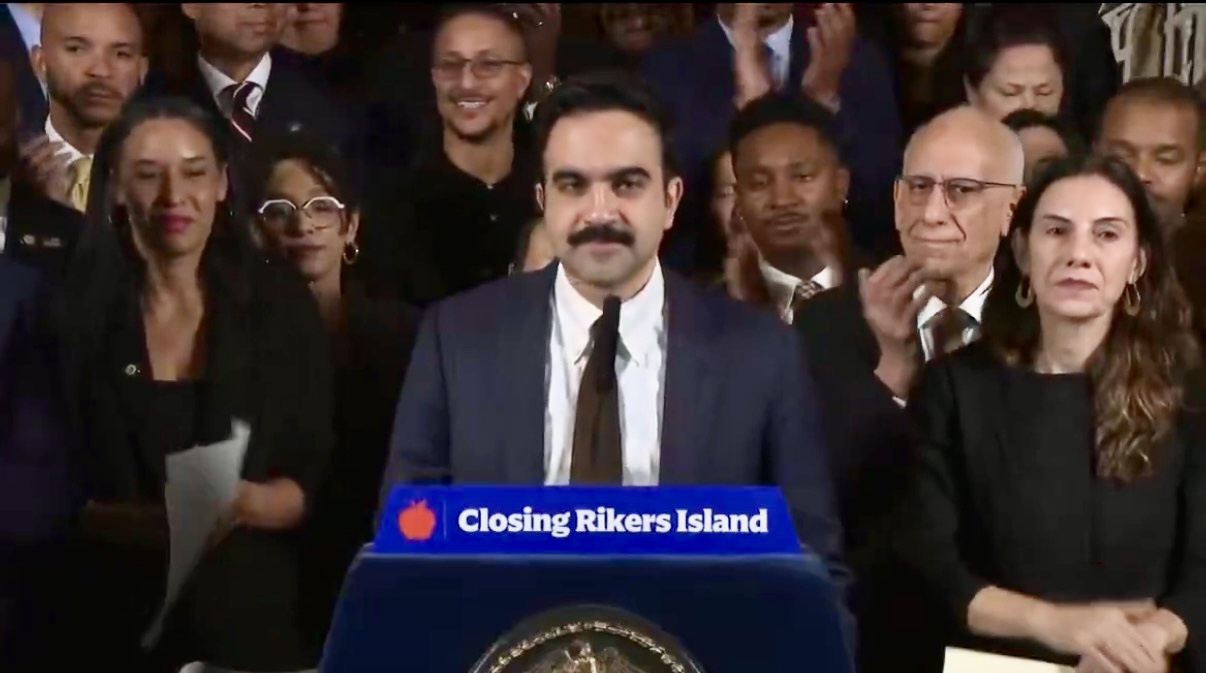
New York City Mayor Zohran Mamdani announced Friday a plan to close the notorious Rikers Island jail complex by 2032, renewing efforts to shut down a facility that has faced decades of allegations of violence, abuse, medical neglect and deaths in custody.
The proposal would replace Rikers Island with four smaller jails located closer to the city’s courts and the communities where incarcerated people live. The announcement represents a significant step toward fulfilling a longstanding promise to end the city’s reliance on one of the nation’s most troubled detention facilities.
However, the new target date would push the closure five years beyond the 2027 deadline established under New York City law.
The political news that affects your wallet, your rights and your vote, broken down in plain language. Free in your inbox.
Rikers Island has been the subject of years of federal investigations, lawsuits and public criticism over dangerous conditions for incarcerated people and correctional officers. Federal authorities have documented excessive force, inadequate supervision and failures to protect people held at the complex.
Many people detained at Rikers Island have not been convicted of a crime. They are awaiting trial or the resolution of their cases, often because they cannot secure release while their cases move through the courts.
The closure effort is intended to move the city’s jail system away from a large, isolated complex and toward smaller facilities that provide greater access to courts, attorneys, medical services and family visits.
The plan would also require New York City to reduce the number of people held in its jails so that the replacement facilities can accommodate the remaining population.
According to the Associated Press, the city’s jail population stands at approximately 6,600 to 6,700 people. Mamdani’s administration wants to reduce that number to about 4,100 by 2032 through expanded supervised release, alternatives to incarceration and efforts to resolve criminal cases more quickly.
The administration is also proposing $146 million in new funding for mental health treatment, substance use services, education, job training, housing assistance and programs that help people return to their communities after incarceration.
The replacement jails are scheduled to open in stages. Brooklyn’s facility is expected to open in 2029, followed by facilities in the Bronx and Queens in 2031. The Manhattan facility is projected to open in 2032.
Rikers Island has faced particularly intense scrutiny over deaths in custody. According to the Queens Daily Eagle, approximately 100 people have died at the jail complex over the past decade. The deaths, along with documented violence and deteriorating conditions, have fueled demands for permanent closure.
The problems have also prompted federal court intervention. A federal judge appointed an outside manager to oversee reforms after years of findings that the city had failed to adequately address dangerous conditions.
The decision to close Rikers Island dates back to 2019, when the New York City Council approved legislation requiring the jail complex to shut down by August 31, 2027. That legislation followed years of organizing by formerly incarcerated people, civil rights organizations and criminal justice advocates.
Mamdani’s new proposal acknowledges that the original deadline cannot be met because the replacement facilities are not ready and the current jail population exceeds their planned capacity.
Changing the legally mandated closure date will require City Council approval.
City Council Speaker Julie Menin has indicated that lawmakers are prepared to consider extending the deadline, although negotiations over the legislation and accountability requirements remain ongoing.
The plan also faces questions about how quickly the city can reduce its jail population without compromising public safety. Prosecutors, judges and defense attorneys would need to coordinate efforts to address court backlogs, while city agencies would have to expand programs intended to reduce unnecessary detention.
For incarcerated New Yorkers and their families, the proposal could eventually mean shorter trips to court, improved access to medical treatment and more opportunities to maintain contact with loved ones. But those changes depend on the city completing construction, securing funding and implementing reforms over the next six years.
Mamdani’s administration says it will publish quarterly progress reports to track the closure effort.
For now, Rikers Island remains open, and the city’s next major step will be securing City Council approval for a revised deadline while moving forward with construction and population reduction efforts.