Poli Alert Politics & Civics
Related Articles


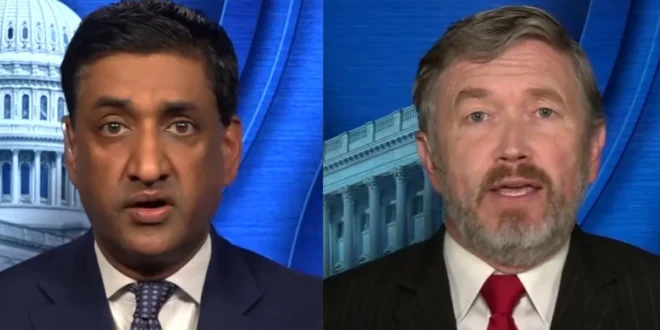
Bipartisan lawmakers said Sunday they are weighing contempt proceedings against Attorney General Pam Bondi after the Justice Department failed to release all eligible files related to convicted sex offender Jeffrey Epstein by a congressionally mandated deadline, escalating a confrontation over transparency and executive accountability.
Reps. Ro Khanna, D-Calif., and Thomas Massie, R-Ky., who led passage of the Epstein Files Transparency Act, said they are discussing next steps with members of Congress after the department released thousands of documents Friday but fell well short of what lawmakers expected.
“The quickest way, and I think most expeditious way, to get justice for these victims is to bring inherent contempt against Pam Bondi,” Massie said Sunday on CBS’ Face the Nation.
The rarely used inherent contempt power allows the House to directly penalize executive officials without relying on the Justice Department — an option lawmakers say may be necessary given the department’s role in the dispute.
Administration pushes back
Deputy Attorney General Todd Blanche rejected the criticism, saying the department is complying with the law and continuing to process records to protect victims’ identities.
“We’re going through a very methodical process with hundreds of lawyers looking at every single document,” Blanche said Sunday on NBC’s Meet the Press. “Making sure that victims’ names and any of the information from victims is protected and redacted is exactly what the Transparency Act expects.”
Blanche dismissed threats of impeachment or contempt.
“Bring it on,” he said. “We are doing everything we’re supposed to be doing to comply with this statute.”
The Justice Department has said additional Epstein records will be released on a rolling basis but has not provided a timeline.
Lawmakers split on escalation
Sen. Tim Kaine, D-Va., cautioned against moving too quickly toward impeachment, calling such steps “premature.”
“We have tools in appropriations bills and other tools to force compliance if somebody is dragging their feet,” Kaine said on Meet the Press. “I’d rather focus on those tools than get into discussions about contempt and impeachment.”
Kaine pointed to provisions in defense funding legislation that could restrict Defense Secretary Pete Hegseth’s travel budget if the Pentagon fails to release certain materials — an approach he suggested could be replicated for the Justice Department.
Khanna, however, said inherent contempt does not require Senate involvement.
“We only need the House for inherent contempt,” he said, adding that lawmakers are “building a bipartisan coalition” and could fine Bondi for every day the department remains out of compliance.
“Any Justice Department official who has obstructed justice could face prosecution in this administration or a future administration,” Khanna said.
Deadline missed, questions remain
The Epstein Files Transparency Act, passed last month with bipartisan support, required the Justice Department to release all unclassified Epstein-related records by Friday. Lawmakers said the department’s release — dominated by photographs and heavily redacted materials — omitted key records, including FBI interviews with victims and internal Justice Department memos about charging decisions.
Massie noted that the law does not expire at the end of a congressional session, unlike subpoenas.
“A future DOJ could convict the current AG and others,” Massie wrote Friday on X, arguing that noncompliance could carry criminal consequences.
Clinton photos stir debate
The initial release included multiple undated photographs of former President Bill Clinton without explanation. Clinton has acknowledged traveling on Epstein’s plane but has never been accused of wrongdoing.
Kaine said Clinton “should address” the images if questions remain.
“If there are unanswered questions, he should address them, and I suspect he will,” Kaine said.
In a statement Friday, a Clinton spokesperson accused the White House of political deflection.
“This isn’t about Bill Clinton,” the statement said. “Never has, never will be.”
No charges expected
Blanche said Sunday the Justice Department does not anticipate filing charges based on the released materials.
“We are not prepared to bring charges against anybody,” he said. “But we are learning new information all the time.”
For now, lawmakers from both parties say the partial release has only intensified scrutiny — and raised the prospect of a rare constitutional clash between Congress and the Justice Department over transparency, enforcement and the limits of executive power.