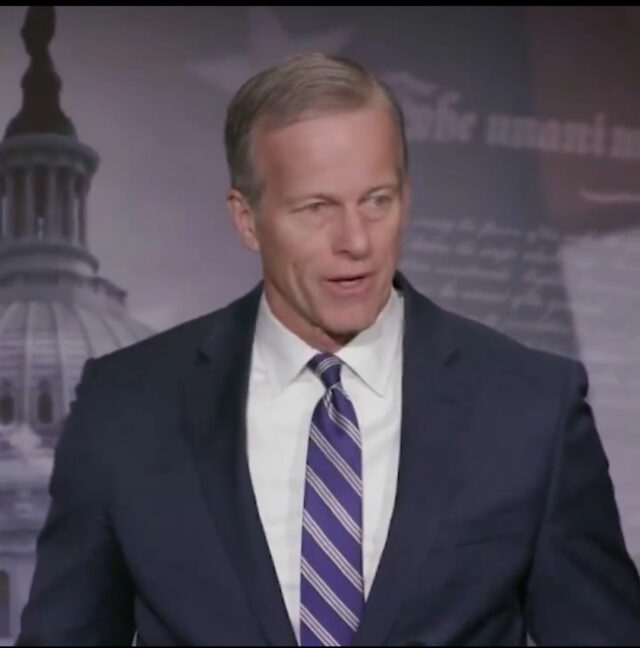
John Thune has secured another term as the leader of Senate Republicans, despite growing frustration within the party following major losses in the 2026 midterm elections that will leave Republicans in the Senate minority next year.
Thune, the Republican senator from South Dakota, was reelected Tuesday, November 10, by acclamation after a day of private meetings and disagreements over whether the party should reconsider its leadership following the election results.
The decision keeps Thune in charge of Senate Republicans as they prepare to surrender control of the chamber to Democrats in January. Republicans lost at least seven Senate seats in the midterms, according to the Associated Press, ending their majority.
The political news that affects your wallet, your rights and your vote, broken down in plain language. Free in your inbox.
Although Thune faced no challenger, his reelection came after several Republican senators pushed to delay the leadership vote, arguing that the party needed more time to examine what went wrong during the election.
Wisconsin Sen. Ron Johnson led the effort to postpone the vote, gathering support from several Republican colleagues, including Sens. John Kennedy of Louisiana, Ted Budd of North Carolina, Rick Scott of Florida and Mike Lee of Utah.
Johnson argued that Republicans could not simply continue with the same leadership after suffering such significant election losses. He told reporters that the defeat demanded change, while emphasizing that his objections were not personally directed at Thune.
Missouri Sen. Josh Hawley also questioned the decision to move forward with the leadership elections so quickly. Hawley argued that immediately reaffirming the existing leadership team could send the wrong message after voters rejected Republican candidates across the country.
However, the effort to delay the election failed. Senators voted 31-15 to proceed with the leadership vote, clearing the way for Thune’s reelection. No alternative candidate emerged.
Thune told Republicans that the party would make the most of its remaining time in the majority before Democrats take control in January. He also acknowledged the election results, describing the midterms as a difficult night for Republicans and saying the party needed to reflect on what it could do better.
The leadership decision comes as Republicans face questions about their political direction, their relationship with Trump and how they plan to operate without control of the Senate.
Thune has led Senate Republicans since January 2025, when he succeeded former Senate Minority Leader Mitch McConnell. Before becoming the party’s top Senate leader, Thune served as Republican whip, the second-highest leadership position in the conference.
During his leadership, Thune helped advance Trump’s legislative agenda, including major tax and spending legislation, border security priorities and the confirmation of administration nominees. However, disagreements emerged over several issues, including Trump’s push for the SAVE America Act, an election-related bill that Thune acknowledged did not have enough Senate support to advance.
As Republicans prepare to enter the minority, Thune will have a different role. Instead of controlling the Senate’s legislative agenda, he will lead the Republican opposition, negotiate with Democratic leadership and determine which issues the party will prioritize.
Democrats are scheduled to assume control of the Senate in January, giving them greater authority over committee leadership, legislative scheduling and the confirmation process.
For now, Senate Republicans have decided to keep their leadership structure largely intact rather than make immediate changes following the midterm losses. Thune will have another two years to lead the conference as Republicans work to rebuild their majority.