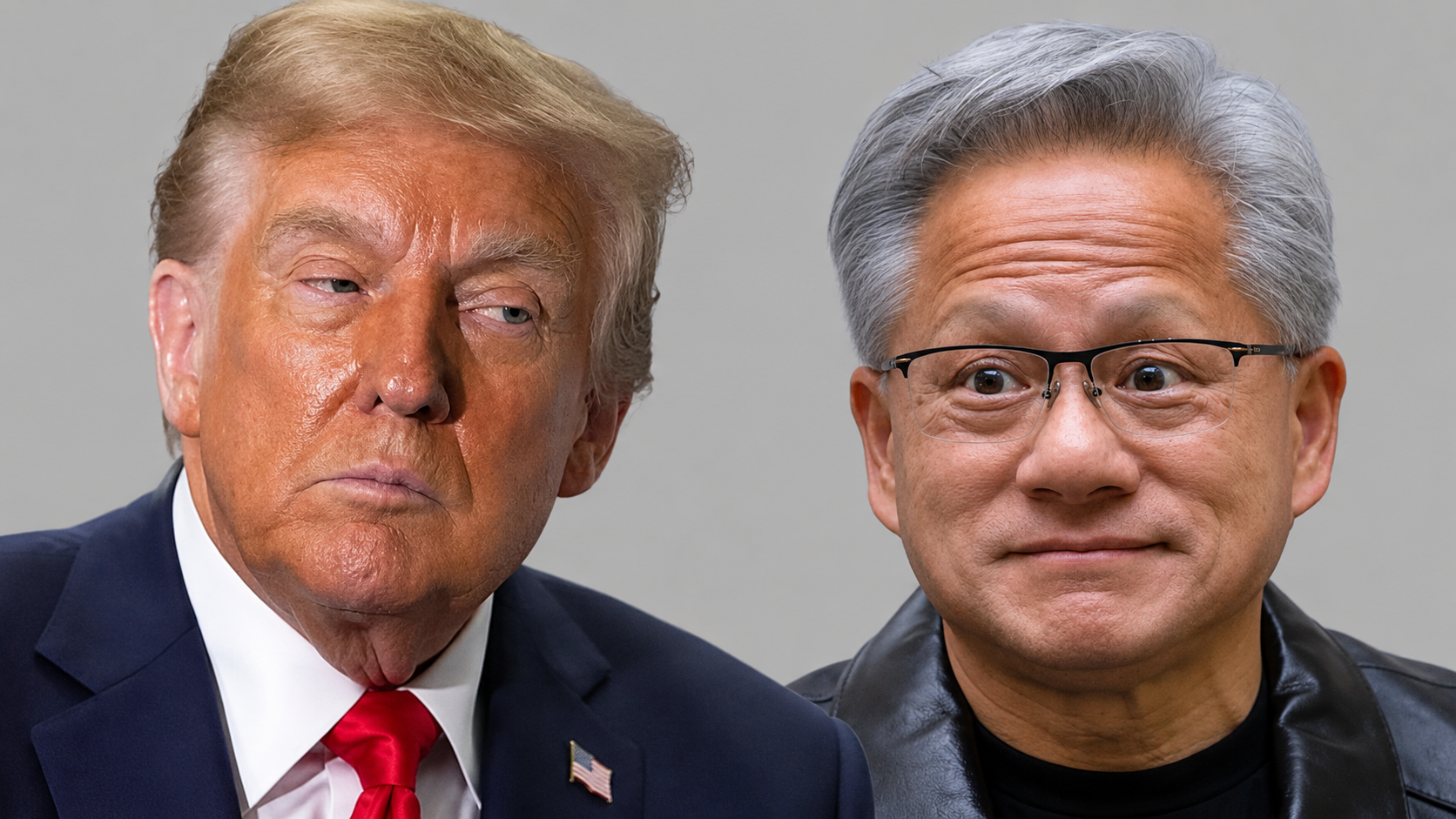
Jensen Huang resigned as CEO of Nvidia on Thursday, and his exit is putting a spotlight on one of the closest relationships in Trump’s world. Nvidia’s board named chief financial officer Colette Kress interim CEO, ending Huang’s 33 year run at the company he helped found in 1993.
The fall came fast. The New York Times reported that Huang had a close relationship with Alice Huang, no relation, a Chinese businesswoman and former managing director of Megaspeed, a data center company based in Singapore. U.S. intelligence officials believe she passed information to the Chinese government. China’s foreign ministry has called the spy accusations groundless. On November 8, Huang told Nvidia employees in an internal message that he had been unfaithful to his wife and had “fallen short” of his responsibility to them. Days later, the Times reported a second extramarital relationship, this one with an Nvidia executive who reportedly reports to him. Nvidia’s stock dropped to eight month lows.
So why was a tech CEO so tight with Trump in the first place? It comes down to chips. Nvidia makes the processors that power artificial intelligence, and the federal government decides which of those chips can be sold overseas through export controls, which are rules that block certain technology from going to countries like China. Every one of those decisions can move billions of dollars, and that made Jensen Huang one of the most active lobbyists in Washington.
The political news that affects your wallet, your rights and your vote, broken down in plain language. Free in your inbox.
The two met at a Mar-a-Lago fundraising gala in 2025. Nvidia gave $1 million to Trump’s inauguration fund and reportedly put $25 million toward his White House ballroom. Huang and his wife, Lori, traveled to Mar-a-Lago to argue that American chipmakers should be allowed to compete in China. In April 2025, after Huang attended a dinner there, the administration backed off plans to restrict sales of certain Nvidia chips to China.
From there, Huang became a fixture. Trump added him at the last minute to his delegation to Beijing in May, and he flew on Air Force One. He attended the White House state dinner for Chinese leader Xi Jinping. In September, he signed a set of voluntary AI safety standards at a White House event, and in October, Trump awarded him the National Medal of Science.
All of that happened after the warnings had reportedly already come in. The Times reported that Trump was briefed in 2025 on Jensen Huang’s relationship with Alice Huang and on intelligence that she was feeding information to Beijing, and that he chose not to act. Secretary of State Marco Rubio reportedly oversaw a classified memo warning senior officials and raised the issue with Trump on the flight to Beijing. Trump denies hearing about it then. The Times also reported that a Commerce Department official halted an investigation into Megaspeed, which is suspected of helping move Nvidia chips into China, after Nvidia stepped in.
When the story broke, Trump stood by him. He said Huang told him, “I had no idea that she was a spy,” and that he believed him. After the resignation, Trump called the scandal “so sad” but said Huang had done a “fantastic job” and suggested Apple CEO Tim Cook take his place.
Huang now faces a request from House lawmakers for a closed door briefing on November 18. Shareholders have also filed a class action lawsuit accusing Nvidia and Jensen Huang of hiding his ties to a suspected Chinese spy.
Trump knows a thing or two about women at the center of his biggest legal losses. In May 2024, a Manhattan jury convicted him on 34 felony counts of falsifying business records to hide a $130,000 hush money payment to adult film star Stormy Daniels ahead of the 2016 election. Daniels says the two had an affair, which Trump denies. He was sentenced to an unconditional discharge, meaning no jail time or fine, but the felony stays on his record. His lawyers asked a New York appeals court to throw out the conviction on November 5, and the judges have not ruled.
Then there is writer E. Jean Carroll. In 2023, a jury found Trump liable for sexually abusing her in a Manhattan department store dressing room in the mid 1990s and then defaming her, and it awarded her $5 million. The Supreme Court refused to hear his appeal, and Carroll has collected about $5.6 million with interest. A second jury ordered Trump to pay her $83.3 million for defamation. An appeals court upheld that verdict, and Trump has asked the Supreme Court to throw it out. Trump denies Carroll’s accusations.
Huang lost the company he built. Trump kept the White House, but he is still in court over both women.