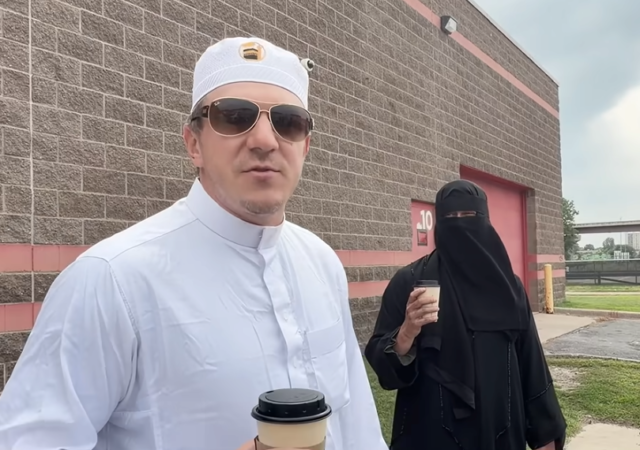
Hennepin County Attorney Mary Moriarty announced charges of unlawful voting and identity theft on Wednesday, October 28. Prosecutors allege that O’Keefe, 42, and Higby, 26, wore disguises and gave poll workers the names of registered Minnesota voters while attempting to begin the state’s voter vouching process on August 11.
Neither man signed the required oath to complete the process, and neither cast a ballot during the encounters, according to published reports. Moriarty said prosecutors believe the alleged conduct was sufficient to support criminal charges even though the men did not complete the voting process.
The case centers on a question that could have implications for election investigations: whether using another person’s identity to test a voting procedure can violate election laws even when the investigators say they never intended to vote.
The political news that affects your wallet, your rights and your vote, broken down in plain language. Free in your inbox.
O’Keefe, who founded Project Veritas before leaving the organization, said he and Higby were acting as investigative journalists. In a video and written statement released Wednesday evening, he argued that they stopped before completing the process to avoid handling a ballot.
“We didn’t apply for a ballot,” O’Keefe wrote, adding that the team was asking election workers questions to document how the system operated.
Prosecutors dispute the idea that stopping short of casting a ballot resolves the legal issue. The charges remain allegations, and neither man has been convicted.
How Minnesota’s Voter Vouching System Works
Minnesota allows a registered voter to vouch for another eligible voter who needs to register at a polling place but cannot provide conventional proof of their current residence.
Under the process, the registered voter signs an oath confirming that the person seeking to register lives in the precinct. The person being vouched for must also verify their identity and eligibility using information such as a Minnesota driver’s license or state identification number, or the last four digits of their Social Security number.
The system is designed to help eligible residents participate in elections when they lack certain documents showing their current address. It does not allow someone to assume another voter’s identity or bypass the requirements for establishing eligibility.
The procedure is relatively uncommon. According to the Minnesota Secretary of State’s office, fewer than 0.6% of votes cast in the November 2024 election involved vouching.
Older residents who have moved but have not updated their identification documents are among those who may use the process.
The prosecution argues that the alleged use of registered voters’ names crossed a legal line before the men completed the vouching process. O’Keefe maintains that the operation involved questioning election workers rather than applying for ballots.
Poll Workers Flagged the Undercover Operation
The investigation followed encounters recorded at multiple Minneapolis polling places during the August primary.
In a video posted to YouTube on August 13, O’Keefe, Higby and others wore costumes resembling clothing worn by some Muslim people and used affected accents while asking election workers about the vouching procedure. Higby’s face was covered, and O’Keefe referred to him as his wife during some interactions.
Moriarty said election workers became suspicious of the group’s behavior and reported their concerns to election officials, who contacted police.
The county attorney said the men identified themselves using the names of registered voters in the precincts without those voters’ knowledge or permission. Investigators later examined the encounters as part of the criminal case.
Moriarty said the reports from polling place workers showed that election staff recognized behavior they considered suspicious and alerted the appropriate authorities.
O’Keefe’s organization, O’Keefe Media Group, described the operation as an attempt to expose what it considers weaknesses in Minnesota’s vouching system. The group said the team wanted to observe how election workers responded to an unusual scenario and what safeguards they explained.
According to the organization’s statement, workers responded differently. Some explained the vouching rules, while others questioned the group and communicated concerns over their radios.
The recordings became central to the dispute because they documented the interactions that prosecutors say violated the law, while O’Keefe has used the same encounters to argue that the team was investigating election procedures.
O’Keefe Says the Team Was Conducting Journalism
O’Keefe has defended the operation as an effort to document how election officials administer Minnesota’s voting rules. He said the team deliberately stopped short of completing the vouching process and emphasized that the activists did not sign the required oath or cast ballots.
He also argued that the wording used during the encounters was significant, saying the team referred to “the name” rather than claiming that the names provided were their own.
Those explanations are part of O’Keefe’s defense, not a legal determination that the conduct was permissible. Prosecutors maintain that the alleged use of other voters’ identities and the attempt to begin the process were sufficient to bring charges.
Higby did not immediately respond to a request for comment, according to the account provided in the original reporting. Court records at the time did not list an attorney for him. Neither man had entered a plea when the charges were announced.
The criminal proceedings will give both defendants an opportunity to respond to the allegations in court.
Election Experts Question the Need for the Operation
David Becker, a former Justice Department official and executive director of the Center for Election Innovation and Research, said he was not aware of examples showing that Minnesota’s vouching system had led to organized or widespread voter fraud.
Becker also raised concerns about attempts to test election safeguards by impersonating voters. He described voter impersonation as a serious crime.
His comments reflect a broader debate over how election security should be evaluated. Investigations can document administrative weaknesses, but the methods used to conduct them may themselves raise legal questions. Whether a particular investigation violates the law depends on the evidence and the applicable statutes.
The case also underscores the difference between identifying a potential vulnerability and demonstrating that the vulnerability has resulted in unlawful ballots being cast or counted. The reported encounters did not result in ballots being cast by O’Keefe or Higby.
Voter Identification Rules Differ Across States
Election procedures vary across the country. According to the National Conference of State Legislatures, states differ in whether they require voters to show identification at the polls and what alternatives are available to people who lack conventional identification.
Some states require photo identification, while others accept documents such as utility bills or bank statements. In states without a standard identification requirement at the polls, voters may verify their identity through other procedures, including affidavits or personal information.
Several states also provide alternative verification methods for specific circumstances. Minnesota allows registered voters to vouch for eligible residents in their precinct. Alaska and New Hampshire have procedures that allow certain election officials to verify a voter’s identity when they know the person. North Dakota and West Virginia have other provisions for particular circumstances involving voter verification.
These systems are not identical, and the details of each state’s laws determine who may verify a voter’s identity and what steps must be completed before a ballot can be cast.
The Minnesota case does not, by itself, establish that the state’s vouching system has enabled widespread fraud. It raises a specific legal dispute over the conduct of two activists who say they were documenting the process and prosecutors allege used other voters’ identities unlawfully.
The next stage is the court process, where the prosecution must establish its allegations and the defendants will have the opportunity to challenge the evidence. Until a court reaches a decision, the charges remain allegations.