Poli Alert Politics & Civics
Related Articles

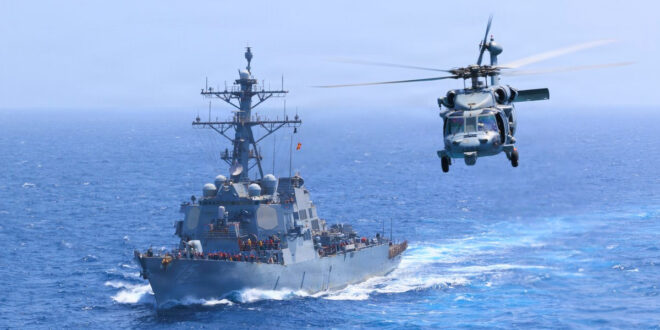
President Donald Trump’s war with Iran is approaching its sixth month, far beyond the four to five weeks he initially projected, as stalled negotiations, rising oil prices, mounting military casualties and depleted U.S. weapons stockpiles raise new questions about the cost and consequences of the conflict.
The war began Feb. 28 with U.S. and Israeli strikes on Iran. Trump initially suggested the fighting could be resolved within weeks. Instead, the conflict has continued into August, with the Strait of Hormuz effectively closed to much commercial shipping and negotiations showing little sign of producing a breakthrough.
Iran has demanded compensation for war damages and the lifting of U.S. sanctions as part of any agreement to reopen the strategically vital waterway, according to reports. The demands have added another obstacle to negotiations while oil markets have responded to the uncertainty with higher prices.
For Americans, the consequences are increasingly difficult to separate from everyday household expenses.
The war is hitting Americans’ wallets
Americans have paid more than $82 billion in additional gasoline costs since the war began, according to research from Brown University. That works out to roughly $627 per household.
A separate economic forecast estimates the typical household could lose about $1,000 because of the conflict, describing that figure as the low end of the potential financial impact.
The direct military cost is also climbing. Defense Secretary Pete Hegseth has put the cost at roughly $40 billion, while one public policy expert estimates the eventual cost could approach $1 trillion after accounting for replenishing weapons, rebuilding military infrastructure and caring for veterans.
Those long-term costs could continue well after the fighting ends.
Nearly 700 U.S. service members have been wounded
The human cost is mounting alongside the financial one.
Nearly 700 U.S. service members have been wounded during the conflict, according to an Associated Press report. Most suffered traumatic brain injuries, which can produce symptoms including headaches, memory problems and sleep disturbances that may persist long after an initial injury.
Pentagon spokesman Sean Parnell has characterized most of the injuries during a two-week period as “minor concussions,” a description that has drawn scrutiny given the potential long-term effects of traumatic brain injuries.
At least 18 U.S. troops have been killed since the war began, according to earlier casualty reporting. But the Defense Department revised how it categorizes and tracks war-related deaths in late July, publicly reducing its reported death toll to 14.
The change has added another layer of controversy over how the administration is communicating the human cost of the conflict.
U.S. weapons stockpiles are under pressure
Perhaps the most consequential long-term concern is what the war is doing to America’s military readiness.
The United States has used virtually all of its Army Tactical Missile Systems and Precision Strike Missiles during the conflict, according to reporting on the country’s weapons stockpiles. The supply of Patriot air-defense interceptors has also fallen substantially since the fighting began.
Defense officials are now pressing weapons manufacturers to dramatically accelerate production.
Deputy Defense Secretary Stephen Feinberg gave contractors 21 days to develop emergency plans for increasing weapons production, according to reports.
The depletion has also become a potential strategic vulnerability. Analysts have warned that the United States could be forced to conserve air-defense interceptors rather than use them against every incoming Iranian drone or missile.
Restoring some depleted interceptor stocks could take at least three years, according to defense analysts.
That means the consequences of the Iran war could extend beyond Iran itself.
Russia and China are watching
The condition of America’s weapons stockpiles is closely monitored by U.S. adversaries.
Experts have warned that the depletion could influence the calculations of Russia and China, particularly as Washington tries to deter both countries while simultaneously supplying weapons to allies and maintaining its own global military commitments.
A prolonged conflict therefore creates a difficult strategic trade-off: The more weapons the United States uses in Iran, the more resources it must devote to rebuilding its arsenal — potentially reducing flexibility elsewhere.
Trump has rejected reports of serious weapons shortages and called some reporting about depleted stockpiles “treasonous.” He has insisted that the United States has “massive amounts” of munitions.
But the Pentagon’s push for emergency production planning underscores the challenge facing the administration.
A war without a clear endpoint
The central question increasingly is not simply how much the Iran war has cost, but how much more it could cost if it continues.
The conflict has already moved far beyond Trump’s original timeline. Oil prices remain vulnerable to disruptions around the Strait of Hormuz. Thousands of American troops have been exposed to combat-related risks. Weapons inventories have been strained, and the Pentagon is preparing for years of industrial replenishment.
For working families, the war is showing up in higher fuel costs and broader economic uncertainty.
For the military, it is showing up in casualties and depleted weapons.
And for the United States, it is raising a larger question about strategic readiness: How long can Washington sustain a major war while simultaneously maintaining its ability to respond to threats elsewhere?
Trump entered the conflict promising a short campaign. Nearly six months later, there is still no clear end in sight.
Next Steps
Negotiations over the Strait of Hormuz remain a critical potential off-ramp. A reopening could ease pressure on global energy markets and reduce the economic burden on American consumers.
But until an agreement is reached, the United States faces continued pressure to maintain military operations, protect American forces and replenish weapons stocks that defense officials acknowledge need to be rebuilt.
For Americans already struggling with household costs, the longer the war continues, the harder it becomes to treat its consequences as something happening somewhere else.