


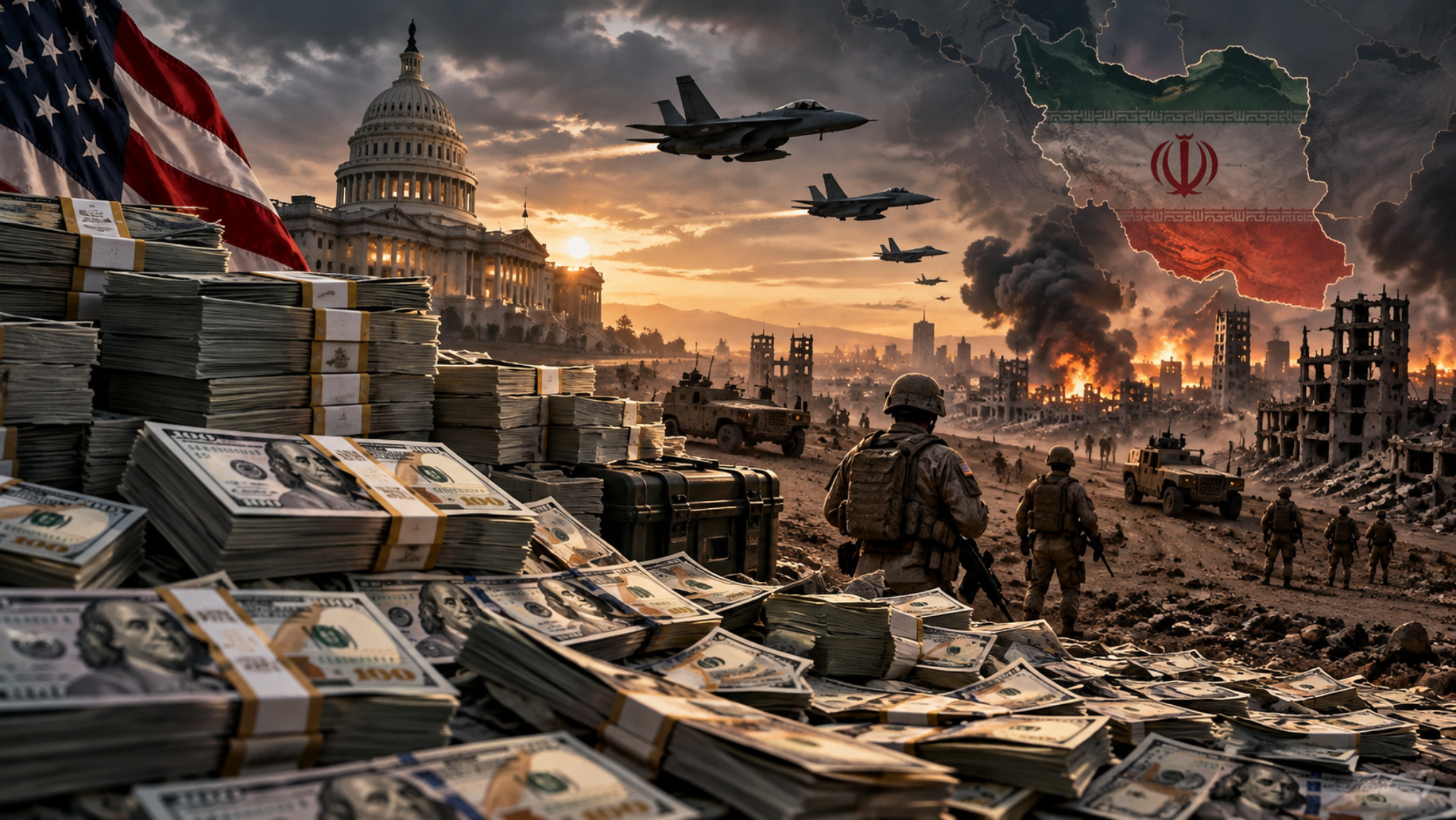
The Iran war cost has climbed to $47.1 billion, according to the newest estimate the Pentagon gave Congress, as the conflict passed the eight month mark this week with no peace deal in sight.
The United States and Israel launched strikes on Iran on February 28. At the start, Trump told Americans the military campaign would last a matter of weeks. Eight months later, a third aircraft carrier and thousands of additional troops are headed to the region, and Trump has said new strikes are an option after next week’s midterm elections. This week he told reporters the war will end “when I want it to.”
The $47.1 billion figure comes from U.S. Central Command, the part of the military that runs operations in the Middle East, and covers spending through October 16. That is $3.5 billion more than the estimate from early September. The number has grown at every update. In March, Pentagon officials told senators the first six days alone cost $11.3 billion. By late April, the official estimate reached $25 billion. Over the summer, Defense Secretary Pete Hegseth put it at $37.5 billion.
The political news that affects your wallet, your rights and your vote, broken down in plain language. Free in your inbox.
Most of the Iran war cost goes to replacing weapons. About $29 billion covers munitions the military has fired, led by interceptors, the missiles used to shoot down incoming Iranian missiles and drones. A single Patriot interceptor costs millions of dollars. Another $11.9 billion covers the cost of running operations, and about $6 billion goes to replacing equipment that was damaged or destroyed.
The official tally leaves out one major expense: damage to U.S. bases in the Middle East. Iran has hit those bases with ballistic missiles and drones, and a Pentagon inspector general report released last month found Iranian strikes damaged or destroyed hundreds of buildings and structures. NBC News reported over the summer that the Defense Department’s own internal estimate, which includes repairing those bases, ran between $80 billion and $100 billion. That is roughly double the number the public has been given.
Five Democratic senators wrote to Adm. Brad Cooper, the head of Central Command, this month demanding the Pentagon release the full cost of the war. Their letter called the administration’s efforts to hide the true price “outrageous and unacceptable.”
The bill is still running. The Congressional Budget Office, Congress’s nonpartisan budget scorekeeper, estimates the war could cost $2 billion to $3 billion every month it continues. The White House is asking lawmakers to approve a $95 billion spending package that would help fund the war along with other priorities, on top of a proposed $1.5 trillion military budget. Democrats have pushed legislation to end the war, but it has failed to pass the Republican controlled Congress.
The $47.1 billion only counts what the government spends. Families are paying a second bill. Mark Zandi, chief economist at Moody’s Analytics, estimates the Iran war cost the typical American household about $2,000 as of early October. By his breakdown, $1,100 of that comes from higher energy costs, $540 from higher interest rates on loans and credit cards, and $360 from increased military spending.
Gas is where most people feel it first. Before the war, the national average for regular gas was $2.98 a gallon, according to AAA. It peaked at $4.56 in May and has stayed above $4.30, an increase of about 66 percent. Diesel hit a record $6.53 a gallon in September. Diesel matters even for people who never buy it, because it fuels the trucks that move groceries, clothes and nearly everything else to stores. Brown University’s energy cost tracker estimates Americans have paid more than $141 billion extra for gas and diesel since the war began.
Prices jumped because the war shut down the Strait of Hormuz for months. The strait is a narrow waterway off Iran’s coast where a huge share of the world’s oil and natural gas ships out of the Persian Gulf. A temporary peace agreement over the summer eased prices for a while, but it expired in August, and attacks on oil facilities and ships picked back up. Brent crude, the global benchmark price for oil, hit $112 a barrel on October 22 after Houthi attacks on Saudi energy sites.
Inflation, the rate at which everyday prices rise, followed gas up. It sat at 2.4 percent in February before the war, peaked at 4.3 percent in May and hit 3.7 percent in September. Real wages, meaning what a paycheck can actually buy after inflation, have fallen almost every month since the war started, and Moody’s found more people dipping into savings and leaning on credit cards to cover the gap. Airfares are up, mortgage rates are hovering near 7 percent, and heating oil costs are expected to jump about 30 percent this winter. The White House points to measures showing earnings are still outpacing inflation.
Wholesale prices, what businesses pay for goods before they reach store shelves, jumped in September. Many companies have absorbed higher shipping and production costs so far, but if fuel stays this expensive, shoppers could see those costs passed on at the register.
The war has also cost lives. NBC News’ war tracker counts 18 U.S. service members killed and hundreds wounded, starting with six soldiers killed in an Iranian drone strike at a port in Kuwait just after the war began.
With the midterms days away, voters have made their priority clear. A recent AP NORC poll found most voters want Congress to focus on ending the war.

