Poli Alert Politics & Civics
Related Articles



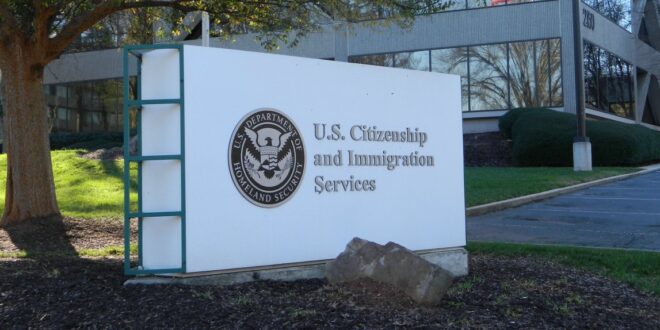
The Trump administration announced Friday a sweeping immigration policy that could force many immigrants already living legally in the United States to leave the country before applying for permanent residency, dramatically reshaping the green card process and further tightening legal immigration pathways.
Under new guidance issued by U.S. Citizenship and Immigration Services, many immigrants seeking green cards will no longer be allowed to complete the process while remaining in the U.S. Instead, they will generally be required to return to their home countries and apply for immigrant visas through U.S. consulates abroad.
Immigration experts and former officials warned the policy could affect hundreds of thousands of people annually, including students, tourists, temporary workers and immigrants who overstayed visas but hoped to gain legal residency through marriages to U.S. citizens or employer sponsorships.
For some immigrants, leaving the country could effectively prevent them from returning.
President Donald Trump’s administration has already imposed entry restrictions on dozens of countries through expanded travel bans and visa suspensions. Additionally, immigrants who have overstayed visas for extended periods can face automatic reentry bans once they depart the United States.
Michael Valverde, a former senior USCIS official who served under both Republican and Democratic administrations, described the move as highly unusual.
“This is a largely unprecedented move that will limit lawful immigration to the U.S. greatly,” Valverde said. “People who followed the rules faithfully now face tremendous uncertainty.”
The policy centers on the “adjustment of status” process, a long-standing immigration pathway that has allowed eligible immigrants already in the U.S. to apply for green cards without leaving the country.
In the memo released Friday, USCIS instructed immigration officers to treat adjustment of status as an “extraordinary” form of relief and an act of “administrative grace,” arguing Congress intended most applicants to complete green card processing overseas.
The guidance also directs officers to consider an applicant’s effort to seek permanent residency from inside the U.S. as a potential “adverse factor” when reviewing cases.
Administration officials indicated some exemptions would remain. Immigrants holding “dual intent” visas, such as H-1B visas for high-skilled workers, as well as refugees and asylum recipients, are still expected to qualify for domestic green card processing.
“From now on, an alien who is in the U.S. temporarily and wants a Green Card must return to their home country to apply, except in extraordinary circumstances,” USCIS spokesman Zach Kahler said in a statement.
“This policy allows our immigration system to function as the law intended instead of incentivizing loopholes,” he added.
Kahler later clarified that applicants deemed beneficial to the economy or national interest may still be permitted to complete the process inside the United States.
Doug Rand, a former senior USCIS official during the Biden administration, said the policy could particularly impact immigrants married to American citizens who originally entered the country legally on temporary visas.
“The primary impact of this appears to be to make it difficult or impossible for very large numbers of U.S. citizens to get on with their lives with the people they’ve chosen to marry who came here legally,” Rand said.
He warned that some applicants forced to leave the U.S. could become trapped abroad because of ongoing travel bans and immigration restrictions.
“Imagine you fall in love with someone from Iran or Russia, or again, 114 different countries, where if you go back and try to apply for permanent residency from that country, the Trump administration will not let you in,” Rand said.