Poli Alert Politics & Civics
Related Articles



The House voted Wednesday to overturn President Donald Trump’s tariffs on Canada, with six Republicans joining nearly all Democrats in a bipartisan rebuke of a key pillar of the president’s trade agenda.
The resolution, introduced by Rep. Gregory Meeks, D-N.Y., passed 219-211. But the measure is largely symbolic for now: It did not receive a veto-proof majority, and Trump could block it if it clears the Senate.
The vote marked a rare break within GOP ranks on trade, as Republican Reps. Dan Newhouse of Washington, Brian Fitzpatrick of Pennsylvania, Jeff Hurd of Colorado, Kevin Kiley of California, Thomas Massie of Kentucky and Don Bacon of Nebraska sided with Democrats. Rep. Jared Golden of Maine was the lone Democrat to oppose the measure.
With Republicans holding a razor-thin majority, Speaker Mike Johnson, R-La., could afford only one defection.
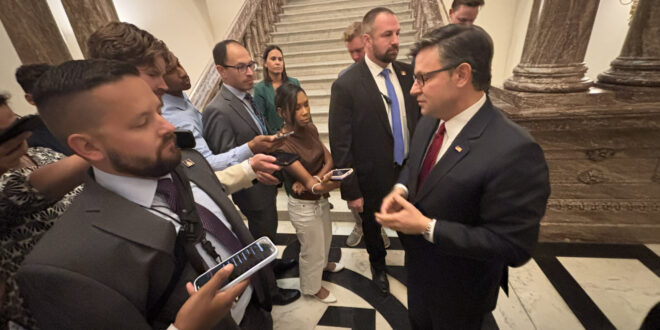
“This is life with a small majority,” Johnson told reporters Tuesday night.
Trump issues warning
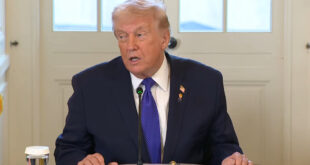
Moments before the vote concluded, Trump urged Republicans not to oppose his tariff policies, warning on Truth Social that any lawmaker who voted against them “will seriously suffer the consequences come Election time, and that includes Primaries!”
“TARIFFS have given us Economic and National Security, and no Republican should be responsible for destroying this privilege,” Trump wrote.
Johnson struck a more measured tone earlier in the day, saying after a White House event that Trump was “not upset.”
“He understands what’s going on,” Johnson said. “It’s not going to affect or change his policy. He can veto these things if they come to him.”
Emergency declaration at issue
The resolution would terminate the national emergency Trump declared last year to justify imposing tariffs on Canada. The president has accused Canada of failing to curb illegal migration and fentanyl trafficking across the northern border.
Since then, Trump has threatened additional tariffs as relations between the longtime allies have grown increasingly strained.
Democrats argued the tariffs have driven up costs for American consumers and businesses and questioned why Congress has ceded authority over trade to the executive branch.
“Will you vote to lower the cost of living for American families, or will you keep prices high out of loyalty to one person, Donald J. Trump?” Meeks asked during floor debate.
Republicans countered that the tariffs are necessary to address the fentanyl crisis and to pressure foreign governments to act in U.S. interests.
“This is Democrats trying to ignore that there is a fentanyl crisis,” said Rep. Brian Mast, R-Fla. “Tariffs get more attention than strongly worded letters.”
Procedural fight and broader trade battle
The vote came a day after Kiley, Massie and Bacon joined Democrats to block a procedural rule that would have prevented lawmakers from challenging Trump’s tariff authority through July. For months, House GOP leaders had barred such votes, but that restriction expired in January.
Democrats are expected to attempt additional votes targeting tariffs on other countries as Trump continues to expand or threaten new levies to address what he describes as unfair trade practices.
Public opinion surveys have shown broad disapproval of the sweeping tariffs, an issue that could carry political ramifications in the November midterm elections.
Supreme Court decision pending
The fate of Trump’s tariff authority may ultimately rest with the Supreme Court. In arguments in November, justices appeared skeptical of the president’s unilateral authority to impose tariffs under emergency powers. A ruling is expected in the coming days.
Johnson has urged Congress to stay out of the dispute while the case is pending.
“The tariffs have been a tool that the president has used very effectively to level the playing field,” Johnson said Wednesday on Fox Business. “I think it’s wrong for Congress to step in the middle of that.”
Even if the Senate takes up the resolution, it would face steep odds in the GOP-controlled chamber — and an almost certain veto from the president.