Poli Alert Politics & Civics
Related Articles
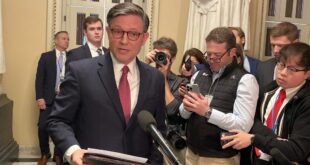


House Republicans on Friday rejected a Senate-passed bill to fund most of the Department of Homeland Security through September, instead advancing a short-term extension that risks prolonging the shutdown into record territory.
House Speaker Mike Johnson proposed extending all DHS funding through May 22, a stopgap plan that faces uncertain support in both chambers and is unlikely to clear the Senate before the shutdown becomes the longest in U.S. history this weekend.
Johnson said House Republicans could not support the Senate measure because it excludes funding for key immigration enforcement agencies, including Immigration and Customs Enforcement and parts of Customs and Border Protection.
“The Republicans are not going to be any part of any effort to reopen our borders or to stop immigration enforcement,” Johnson said.
GOP divisions widen
The House move underscores a growing divide with Senate Republicans, particularly John Thune, who pushed the funding bill through the Senate after bipartisan talks collapsed.
Thune’s strategy aimed to reopen much of DHS immediately while addressing funding for immigration enforcement agencies later through a party-line budget reconciliation bill.
Johnson downplayed tensions but blamed Senate Democrats, led by Chuck Schumer, for the impasse.
“I have to protect the House,” Johnson said, adding that Democrats had forced the standoff.
Shutdown pressures mount
The standoff has extended the partial shutdown of DHS, now nearing record length, with ripple effects across the country.
Donald Trump has largely stayed out of the congressional dispute, focusing criticism on Democrats. On Thursday, he ordered DHS to resume pay for Transportation Security Administration officers amid mounting airport delays caused by staffing shortages.
Administration officials said Friday that paychecks could be issued as soon as Monday.
Uncertain path forward
Johnson told House Republicans in a private call that passing the short-term extension is critical to preserving broader GOP legislative plans, including a forthcoming reconciliation package.
He suggested the Senate could quickly approve the House measure during a pro forma session, even as most senators remain out of Washington until mid-April.
But skepticism is growing within Republican ranks. Some moderates, including Carlos Gimenez, have questioned whether the plan can pass either chamber, with some urging leadership to accept the Senate bill to end the shutdown.
Senate resistance builds
The House proposal has drawn sharp criticism in the Senate, where lawmakers in both parties warn it would only extend the disruption.
Schumer called the plan “dead on arrival,” while a Senate GOP aide said the fastest path to reopening DHS is for the House to pass the Senate bill.
Democrats are also expected to block the measure during pro forma sessions, where a single senator can prevent passage by unanimous consent.
With Democrats previously opposing shorter stopgap measures, the House plan is unlikely to secure the 60 votes needed to advance once the Senate returns.
With both chambers at odds and no immediate resolution in sight, the DHS shutdown appears set to continue, deepening operational disruptions and intensifying political pressure on lawmakers to reach a deal.