Poli Alert Politics & Civics
Related Articles



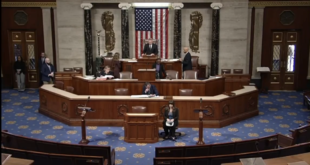
Over the objections of Speaker Mike Johnson, a bipartisan coalition in the House voted Wednesday to advance legislation that would revive enhanced pandemic-era health insurance subsidies that lowered costs for roughly 22 million Americans but expired last month.
The 221–205 vote cleared a critical procedural hurdle ahead of final passage expected Thursday. The move succeeded only after a small bloc of centrist Republicans joined Democrats in signing a rare discharge petition, wresting control of the House floor from GOP leadership.
The maneuver reflected mounting pressure from constituents facing sharp premium increases beginning this month and underscored the limits of Johnson’s control over a narrowly divided House majority.
In the end, nine Republicans joined Democrats to advance the bill.
Republicans Bypass Leadership
Four GOP lawmakers — Reps. Mike Lawler of New York, Brian Fitzpatrick, Robert Bresnahan, and Ryan Mackenzie of Pennsylvania — provided the decisive signatures needed to force the vote, hitting the 218 threshold required for a discharge petition.
After last year’s government shutdown failed to resolve the issue, the lawmakers said allowing the subsidies to lapse was no longer politically or economically tenable.
Lawler framed the House action as leverage rather than a final product.
“No matter the issue, if the House puts forward relatively strong, bipartisan support, it makes it easier for the senators to get there,” he said.
If ultimately passed, the bill would provide a three-year extension of expanded tax credits for people who buy coverage through the Affordable Care Act, commonly known as Obamacare.
Senate Uncertain, Negotiations Ongoing
The Senate is not obligated to consider the House bill, and Republican leaders have signaled resistance to a clean extension.
Instead, a bipartisan group of senators is working on an alternative package that could shorten the subsidy extension to two years while imposing additional restrictions.
Senate Majority Leader John Thune, R-S.D., said any Senate-approved plan would need income caps to target assistance to lower- and middle-income households and require beneficiaries to contribute at least a nominal premium.
“That way insurance companies can’t game the system and auto-enroll people,” Thune said. He also said Republicans would push to expand health savings accounts, allowing tax-free withdrawals for medical expenses.
Democrats Elevate Health Care as Election Issue
Democrats have seized on the lapse in subsidies as a central political issue ahead of the fall elections, arguing Republicans are responsible for rising insurance costs.
House Democratic Leader Hakeem Jeffries directly challenged GOP lawmakers in competitive districts to support the measure if they wanted to shield constituents from steep premium hikes.
“Address the health care crisis in this country and make sure that tens of millions of people have the ability to go see a doctor when they need one,” Jeffries said ahead of the vote.
All four Republicans who signed the discharge petition represent swing districts likely to determine control of the House next year.
A Rare but Growing Tactic
Discharge petitions are an extraordinary tool, often viewed as a last resort because they publicly expose fractures within party leadership. Historically, they are rarely successful.
But this Congress has seen an uptick in their use.
Earlier this year, a discharge petition forced a House vote on the Epstein Files Transparency Act, backed by all Democrats and four Republicans, after Reps. Ro Khanna, D-Calif., and Thomas Massie, R-Ky., bypassed leadership to compel action.
For Johnson, the health care vote represents another episode in which a divided Republican conference has undercut leadership authority — and a reminder of how narrow majorities can collapse under election-year pressure.