Poli Alert Politics & Civics
Related Articles


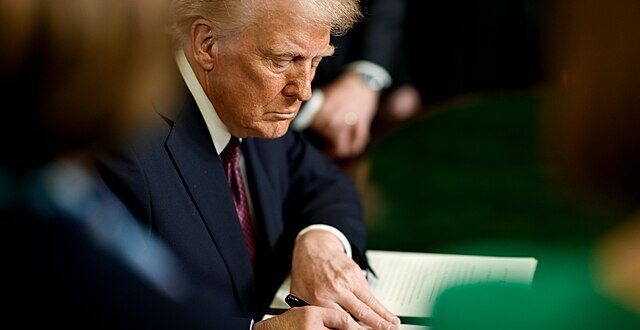
A federal judge on Thursday declined to block President Donald Trump’s executive order tightening rules on mail-in voting, dealing a setback to Democrats who argued the measure could disenfranchise millions of voters ahead of the 2026 midterm elections.
U.S. District Judge Carl Nichols, a Trump appointee, rejected a request from Democratic plaintiffs — including Senate Minority Leader Chuck Schumer — for a preliminary injunction against the order, ruling that the challenge was premature because federal agencies had not yet implemented the policy changes outlined in the directive.
“Given that the Executive Order does not command Plaintiffs to do anything, and that no agency has yet acted pursuant to the Order in a way that could harm Plaintiffs, they have not suffered any harm at present,” Nichols wrote in his opinion.
Trump signed the executive order on March 31 as part of a broader push by his administration to tighten election procedures and increase federal oversight of voter eligibility verification. The order directs federal agencies to compile lists of confirmed U.S. citizens eligible to vote in each state and requires the U.S. Postal Service to deliver ballots only to voters appearing on approved state mail-in ballot rolls.
The order also instructs states to preserve election-related records for five years.
Democrats and voting rights advocates argued the directive infringes on states’ constitutional authority to administer elections and could improperly remove eligible voters from registration rolls due to outdated or inaccurate federal databases.
Lawyers for the plaintiffs warned that using Department of Homeland Security and Social Security Administration data to create “state citizenship lists” could result in lawful voters being flagged or excluded.
The Justice Department argued the lawsuit should be dismissed because no agencies had yet taken concrete action to implement the executive order, making any alleged harms speculative.
Nichols agreed, though he left open the possibility that Democrats could seek another injunction if federal agencies move forward with policies that directly affect voters or election administration.
The ruling comes as Republicans and Democrats prepare for a closely contested battle for control of Congress in November. Trump has repeatedly criticized mail-in voting since his 2020 election loss, continuing to falsely claim widespread voter fraud influenced the outcome of that election.
A separate coalition of Democratic-led states has filed a similar lawsuit in federal court in Boston. U.S. District Judge Indira Talwani is scheduled to hear arguments in that case on June 2.
The executive order is one of several election-related measures Trump has pursued during his second term, as his administration continues efforts to reshape federal oversight of voting procedures nationwide.