Poli Alert Politics & Civics
Related Articles



Hours after conservative activist Charlie Kirk was assassinated, FBI Director Kash Patel wrongly assured the public that the shooter was in custody. The post, made on his official social media account, was quickly contradicted by Utah officials, who confirmed the gunman was still at large. Two men initially detained were released, and the real suspect, Tyler Robinson, surrendered only after his father recognized him in FBI-released photos.
The false claim spotlighted what critics see as Patel’s shaky leadership at a time when the FBI is under intense political and institutional pressure. Former bureau officials warned that such public missteps erode trust. “This looks like the Keystone Cops and it continues to get worse,” said Chris O’Leary, a retired FBI counterterrorism executive.
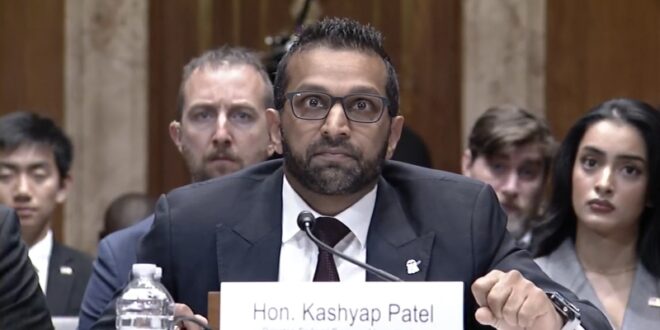
Patel faces two days of congressional oversight hearings this week, where lawmakers are expected to press him not only on the Kirk investigation but also on broader questions about his stewardship of the bureau.
Partisan Divide on Patel’s Leadership
Democrats plan to grill Patel over his purge of senior FBI executives, his decision to pursue Trump-era grievances like the Russia investigation, and his prioritization of street crime and immigration cases over traditional FBI missions such as counterintelligence and public corruption.
Republicans are more likely to defend Patel or shift the focus to the FBI’s critics. Still, some conservatives are openly questioning his competence. “Time for Republicans to assess whether Kash Patel is the right man to run the FBI,” strategist Christopher Rufo posted on X.
Patel, however, has found support from Trump, who praised his handling of the Kirk case, saying Patel and the FBI had done a “great job.”
Lawsuits and Internal Turmoil
Adding to Patel’s troubles, three former senior executives filed a lawsuit the same day as Kirk’s killing, alleging their firings were politically motivated. One plaintiff, former acting FBI director Brian Driscoll, claimed Patel told him his job depended on dismissing officials the White House wanted removed.
Other ousted leaders include Spencer Evans, a top agent in Las Vegas, and Steve Jensen, who helped oversee Jan. 6 riot investigations. Their lawsuit follows years of upheaval that saw multiple high-level departures, fueling concerns that institutional knowledge is being stripped away.
The turmoil extends to the field offices, where some resignations were forced by reassignments and polygraph demands aimed at identifying leakers.
Shifting FBI Priorities
Patel has reshaped the FBI’s agenda, aligning it with Trump’s focus on immigration enforcement and street crime. Under his leadership, the FBI has taken an unusually aggressive role in city policing, launching “Operation Summer Heat” to highlight thousands of arrests, many tied to immigration offenses.
But critics warn this shift comes at the expense of the bureau’s traditional strengths. “The investigative programs that have been hurt the most this year are the ones that really only the FBI does, or the FBI does better than anybody else,” said Matt DeSarno, a former Dallas field office chief.
At the same time, Patel has revived probes into the Trump-Russia investigation, including possible misconduct by former FBI Director James Comey and former CIA Director John Brennan. Critics see this as political score-settling rather than genuine accountability.
High-Stakes Test Ahead
With oversight hearings set for Tuesday and Wednesday, Patel faces perhaps the biggest test of his tenure. His ability to defend the bureau’s credibility, reassure lawmakers, and address the mounting controversies will determine whether he can stabilize the FBI amid political violence, lawsuits, and internal upheaval.
“It’s extremely important that he perform very well at these oversight hearings,” said Gregory Brower, a former FBI congressional affairs chief. “Skepticism is already high, and he can’t afford more mistakes.”