Poli Alert Politics & Civics

Related Articles


Washington, D.C., City Council member Janeese Lewis George has won the Democratic primary for mayor, NBC News projected Thursday, positioning the democratic socialist as the overwhelming favorite to lead the nation’s capital and potentially spar with President Donald Trump over the city’s governance.
With roughly three-fourths of the expected vote counted, Lewis George led former City Council member Kenyan McDuffie by a margin of 53% to 37%. McDuffie conceded the race Thursday morning, congratulating Lewis George on her victory and wishing her success ahead of the general election.
The result marks another significant victory for the progressive wing of the Democratic Party and adds to a growing list of democratic socialist candidates gaining influence in major U.S. cities.
Progressive Victory in the Nation’s Capital
Lewis George, who has represented a northern Washington district on the City Council since 2020, defeated McDuffie and five other Democratic candidates, all of whom received single-digit levels of support.
The primary outcome follows similar progressive advances in municipal politics nationwide. In recent years, democratic socialist candidates have gained prominence in cities including New York and Los Angeles, reflecting a broader shift among some urban Democratic voters toward progressive policy platforms focused on housing affordability, economic inequality and social services.
Trump Emerges as a Central Figure
Although local concerns dominated much of the campaign, Trump’s influence loomed large over the race.
The election unfolded against the backdrop of ongoing tensions between Washington city leaders and the Trump administration. The president has repeatedly criticized the District’s leadership and has floated the possibility of greater federal control over the city.
Earlier this month, Trump suggested he would consider federal intervention if Lewis George became mayor.
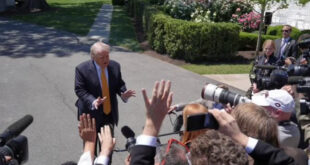
“We won’t put up with it,” Trump told reporters at the White House, referring to the prospect of her victory.
Lewis George responded by accusing the president of undermining democratic governance.
“Threatening Home Rule because you do not like how residents vote is an attack on democracy itself,” she said in a statement during the campaign. “The people of D.C. elect the mayor of D.C. And they want someone who will stand up to Donald Trump.”
Bowser Era Comes to an End
The election also signals the end of the political era defined by outgoing Mayor Muriel Bowser, who is retiring after three terms in office.
Bowser’s tenure was shaped in part by her interactions with Trump during both of his administrations. During Trump’s second term, she adopted a more measured approach toward the White House, including when the administration deployed National Guard troops to Washington in an effort to address crime concerns.
While Bowser publicly opposed the deployment, she ultimately accepted the federal action, similar to responses from officials in other affected cities.
Lewis George campaigned on a more confrontational stance toward the administration, arguing that local leaders should more aggressively defend Washington’s autonomy.
Local Issues Remain Top Priority
Despite the national attention surrounding Trump’s comments, local concerns remained at the center of the campaign.
Candidates focused heavily on crime reduction, public safety, housing affordability and economic opportunity. Lewis George emphasized expanding affordable housing and addressing rising living costs, issues that have become increasingly important for residents facing one of the nation’s most expensive housing markets.
The election was also the first mayoral contest since Washington voters approved ranked-choice voting. However, the new system did not affect the outcome because Lewis George secured a majority of first-choice votes, eliminating the need for additional rounds of vote redistribution.
Looking Ahead
Lewis George now advances to the general election as the clear frontrunner in the heavily Democratic city. If elected, she would become one of the highest-profile democratic socialist leaders in the United States and could quickly find herself at the center of disputes over Washington’s autonomy, federal oversight and relations with the Trump administration.
Her victory also adds momentum to progressive candidates nationwide as Democrats continue debating the party’s direction heading into the 2026 and 2028 election cycles.