


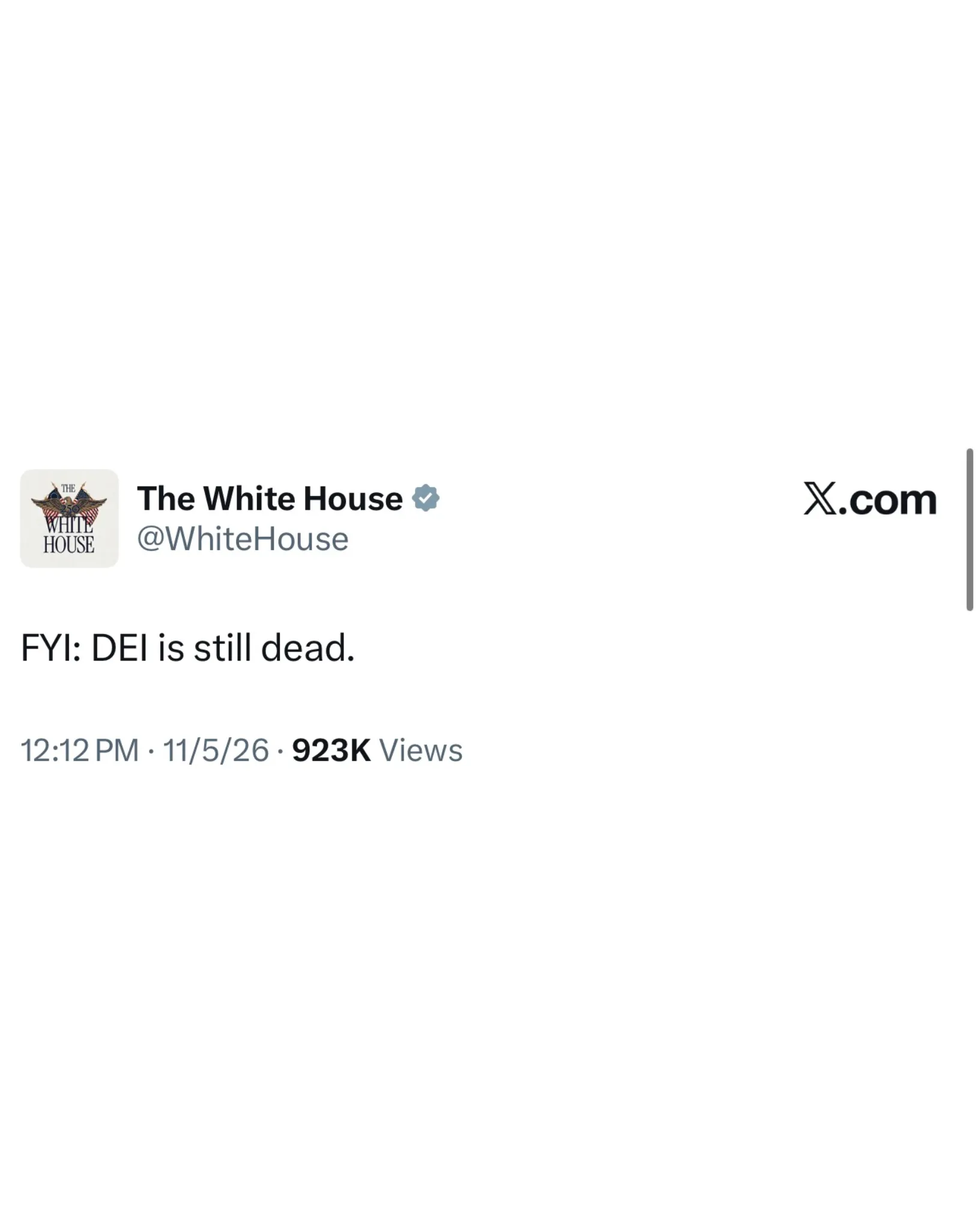
The official White House account on X posted “FYI: DEI is still dead” on Thursday, two days after voters sent one of the most historic groups of winners in American history into governors’ mansions and the U.S. Senate.
DEI stands for diversity, equity and inclusion. It is the umbrella term for programs meant to widen who gets hired, promoted, admitted to schools or awarded government contracts, especially people from groups that were shut out in the past. Trump has made ending those programs a signature cause of his second term.
Tuesday’s midterms told a different story. In Georgia, Democrat Keisha Lance Bottoms defeated Republican billionaire Rick Jackson to become the first Black woman ever elected governor of any state. In Michigan, Abdul El-Sayed beat former Republican Rep. Mike Rogers to become the first Muslim U.S. senator. In New Hampshire, Rep. Chris Pappas defeated former Sen. John E. Sununu to become the first openly gay man elected to the Senate.
The political news that affects your wallet, your rights and your vote, broken down in plain language. Free in your inbox.
The list kept going. Deb Haaland, a citizen of the Laguna Pueblo, won in New Mexico to become the first Native American woman elected governor. In Minnesota, Lt. Gov. Peggy Flanagan, a citizen of the White Earth Band of Ojibwe, became the first Native American woman elected to the Senate. Gina Hinojosa ousted Gov. Greg Abbott to become the first Latina governor of Texas. California elected Xavier Becerra as its first Latino governor, and Amy Acton became Ohio’s first woman governor. New York reelected Kathy Hochul on the state’s first all woman ticket, making Adrienne Adams the first Black woman elected lieutenant governor there.
Five Black governors were elected Tuesday, the first time multiple Black governors will serve at the same time. Florida, Wisconsin and Nevada each elected their first Black governor, and Florida’s is a Republican, Byron Donalds.
It was a rough night for the GOP overall. Democrats took control of both the House and the Senate in what Newsweek called a blue tsunami.
Bottoms used her victory speech to talk about where she comes from. The day before the election, she visited the grave of her great great grandmother, Betsy Peek, who was born enslaved in Crawfordville, Georgia, in 1845. Crawfordville is also the hometown of Alexander Stephens, the former Georgia governor who served as vice president of the Confederacy.
“Yes, Crawfordville produced the Confederacy’s vice president, but tonight it also produced your next governor,” Bottoms said. “Tonight should remind us that no matter what community we come from, Georgia is not defined by one moment in time or by one person. It’s been defined by all of us.”
Two days later, the White House posted its message. About two hours before the DEI post, the same account shared a video showing Trump as a video game character in a red MAGA hat that read “STILL YOUR PRESIDENT.”
The post echoes a line the administration has used for nearly two years. On his first day back in office in January 2025, Trump signed an executive order titled “Ending Radical and Wasteful Government DEI Programs and Preferencing.” A month later, the White House shared a post declaring “DEI is dead under the Trump Administration.” On October 28, the White House published a page called “Merit, Restored,” claiming 17 executive actions and $7.3 billion in DEI spending cut or canceled. The administration says those moves bring back merit in hiring and admissions. Many of Trump’s anti DEI orders have also been challenged in court, and some remain tied up in litigation.
So “DEI is still dead” landed the same week voters picked the winners above. Keisha Lance Bottoms did not get hired through a program. Abdul El-Sayed did not fill a quota. Voters in Georgia, Michigan, New Hampshire, New Mexico, Minnesota and Texas went to the polls and chose them.




