Poli Alert Politics & Civics
Related Articles
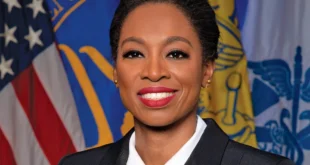

Washington, D.C., Police Chief Pamela Smith is once again the city’s top law enforcement official after the Trump administration abruptly rescinded a sweeping order that had stripped her of authority less than 24 hours earlier.
The reversal came Friday as part of an agreement between the Department of Justice and D.C. Attorney General Brian Schwalb’s office, ending a brief but intense legal battle over control of the Metropolitan Police Department.
Background
The dispute began Monday when President Donald Trump issued an emergency order citing “out-of-control” violent crime and deployed National Guard troops to the capital. U.S. Attorney General Pam Bondi followed with a directive naming Drug Enforcement Administration Chief Terry Cole as acting police chief, effectively sidelining Smith.
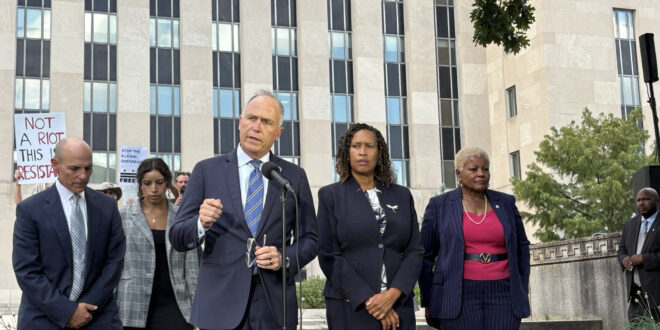
City officials, led by Schwalb, filed suit in federal court, calling the move an “unprecedented hostile takeover” that violated the limits of the Home Rule Act, which allows the president to request D.C. police services only for federal purposes and only under emergency circumstances.
Legal Arguments
The lawsuit argued that Bondi’s order exceeded federal authority and would “upend the entire command structure of MPD,” creating chaos for the force’s more than 3,100 officers and endangering public safety.
Smith, in a sworn declaration, said she had “never seen a single government action that would cause a greater threat to law and order.” Schwalb’s office maintained that Congress had not given the president or attorney general power to replace the city’s police chief.
Government Response
Under the settlement announced Friday, Cole will serve as Bondi’s “designee” for coordination purposes, not as emergency police chief. Smith will remain in charge of day-to-day operations, reporting to Mayor Muriel Bowser.
However, Bondi issued a new order directing Bowser to ensure MPD cooperates with federal immigration enforcement operations and complies with all federal database requests — a move that effectively ends D.C.’s “sanctuary city” policy.
“This is the gravest threat to Home Rule that the District has ever faced, and we are fighting to stop it,” Schwalb said after the hearing, calling the agreement a victory for local autonomy.
Reactions
Bowser, who had initially complied with Trump’s directive, later said the Bondi order went “too far.” In a post on X, she wrote: “There is no statute that conveys the District’s personnel authority to a federal official.”
The White House defended the president’s initial action. Press secretary Karoline Leavitt called it “the first step in stopping the violent crime that has been plaguing the streets of Washington, DC.”
Broader Context
Trump has the authority under the Home Rule Act to federalize D.C.’s police for up to 30 days without congressional approval. Extending that control would require bipartisan support in Congress, which the White House says it will seek.
Bowser countered Trump’s claims of surging crime, noting that violent crime in 2024 fell to its lowest level in over three decades — down 35% from the prior year, according to federal data.
Next Steps
While Smith remains in charge for now, the city must comply with federal immigration enforcement requests under the new order. Trump has signaled he will ask Congress for a long-term extension of federal authority over the department, setting up another likely political clash in the months ahead.