Poli Alert Politics & Civics
Related Articles


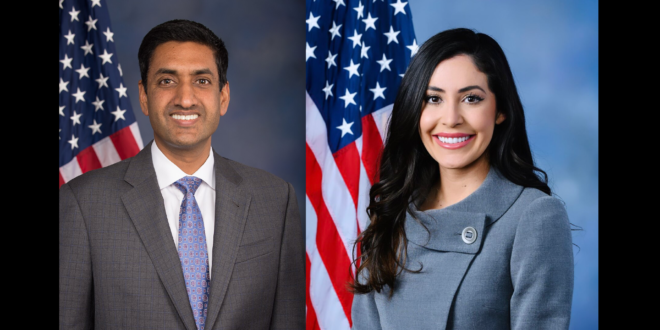
A bipartisan pair of House lawmakers unveiled legislation Tuesday that would prohibit federal politicians from using campaign contributions to defend themselves against sexual misconduct allegations, arguing elected officials should not be able to rely on donor money to cover personal legal battles.
The proposal, introduced by Rep. Ro Khanna, D-Calif., and Rep. Anna Paulina Luna, R-Fla., would bar members of Congress and candidates for federal office from using campaign accounts or legal defense funds to pay legal expenses related to allegations of sexual assault, sexual abuse or sexual harassment.
The legislation would also prohibit campaign funds from being used to pay settlements, court judgments, private investigators or research aimed at accusers in sexual misconduct cases.
Khanna said requiring politicians to pay their own legal costs would create greater accountability and remove what he described as an unfair financial advantage enjoyed by elected officials.
“That creates this culture of impunity where people think they’re untouchable,” Khanna said, arguing lawmakers should rely on their own financial resources rather than campaign donations when defending themselves against personal allegations.
He added that elected officials already benefit from significant legal advantages and should not be allowed to raise money from supporters for matters unrelated to governing or campaigning.
Under the proposal, lawmakers who successfully defend themselves against allegations could later be reimbursed for qualifying legal expenses if they are ultimately not found liable.
Luna called the legislation a long-overdue reform and said preventing politicians from tapping campaign funds would serve as a significant deterrent against misconduct.
“It is not what the Founding Fathers intended for members of Congress,” Luna said. “It’s a perversion of the system.”
The measure comes as lawmakers continue debating reforms to congressional workplace policies following a series of sexual misconduct allegations involving members of Congress this year. Those controversies prompted House leaders to establish a bipartisan working group tasked with reviewing protections for Capitol Hill employees and recommending changes.
Khanna said campaign accounts should not be used for activities that often extend beyond courtroom defense into public relations efforts designed to challenge or discredit accusers.
“In most of the cases, they’re being used to smear survivors,” he said.
The legislation follows allegations against former California Democratic Rep. Eric Swalwell, who resigned from Congress after multiple women accused him of sexual misconduct. Swalwell has denied the allegations, calling them politically motivated, while acknowledging what he described as personal “mistakes in judgment.”
According to reports, campaign funds from Swalwell’s former congressional account and gubernatorial campaign were used to retain high-profile attorney Sara Azari, whose firm hired a private investigator as part of the legal response.
Despite support from lawmakers in both parties, the bill faces uncertain prospects. Congress has struggled to advance major legislation this year, and lawmakers have only a limited number of legislative weeks remaining before the end of the current session.
Meanwhile, broader reforms are also under consideration. A coalition representing more than 1,500 congressional staff members recently urged lawmakers to expand legal assistance for employees, make independent workplace investigations easier to initiate and lengthen the time available to file misconduct complaints.
Separately, the Republican and Democratic women’s caucuses have been working together on recommendations aimed at strengthening protections for congressional employees. House Speaker Mike Johnson, R-La., has also said he would support banning members of Congress from engaging in sexual relationships with any congressional staff members, not just those they directly supervise.