Poli Alert Politics & Civics
Related Articles


Mojtaba Khamenei has been appointed the new supreme leader of Iran, succeeding his father Ali Khamenei, who ruled the country for nearly four decades before being killed in recent U.S.–Israeli airstrikes, according to Iranian state media.
The decision was made by the Assembly of Experts, the powerful clerical body responsible for selecting the country’s supreme leader. The move effectively places leadership of the Islamic Republic in the hands of the son of its longtime ruler — a development many critics say contradicts the spirit of the Iranian Revolution that toppled the monarchy in 1979.
For decades, Iranians who supported the revolution believed it had ended the practice of dynastic rule. The selection of Mojtaba Khamenei has revived concerns that the Islamic Republic is becoming hereditary in practice.
Signal of defiance toward Washington
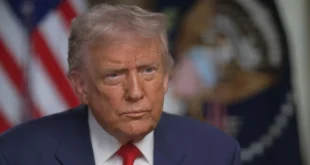
The appointment also appeared to send a message to Donald Trump, who had previously said Mojtaba becoming supreme leader would be “unacceptable.”
Analysts say elevating him despite that criticism signals that Iran’s leadership intends to resist pressure from the United States and Israel, particularly amid an escalating conflict.
Observers say the regime appears to be consolidating authority around the Islamic Revolutionary Guard Corps, or IRGC, with the younger Khamenei now at the center of that power structure.
State media quickly shapes narrative
Within hours of the announcement, Iranian state media released a documentary portraying Mojtaba as the rightful heir to his father’s legacy.
The video highlighted his religious studies and his participation as a teenage volunteer in the Iran–Iraq War, where he reportedly fought at age 17 alongside Iranian forces.
The messaging appeared aimed at reassuring regime supporters and addressing a key criticism — that Mojtaba lacks the deep scholarly credentials traditionally expected of the supreme leader, known in Shiite political theory as the “vali-faqih,” or supreme jurist.
Soon after the announcement, public statements of loyalty followed from Iran’s president, parliament and the Revolutionary Guards.
A powerful figure behind the scenes
Born in 1969, Mojtaba Khamenei studied in Shiite seminaries like his brothers but did not achieve the clerical rank of mujtahid, the level many religious authorities consider necessary for the position.
He is married to Zahra Haddad Adel, the daughter of former parliament speaker Gholam Ali Haddad-Adel, a close ally of the Khamenei family.
Despite keeping a relatively low public profile, Mojtaba has long been seen as influential inside Iran’s power structure.
Many analysts believe he played a role in helping Mahmoud Ahmadinejad win Iran’s presidency in 2005, reportedly mobilizing networks tied to the Revolutionary Guards during the election.
Role in Iran’s political turmoil
His influence became more visible during the 2009 Iranian election protests, when millions of Iranians took to the streets alleging vote fraud after Ahmadinejad’s disputed reelection.
The protests were violently suppressed, marking a turning point in Iran’s reform movement. Demonstrators at the time openly criticized Mojtaba, accusing him of helping orchestrate the crackdown.
In 2019, the U.S. Department of the Treasury imposed sanctions on Mojtaba Khamenei, accusing him of working with IRGC leaders to advance policies tied to his father’s regional and domestic agenda.
Family losses in recent strikes
The airstrikes that killed Ali Khamenei reportedly also killed several members of his family, according to Iranian state media.
Those killed included the former leader’s daughter, grandchild, daughter-in-law and son-in-law. His wife — Mojtaba’s mother — later died from injuries sustained in the attack.
Questions about the future
Analysts say Mojtaba Khamenei’s leadership may signal continuity rather than change for Iran’s political system.
Unlike previous Iranian leaders, he has never held a major administrative office or led a significant government institution.
Experts say his influence historically came from managing his father’s powerful office — a role some compare to that of a chief of staff with access to intelligence, security and economic decision-making.
Observers say his rise may strengthen the position of the Revolutionary Guards while doing little to address Iran’s economic challenges, including energy shortages, unemployment and water scarcity.
Symbolic timing of the announcement
Clerical leaders announced Mojtaba’s appointment on the first night of Laylat al‑Qadr, one of the holiest nights of Ramadan for Muslims.
The timing carries special meaning for Shiite believers, as it coincides with the commemoration of the assassination of Ali ibn Abi Talib, whom Shiites regard as the rightful successor to the Prophet Muhammad.
Supporters of the regime quickly framed the moment as a renewal of leadership.
In videos circulating in Tehran, pro-government crowds were heard chanting: “Khamenei became young again.”
Uncertain legitimacy
While the leadership transition may project stability for the ruling establishment, analysts say Mojtaba Khamenei could face serious legitimacy challenges at home.
Iran’s economy remains strained, and public dissatisfaction has fueled periodic protests in recent years.
Whether the new supreme leader can consolidate authority while managing those pressures — and navigating conflict with the United States and Israel — remains an open question.