

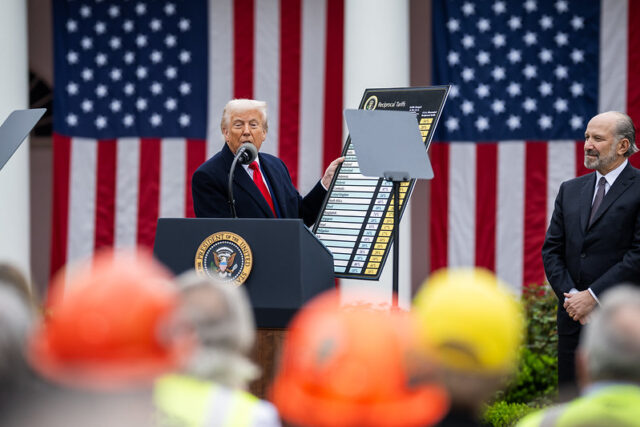
The Trump administration on Wednesday proposed new tariffs on imports from 14 major trading partners, pressing ahead with its trade agenda despite Republican losses in the midterm elections and widespread concerns about the cost of living.
China would face an additional 20% tariff under the proposal, while imports from several of America’s closest economic allies would also be subject to higher duties.
According to Reuters, the affected trading partners include China, Bangladesh, Cambodia, the European Union, India, Indonesia, Japan, South Korea, Malaysia, Singapore, Switzerland, Taiwan, Thailand and Vietnam.
The political news that affects your wallet, your rights and your vote, broken down in plain language. Free in your inbox.
Mexico and Norway were included in the administration’s trade investigation but were excluded from the latest tariff proposals.
The Office of the U.S. Trade Representative announced the measures following an eight-month investigation into foreign manufacturing and trade practices. The Trump administration claims that government subsidies and excessive industrial production overseas create unfair competition for American manufacturers.
China rejected those allegations, accusing Washington of using concerns about manufacturing capacity as justification for political manipulation.
The new tariffs would be imposed under Section 301 of the Trade Act of 1974, a federal law that authorizes the United States to respond to foreign trade practices deemed unfair or harmful to American commerce.
The administration is relying on that authority after the Supreme Court ruled in February that Trump exceeded his emergency powers by imposing widespread tariffs without congressional authorization.
According to The Associated Press, the proposed duties are also intended to recover some of the federal revenue lost following that ruling.
The announcement comes just weeks after Democrats secured control of both chambers of Congress in midterm elections dominated by concerns about inflation, affordability and the economy.
Trump has maintained that tariffs will encourage domestic manufacturing, create American jobs and reduce dependence on foreign suppliers. However, tariffs are paid by businesses importing goods into the United States, not directly by foreign governments.
Importers can absorb those additional expenses, negotiate lower prices with suppliers or pass the costs on to consumers through higher retail prices.
For American households, the proposed tariffs could make imported clothing, electronics, appliances and other consumer goods more expensive, depending on which products are covered. Small businesses that rely on overseas suppliers could also face higher operating costs.
The incoming Democratic congressional majority could pursue legislation restricting Trump’s tariff authority or reversing certain import taxes. However, Trump could veto such legislation, requiring a two-thirds majority in both chambers to override him.
The new tariffs are not immediately taking effect. The proposals must undergo a public comment period and hearing before they can be finalized.
Reuters reported that implementation could come as early as January 2027, although the final rates and effective dates remain subject to change.