

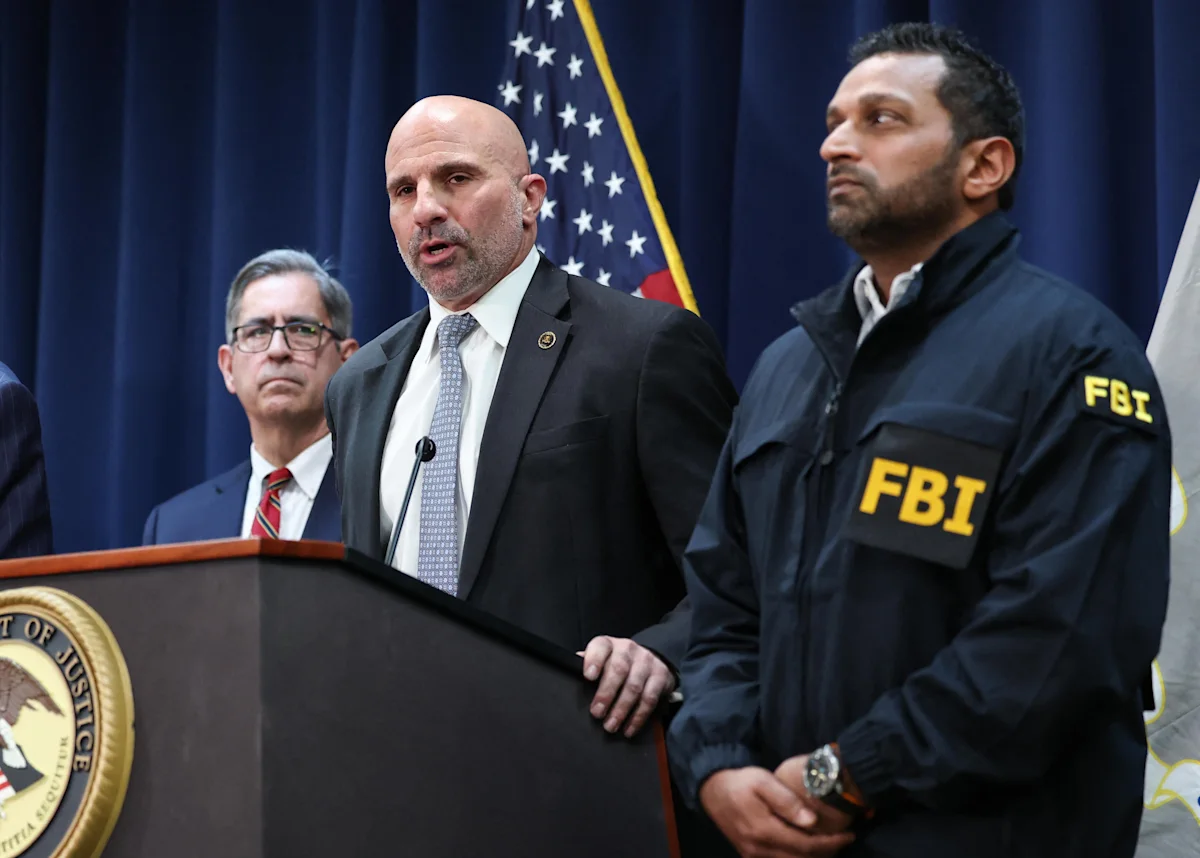
FBI Deputy Director Christopher Raia plans to retire in December, leaving FBI Director Kash Patel facing another vacancy in the bureau’s senior leadership less than two years into Donald Trump’s second term.
The Washington Post reported Monday, November 23, citing three people familiar with the matter, that Raia intends to leave after serving less than a year in the position. The FBI declined to comment on the planned retirement.
Raia’s departure would follow those of Dan Bongino and Andrew Bailey, both of whom joined the bureau’s leadership under the Trump administration.
The political news that affects your wallet, your rights and your vote, broken down in plain language. Free in your inbox.
Raia joined the FBI in 2003 and brought more than two decades of law enforcement experience to the position. His appointment in January 2026 marked a return to the bureau’s traditional practice of selecting experienced FBI agents for its second highest position.
Before becoming deputy director, Raia led the FBI’s New York field office, overseeing criminal investigations, counterterrorism operations, cybersecurity and intelligence programs. He also held several leadership positions within the agency’s national security division.
Neither Bongino, a conservative podcast host and former Secret Service agent, nor Bailey, the former Republican attorney general of Missouri, had previously worked for the FBI.
Bongino departed in January. Bailey announced his resignation in September, saying he intended to return to Missouri to spend time with his family.
The leadership changes have coincided with the removal and reassignment of numerous experienced FBI officials under Patel, including personnel involved in investigations concerning Trump.
Raia’s reported retirement comes just days after he appeared before the House Homeland Security Committee on November 18 to testify about national security threats.
During that hearing, Raia discussed the bureau’s efforts to combat terrorism, foreign espionage and threats involving Iran. He also addressed concerns surrounding recent technology outages affecting government agencies and private companies.
The FBI deputy director is responsible for managing the bureau’s daily operations and overseeing divisions responsible for criminal investigations, intelligence, national security and other federal law enforcement activities.
Unlike the FBI director, the deputy director does not require Senate confirmation, allowing the bureau’s leadership to fill the position without a congressional confirmation vote.
Patel has not publicly identified a potential successor. Raia has not publicly explained his reported decision to retire, and there is no confirmed evidence that his departure is connected to disagreements with Patel or the Trump administration.