The Speaker of the House is the person in charge of the U.S. House of Representatives, and the job puts them second in line to become president if something happens to both the president and the vice president. That is a lot of power for a role most Americans could not describe if you stopped them on the street. Democrats won control of the House in last week’s midterm elections, and Hakeem Jeffries is now running to become the first Black Speaker in American history, so the job is about to change hands in a big way.
Start with the basics. Congress is the part of our government that writes laws, and it has two sides, kind of like two classrooms working on the same group project. One side is the Senate, with 100 members, two from every state. The other side is the House of Representatives, with 435 members. States with more people get more representatives, so California has 52 while Wyoming has just one. Every House member is elected by voters back home, and all of them are up for election every two years.
Now picture 435 adults in one room, all wanting to talk, all wanting their ideas heard, and almost all of them belonging to one of two teams that usually disagree. Somebody has to run that room. That person is the Speaker of the House.
The political news that affects your wallet, your rights and your vote, broken down in plain language. Free in your inbox.
The Constitution says the House picks its own Speaker and leaves most of the details up to the members. When a new Congress starts every two years in January, all 435 members vote. To win, a candidate needs a majority of the votes cast for a named person, which usually means 218 when everyone shows up. The party with the most seats picks its candidate ahead of time, then that whole team votes for that person. The Constitution never actually says the Speaker has to be a member of the House, but every single one in history has been.
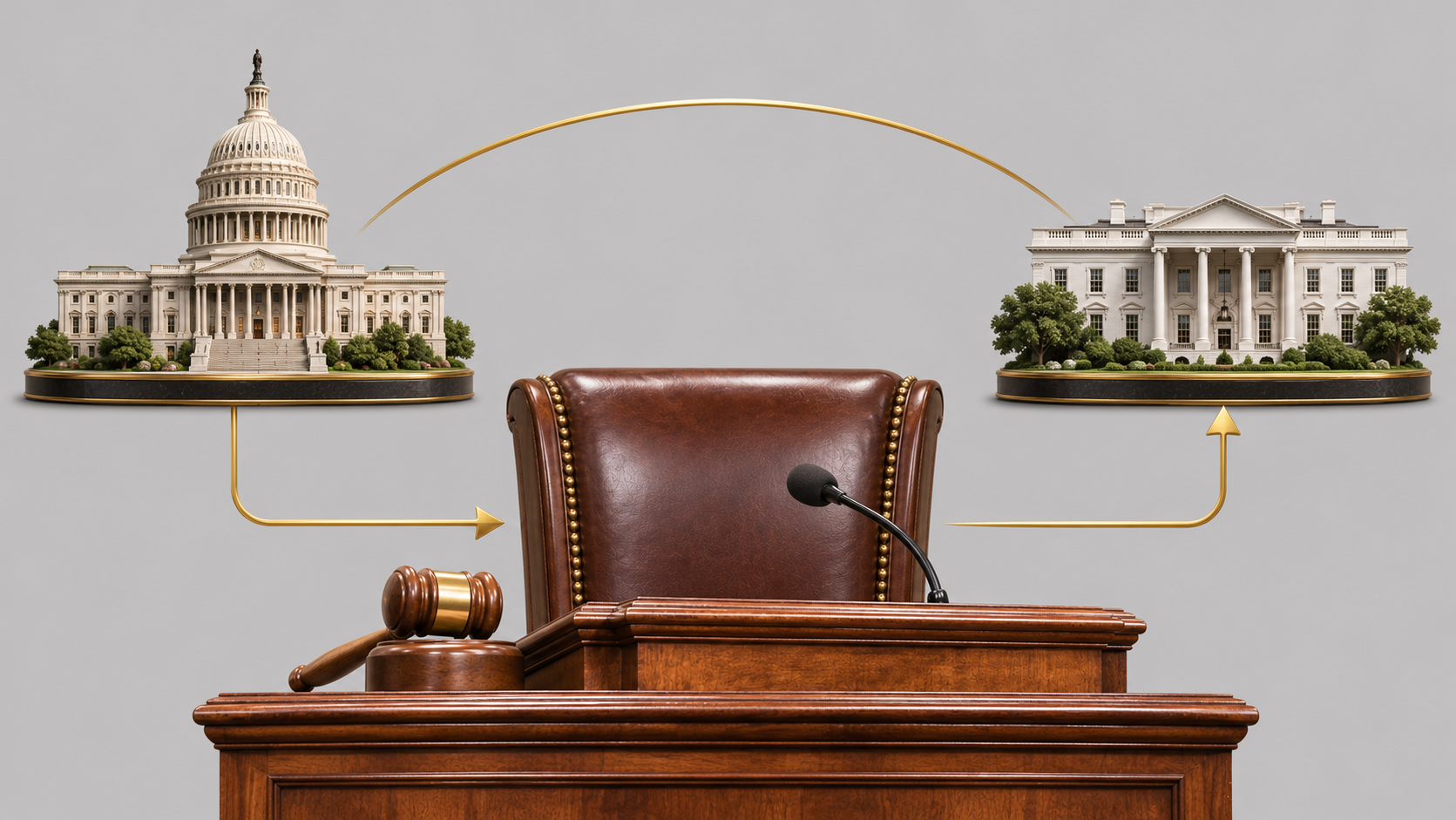
The easiest way to understand the job is to think of the Speaker as a referee, a hall monitor with the master schedule, and a team captain all rolled into one person.
As the referee, the Speaker runs the meetings of the full House or picks another member to stand in. They decide who gets to talk, keep order when arguments get heated, and make calls on the rules. That wooden hammer you see banged at the front of the chamber is called a gavel, and holding it is the symbol of the Speaker’s authority.
The schedule is where the real power lives. A bill is an idea for a new law, and thousands of them get written every session. Only a small slice ever get a vote. The Speaker, working with party leaders, decides which bills make it to the floor and when. If the Speaker does not want a bill voted on, it usually just sits there collecting dust, no matter how many people support it. Imagine a principal who decides which science fair projects get shown to the whole school. If your project never makes the list, nobody ever sees it.
The Speaker also decides which committee each bill goes to first. Committees are smaller groups of members who study one subject, like taxes, health care, or the military, before the full House weighs in. The Speaker has a huge say over who sits on the most important committees, especially the Rules Committee, which sets the rules for how every major bill gets debated and whether anyone is allowed to change it. Controlling that committee is like controlling the rulebook for every game on the schedule.
As team captain, the Speaker leads the majority party in the House. They help raise money for their party’s candidates, keep members together on big votes, and speak for the party on TV. When there is a fight over the federal budget or a government shutdown, the Speaker is one of the few people in the room making the final deal with the president and the Senate. A shutdown can mean federal workers going without paychecks and programs that families depend on getting delayed, so the Speaker’s choices reach far past Washington.
The Speaker still has a regular job on top of all this. They represent their own home district just like every other member, though by tradition they rarely vote on everyday bills. They swear in members at the start of each Congress and sign bills the House passes before those bills move on.
Then there is the line of succession, the order of who takes over if a president can no longer serve. A law passed in 1947 put the vice president first and the Speaker of the House second, ahead of every Cabinet member. It has never come down to the Speaker, but that is why people say the Speaker is two heartbeats away from the presidency.
The job also comes with no guarantee of keeping it. In October 2023, the House voted to remove Speaker Kevin McCarthy, the first time that had ever happened. For about three weeks there was no Speaker at all, and the House could not pass a single law until members chose Mike Johnson on October 25, 2023. Earlier that same year, McCarthy needed 15 rounds of voting just to win the gavel in the first place. Running the room only works if your own team keeps backing you.
History is part of this story too. The first Speaker took the gavel in 1789. Nancy Pelosi became the first woman to hold the job in 2007. In the 237 years since the House first met, no Black American has ever been Speaker. Jeffries, who represents Brooklyn and has led House Democrats since 2023, is now positioned to change that.
Here is what happens next. Mike Johnson stays Speaker until the new Congress is sworn in on January 3, 2027. On that day, all 435 members vote, and with Democrats holding the majority, Jeffries is the clear favorite. Johnson has already said he will not run to lead Republicans as the minority party, and House Republicans are holding their own leadership elections to pick who will.
Whoever holds the gavel decides which issues get a real vote and which ones never see the light of day, from grocery prices to health care to voting rights. Every one of those choices starts with the Speaker of the House.