


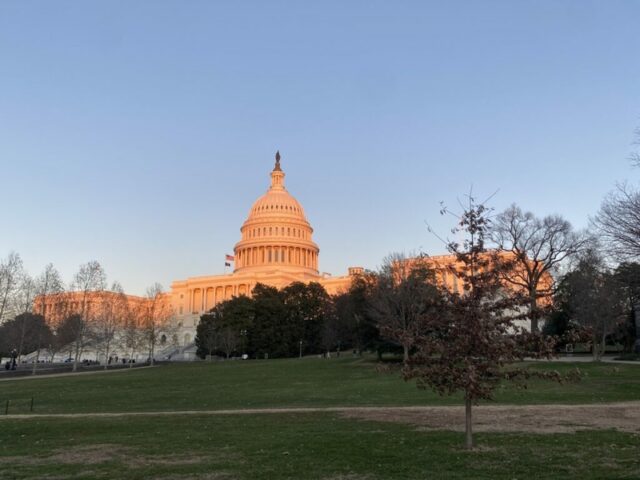
A continuing resolution is a temporary spending bill that keeps the federal government open, usually at the same funding levels as the year before, when Congress has not finished passing a new budget on time.
To understand why a continuing resolution exists, start with how the government gets its money. Every year, Congress has to pass a set of appropriations bills, which are the laws that give federal agencies permission to spend money. There are 12 of them, each covering a different slice of government, such as defense, farming and food programs, health and education, housing and transportation, and homeland security. Together they fund the day to day work of most federal agencies.
The government runs on a fiscal year, a budget year that starts on October 1 and ends on September 30. That means all 12 bills are supposed to pass both the House and the Senate and be signed by the president before October 1. In practice, that rarely happens. Lawmakers often disagree over how much to spend and on what, and the deadline arrives with some or all of the bills unfinished.
The political news that affects your wallet, your rights and your vote, broken down in plain language. Free in your inbox.
That is where a continuing resolution comes in. Instead of letting funding run out, Congress passes one bill that tells agencies to keep operating at roughly the levels they had in the previous year until a set date. Because it buys time, people often call it a stopgap. A continuing resolution can last a few days, a few weeks, a few months or, in some years, the entire fiscal year.
A stopgap bill goes through the same steps as any other bill. It has to pass the House by a simple majority. In the Senate, most bills need 60 votes to get past a filibuster, a tactic that lets the minority party block a final vote unless 60 senators agree to move ahead. Then the president has to sign it. That means a stopgap usually needs at least some support from both parties.
Most stopgap bills are not exact copies of last year’s budget. Lawmakers can add exceptions, sometimes called anomalies, that give a particular program more or less money or extend a law that would otherwise expire. Some get attached to other priorities, such as disaster aid. That is one reason a stopgap bill can turn into a fight of its own.
When Congress does finish its work, it often rolls several or all of the spending bills into one large package. If it bundles all 12 together, it is called an omnibus. If it combines a full year bill for some agencies with a stopgap for others, people sometimes call it a minibus or a cromnibus.
If Congress passes neither the full bills nor a continuing resolution by the deadline, funding lapses and the government shuts down. Under a federal law called the Antideficiency Act, agencies cannot spend money Congress has not approved. Workers whose jobs protect life and property, like air traffic controllers, airport security screeners and border agents, keep working, often without pay until the shutdown ends. Many other federal workers are sent home without pay. Programs that do not depend on the yearly appropriations bills, like Social Security, keep running.
A recent example came in the fall of 2026. Congress did not pass its spending bills for the 2027 fiscal year by October 1, 2026. Instead, it passed a continuing resolution in September that kept the government funded at 2026 levels through December 11. That left lawmakers to pass the full spending bills, pass another stopgap or let the government close, and some members of Congress used the deadline as leverage, saying they would only vote for a new stopgap if it included conditions they wanted.
A continuing resolution matters because of what happens when there is no budget. Agencies running on a stopgap usually cannot start new programs or make long term plans, because they do not know what next year’s budget will be. Schools, cities and nonprofits waiting on federal grants can be left guessing. And when a stopgap runs out without a replacement, the effects reach regular people quickly: federal workers and contractors miss paychecks, national parks and museums can close, some permit and loan applications stall, and families who rely on programs like WIC can face uncertainty about benefits.
When you hear that Congress is racing a deadline to keep the government open, the debate is almost always about one of two things: passing the 12 spending bills, or passing a continuing resolution that buys more time to finish them.




