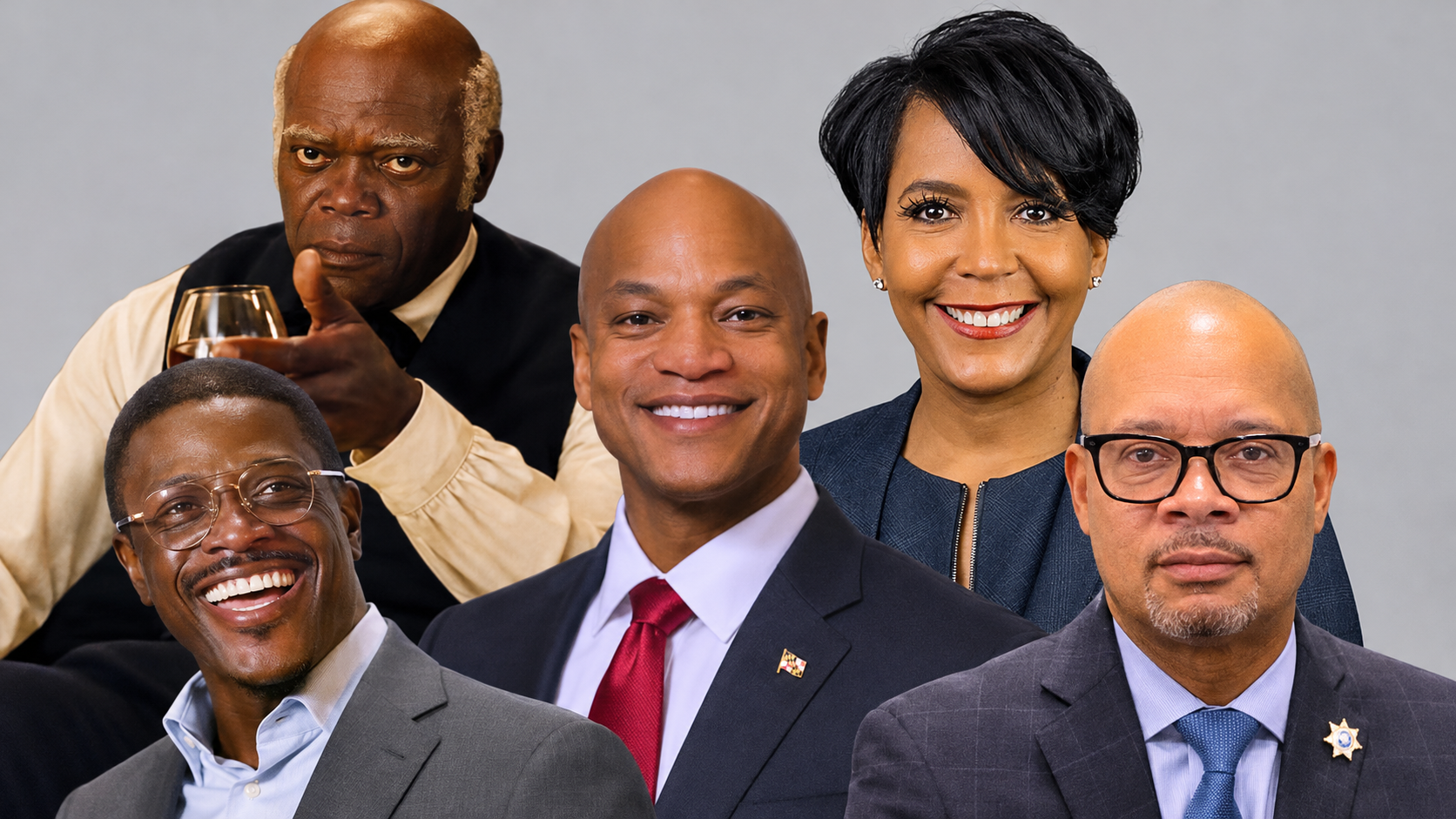
Black governors will lead five states at the same time for the first time in American history after Tuesday’s midterm elections. Keisha Lance Bottoms won in Georgia, Aaron Ford won in Nevada, David Crowley won in Wisconsin and Byron Donalds won in Florida, while Wes Moore cruised to a second term in Maryland. When the new terms begin in January, all five will be in office together.
The scale of that is easier to see in numbers. Before Tuesday, voters in this country had elected exactly three Black governors in about 250 years: Douglas Wilder in Virginia in 1989, Deval Patrick in Massachusetts in 2006 and Moore in Maryland in 2022. Two other Black men held the job without winning it at the ballot box. P.B.S. Pinchback served for about a month in Louisiana during Reconstruction, the period after the Civil War when formerly enslaved people briefly gained political power in the South, and David Paterson took over in New York in 2008 when the sitting governor resigned. The most Black governors ever in office at once was two, when Patrick and Paterson overlapped. In one night, voters added four names to a list that took more than two centuries to reach three.
Bottoms, the former mayor of Atlanta, is now the first Black woman ever elected governor of any state. She won by roughly 9 points with nearly every vote counted, in a race polls had treated as a toss up. Georgia has not had a Democratic governor since 2003. Bottoms sat down on the P.O.L.I. Show in August while she was still the nominee. On Tuesday night she took the stage in Atlanta as governor elect.
The political news that affects your wallet, your rights and your vote, broken down in plain language. Free in your inbox.
Ford, Nevada’s attorney general, did something that rarely happens in American politics. He beat a sitting governor, Republican Joe Lombardo, by close to 8 points. Ford becomes Nevada’s first Black governor and the first Black person ever elected governor in a state west of the Mississippi River. Nevada is still counting ballots, so his final margin could move.
Crowley, the Milwaukee County executive, which makes him the elected head of Wisconsin’s largest county, defeated Republican Congressman Tom Tiffany by about 8 points to become the first Black governor in Wisconsin history. Moore traveled to Wisconsin in October to campaign for him, and the two Black governors will now serve side by side.
Donalds, a Republican congressman, beat Democrat David Jolly by a little more than a point to become Florida’s first Black governor and the first Black Republican ever elected governor in the United States. His win belongs in the history books. His record belongs there too. Donalds has spent his career as one of Trump’s most reliable loyalists, and he has backed policy after policy that works against Black Americans. He voted against the George Floyd Justice in Policing Act less than a year after Floyd was murdered. He voted against the John Lewis Voting Rights Advancement Act. As a Florida state lawmaker, he voted to make people with felony convictions pay every fine and fee before getting their voting rights back, months after Florida voters approved restoring them. He voted for Trump’s 2025 bill that cut roughly $1 trillion from Medicaid, the health insurance program Black Americans rely on at higher rates than the country as a whole. He praised this year’s Supreme Court ruling that weakened the Voting Rights Act and cleared the way for Southern states to wipe out Black majority congressional districts. And in 2024, at a Trump campaign event aimed at Black voters, he said, “During Jim Crow, the Black family was together.” He did not run as a voice for Black Florida. He ran as Trump’s pick, and that is who Florida voters elected.
Moore spent four years as the only Black governor in the country. Starting in January, he becomes one of five. He has repeated the same line through every campaign he has run, and he said it again while stumping for Crowley in Wisconsin: making history is not the assignment. “He’ll make history, but the goal is to make child poverty history,” Moore said. “The goal is to make economic inequality history.”
That is where these five Black governors will be measured. Governors control state budgets, which decide how much money goes to schools, how Medicaid works in their state, how roads get fixed and how much residents pay in state taxes. They appoint judges and agency heads, sign or veto laws passed by their legislatures and, in many states, shape how elections are run. Bottoms, Ford and Crowley will each walk in with Republican or divided legislatures to work through, and Donalds takes over a state where his own party holds full control.
The voters who put them there turned out in numbers that drew national attention, especially across the South. Those voters ranked lowering the cost of living among their top reasons for showing up. In January, five Black governors take the oath, and the record that stood at two since 2008 is gone.