Poli Alert Politics & Civics
Related Articles


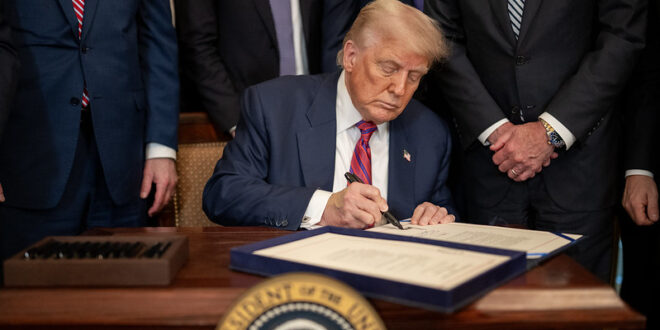
Late Friday night, just before 11 p.m., President Donald Trump took to Truth Social with a promise for America’s seniors: “My Administration will, immediately, begin sending ‘Checks’ of nearly $100 to over 20 MILLION wonderful Seniors to help pay for their Medicare Part B premiums.”
The actual amount: $90. One time. Arriving by direct deposit in early October — the Centers for Medicare and Medicaid Services says on or around October 8 — or as a paper check to the address Medicare has on file.
It’s the latest in a string of cash promises from a president whose party is bracing for a tough midterm fight. And the fine print is worth reading.
Who gets it — and who doesn’t
The payments go to most of the roughly 64 million Americans enrolled in traditional Medicare Part B. But several big groups are excluded:
- Low-income seniors whose Part B premiums are already paid by Medicaid
- Higher-income enrollees who pay income-related surcharges (IRMAA)
- The roughly half of Medicare enrollees in Medicare Advantage plans, which are run by private insurers, likely don’t qualify either, according to Larry Levitt of the nonpartisan research group KFF
The math doesn’t quite math
Medicare Part B — which covers doctor visits, outpatient hospital care, medical equipment, and physician-administered drugs — carries a standard monthly premium of $202.90 in 2026. CNN reported that premiums jumped nearly 10% ($17.90) from 2025 to 2026, the largest increase in four years.
So a one-time $90 check covers less than half of a single month’s premium — and it doesn’t lower the premium itself. It’s a rebate, not relief.
Where the money comes from
The payments come from the Medicare Improvement Fund, a pot Congress created in 2008 with about $2 billion to improve traditional Medicare. The White House says no administration has ever spent from it — which is true in the sense that it has sat untouched, though Congress previously drew it down to pay for other legislation under the Affordable Care Act.
Trump called it a “pointless ‘Slush Fund'” that had “only been used by Dumocrats in Congress.” At $90 a head, paying 20 million-plus seniors would cost roughly $1.8 to $1.9 billion — nearly the entire fund.
Whether the White House can legally spend it this way is an open question. The Washington Post reported that the White House and the Department of Health and Human Services did not answer questions about the administration’s authority to make the payments, and that congressional offices in both parties were caught off guard by the announcement. USA Today likewise reported it is unclear whether the money can be used this way.
The pattern
This isn’t the first envelope with Trump’s name on it:
- Around 1.45 million servicemembers received $1,776 “warrior dividend” checks
- Nearly 1 million Americans are getting $500 checks the administration calls refunds for excessive ACA fees — each arriving with a letter from Trump
- Promised $2,000 tariff dividend checks and DOGE savings checks (once pitched as high as $5,000) never arrived.
- A revived $5,000 “Republican Dividend” for every adult citizen — but only if Republicans hold Congress — exists for now as a campaign pledge, not legislation
The pushback
Sen. Ron Wyden of Oregon, the top Democrat on the Senate Finance Committee, blasted the payments as an attempt to buy off voter anger over rising costs, likening $90 to roughly the price of a tank of gas. Analysts across outlets have flagged the timing — weeks before an election where Republicans hold narrow majorities and the president’s cost-of-living numbers are weak.
The administration’s position: the fund was sitting unused, putting it directly in beneficiaries’ hands is better than letting it sit, and the payment is automatic with no application required.
Why it matters for us
Let’s be real about who this lands on. In our community, grandmothers and grandfathers are often the anchors of the household — the fixed-income elders holding down multigenerational homes while costs climb on everything from groceries to utilities to, yes, medical bills. $90 is real money to somebody counting every dollar. It is not, however, a change to what Medicare costs them every single month.
And the calendar is the calendar. A check that arrives in October, one month before an election, from a fund that sat untouched for nearly two decades, deserves to be read as both things at once: money in a senior’s pocket and a campaign move. Cash the check. And keep your eyes open.
What to watch
- Do the checks actually land? Watch for the October 8 direct deposits and any hiccups.
- Does anyone challenge it? The legal authority question hasn’t been answered. A lawsuit or congressional objection would be a real development.
- What comes next? The $5,000 dividend pledge is the big one to track — it’s currently a promise, not a program.