Poli Alert Politics & Civics
Related Articles



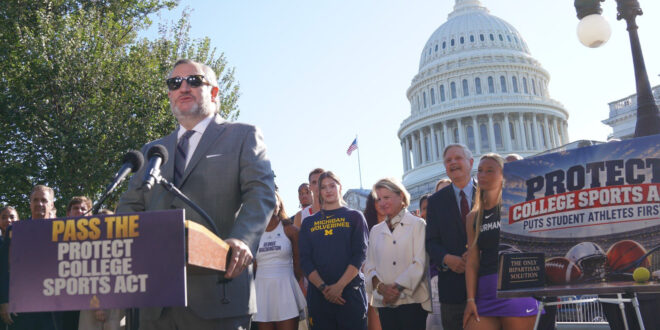
The Senate on Monday passed the most sweeping federal overhaul of college sports in years, approving legislation that would establish national rules for athlete compensation, NIL deals and transfers while giving the NCAA greater authority to enforce them.
The Protect College Sports Act passed 77-22, sending the bipartisan measure to a House that remains divided over how much control Congress should exert over college athletics.
Sponsored by Sens. Ted Cruz, R-Texas, and Maria Cantwell, D-Wash., the bill would codify athletes’ rights to earn money from their names, images and likenesses and to receive a share of athletic revenue. It would also establish national eligibility and transfer rules, strengthen scholarship and health protections, regulate NIL agreements and give the NCAA a central role in enforcing the new system.
Supporters say the legislation would finally replace a confusing patchwork of state laws, court rulings and NCAA policies with one national framework.
Critics say the bill could solve years of legal uncertainty by giving colleges and the NCAA more power while limiting athletes’ ability to challenge the system in court.
A federal rulebook for college sports
The legislation would preserve the basic structure of the 2025 House v. NCAA settlement, under which schools can directly share athletic revenue with their athletes.
Under the Senate bill, schools would be subject to limits on direct compensation but could use an additional retention fund to provide more money to athletes. The legislation also creates rules for outside NIL deals, requiring larger agreements to be disclosed and prohibiting arrangements that function primarily as disguised recruiting payments.
The bill would establish nationwide transfer and eligibility standards. Athletes generally would have five years to compete and could transfer once without losing eligibility, while additional transfers would be subject to restrictions and exceptions.
It also would provide protections involving scholarships, health care and medical expenses, along with standards addressing concussions, heat illness and abuse.
Supporters say those provisions give athletes protections that have largely been left to individual states and schools.
Critics say athletes are giving up something, too
The legislation’s most controversial provisions involve enforcement and legal protections for the institutions running college sports.
The bill would provide the NCAA, conferences and schools with a limited antitrust shield when enforcing federal rules governing compensation, eligibility and transfers. That would reduce the threat of lawsuits that has driven many of the major changes in college athletics over the past several years.
Opponents argue that Congress is effectively creating a system in which schools and athletic organizations can collectively impose restrictions that athletes have previously challenged as anticompetitive.
“What this bill does, at its core, is to protect a system of exploitation,” Sen. Chris Murphy, D-Conn., said during Senate debate.
Athlete advocates and labor groups have also criticized the bill for failing to classify college athletes as employees. That means athletes would not receive federal collective-bargaining rights or the ability to negotiate collectively over compensation and working conditions.
Instead, the legislation creates a commission to study the issue.
The AFL-CIO and other labor organizations have argued that schools should not be allowed to collectively determine limits on athlete compensation and mobility without negotiating with the athletes themselves.
The Congressional Black Caucus and NAACP have also raised concerns about the legislation’s impact on Black athletes and historically Black colleges and universities.
Supporters say the current system cannot continue
Cruz and Cantwell have argued that the current college-sports model is increasingly unworkable.
Since a 2021 Supreme Court ruling and the adoption of state NIL laws, athletes have gained significantly more control over their ability to earn money and change schools. The resulting system has produced a multibillion-dollar market with widely varying rules across states and conferences.
Supporters say the bill would bring consistency while protecting athletes from predatory agents and preserving opportunities in women’s and Olympic sports. The Senate Commerce Committee has described the legislation as an effort to stabilize college athletics and codify athlete protections in federal law.
But the debate reflects a larger unresolved question: whether college athletes should be treated primarily as students receiving new federal protections or as workers entitled to collective bargaining and greater control over the institutions generating billions of dollars from their labor.
House fight could determine what survives
The Senate vote is a major step, but it does not guarantee the bill will become law.
The House has its own competing interests and a different coalition of lawmakers and stakeholders. Opposition from the Congressional Black Caucus, labor groups and athlete advocates could complicate the legislation’s path through the chamber.
The House is also not expected to return until after the November election, leaving lawmakers with a compressed post-election window to act.
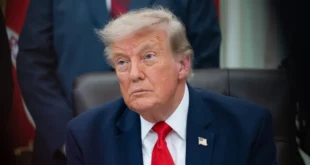
If the House changes the bill, the two chambers would have to negotiate a final version before it could reach President Donald Trump, who has supported federal intervention in college sports.
For athletes, the legislation would establish federal rights that have never before existed in this form. But it would also lock in rules governing their compensation, mobility and eligibility—and give the institutions enforcing those rules substantially more legal certainty.
That trade-off is likely to remain at the center of the fight as the bill moves to the House.