

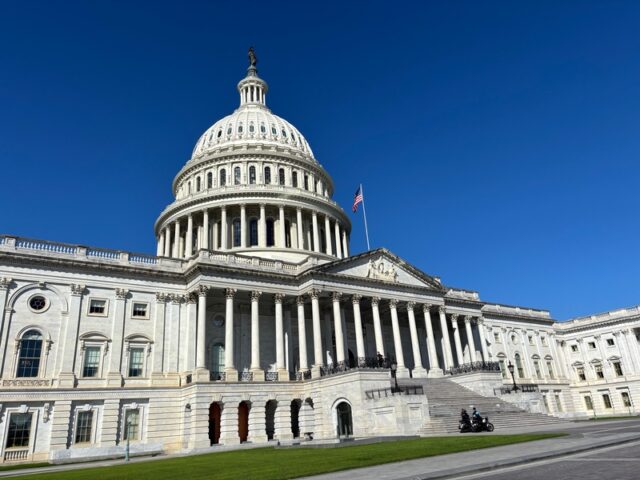
Congress is moving to take a government shutdown off the table before the November midterm elections, with the House approving a short-term funding bill Tuesday that would keep federal agencies operating through Dec. 11.
The 370-48 vote sends the measure to President Donald Trump, who has indicated he will sign it. The Senate approved the legislation in August, meaning lawmakers are poised to avoid another funding crisis while postponing the more difficult fight over how the federal government should be funded for the rest of the fiscal year.
The stopgap measure largely maintains current funding levels after the new fiscal year begins Oct. 1. It gives Congress additional time to negotiate the 12 annual appropriations bills that determine spending through September 2027.
In practical terms, however, lawmakers are pushing the biggest budget decisions until after the election.
A shutdown avoided — for now
The bipartisan vote reflects a desire on both sides to avoid another prolonged funding lapse during an election year.
Last year’s 43-day shutdown, fueled in part by a fight over enhanced Affordable Care Act tax credits, caused widespread disruptions and became one of the longest shutdowns in U.S. history.
House Appropriations Committee Chairman Tom Cole, R-Okla., called the new measure a clean continuing resolution without partisan riders.
“The bill before us is a clean, narrowly tailored continuing resolution that keeps the government open and operating,” Cole said. “It gives the nation and our constituents certainty.”
Cole also acknowledged the political timing, saying the extension would give Congress time to move beyond the November elections before returning to full-year appropriations negotiations.
Immigration funding remains a flashpoint
Democrats backed the measure in part because it blocks the administration from shifting certain existing funds to Border Patrol and provides no additional money for Immigration and Customs Enforcement.
Republicans earlier this year approved a roughly $70 billion package for ICE and the Border Patrol, on top of approximately $170 billion in additional immigration enforcement funding included in the GOP’s broader tax and spending law.
Rep. Rosa DeLauro, D-Conn., the top Democrat on the Appropriations Committee, said Democrats would oppose additional immigration enforcement funding without significant reforms.
“We will not support a single cent in further funding without substantial reforms to protect our communities from abuse,” DeLauro said.
The spending dispute illustrates why Congress has been unable to complete its annual appropriations work and why lawmakers are relying once again on a temporary patch.
Senate changes limit Trump administration
The Senate passed the funding measure 90-6 on Aug. 8 after modifying legislation previously approved by the House. The final version includes provisions that Democrats say strengthen congressional control over federal spending.
Among them is a restriction preventing the administration from transferring money intended for other programs to Border Patrol.
The bill also delays implementation of an Office of Management and Budget rule that would give political appointees greater influence over federal grants.
Republicans and Democrats have clashed over the rule, with critics arguing it could give the White House greater leverage over how federal money is distributed to states, local governments and other grant recipients.
The real budget fight comes later
The legislation does not resolve the underlying disagreement over federal spending. It simply gives lawmakers another two months to reach a deal.
That means the next major budget confrontation is likely to come in December, when Congress will have to decide whether to approve full-year appropriations, pass another stopgap bill or risk another shutdown.
For now, lawmakers have chosen the least disruptive option — keeping the government open through the midterms and leaving the harder choices for later.
The strategy gives members of Congress a chance to campaign without a government shutdown dominating the final weeks of the election.
But it also means the nation’s broader spending questions — including immigration enforcement, federal grants and competing demands for limited federal dollars — remain unresolved.
Congress has once again bought itself time. It has not, however, solved the budget problem.