

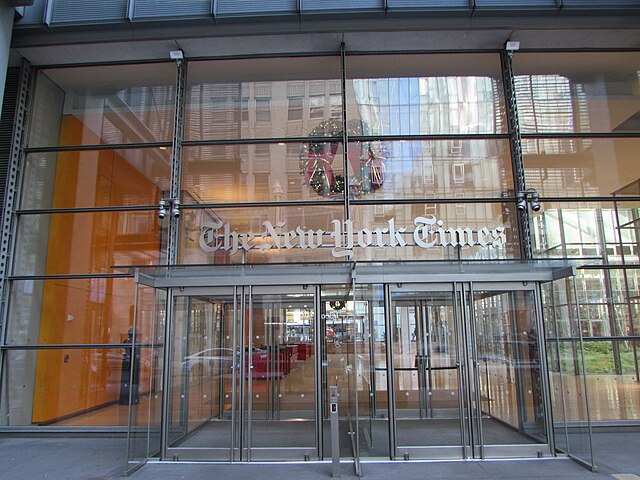
The Justice Department withdrew subpoenas targeting New York Times reporters and their phone records Thursday after a federal judge sharply criticized prosecutors over their handling of an investigation into reporting about security systems aboard President Donald Trump’s new Air Force One.
U.S. District Judge Arun Subramanian declared the subpoenas “null and void” after Justice Department attorneys voluntarily agreed to withdraw them during a contentious court hearing in Manhattan. The subpoenas sought grand jury testimony from several Times reporters and phone records connected to the journalists and some of their family members as part of a leak investigation.
The dispute stemmed from New York Times reporting published earlier this month detailing security concerns involving a Boeing 747-8 aircraft donated by Qatar that Trump has begun using as a temporary Air Force One.
During Thursday’s hearing, Subramanian repeatedly questioned why federal prosecutors sought subpoenas before exhausting other investigative methods, noting Justice Department policies generally treat subpoenas directed at journalists as a last resort.
“The government’s own regulations and policies indicate that subpoenas are the last step, not the first step,” the judge told Justice Department attorneys.
Prosecutors acknowledge errors
Government lawyer Sean Buckley admitted in court that subpoenas seeking phone records from the spouses of two reporters and the mother of another journalist were issued in error.
He said the family members’ information appeared in a public database and acknowledged the requests were a “mistake.”
Buckley also emphasized that the government’s investigation is focused on identifying confidential sources rather than prosecuting the reporters themselves.
The hearing took a dramatic turn when Judge Subramanian called Assistant U.S. Attorney Kevin Sullivan to the witness table to explain statements made in the government’s sealed subpoena application.
The judge questioned why prosecutors indicated the investigation was not public despite widespread news coverage and why the application failed to disclose that the subpoenas targeted New York Times journalists.
“It was an oversight,” Sullivan told the court.
Subramanian warned that such omissions could ordinarily warrant sanctions and questioned whether similar conduct would occur again.
“So, are you going to do this again?” the judge asked.
“No, your honor,” Sullivan replied.
Government withdraws subpoenas
Following a recess, the Justice Department agreed to withdraw all of the challenged subpoenas rather than continue litigating the matter.
Buckley said the department reserves the right to seek future subpoenas if additional investigative steps become necessary.
In a written order issued after the hearing, Subramanian confirmed that the government’s withdrawal rendered the subpoenas “null and void.”
A Justice Department spokesperson later criticized the judge’s handling of the case, arguing he prevented prosecutors from fully presenting the investigation’s basis.
“Make no mistake, this investigation remains ongoing, and we will pursue justice against those threatening national security by leaking classified information, a serious federal crime,” the spokesperson said.
New York Times welcomes ruling
The New York Times hailed the outcome as a victory for press freedom.
“Today’s proceeding was an important affirmation of our country’s commitment to a free press,” David McCraw, the newspaper’s deputy general counsel and senior vice president, said in a statement.
“We are pleased that the government finally conceded that the subpoenas violated the law, but they should never have been issued in the first place.”
The newspaper had argued the subpoenas were overly broad and unconstitutional, noting that prosecutors sought phone records dating back to Jan. 1—months before the newspaper began reporting on security issues involving the Qatari-donated aircraft.
Times attorneys argued the expansive timeframe suggested investigators were attempting to uncover journalists’ broader source networks rather than focusing solely on the Air Force One reporting.
First Amendment concerns
Attorneys representing the newspaper urged the court to reject the subpoenas on First Amendment grounds, arguing they would have a chilling effect on investigative journalism and confidential sources.
“There are critical First Amendment issues at stake here,” attorney David O’Neil told the court.
He added that the government’s actions had already caused harm to reporters and “the public’s right to be informed about the conduct of the government.”
The underlying leak investigation remains active despite the withdrawal of the subpoenas.