Poli Alert Politics & Civics
Related Articles



The U.S. Supreme Court on Tuesday upheld state laws that prohibit transgender athletes from competing in girls’ and women’s sports, delivering another significant victory for states defending restrictions on transgender participation and marking the latest setback for LGBTQ rights before the nation’s highest court.
In a 6-3 decision, the justices ruled that laws enacted in West Virginia and Idaho barring transgender girls and women from participating on female athletic teams do not violate either the Constitution’s Equal Protection Clause or Title IX, the federal law prohibiting sex discrimination in education.
Justice Brett Kavanaugh, writing for the majority, concluded that states may preserve separate athletic competitions based on biological sex without running afoul of federal law.
“The Constitution and Title IX do not require an overhaul of women’s and girls’ sports throughout America,” Kavanaugh wrote.
While acknowledging that transgender girls and women who wish to compete deserve “respect” and should not be “ostracized or vilified,” Kavanaugh said neither the Constitution nor federal education law requires states to allow participation based on gender identity rather than biological sex.
The ruling directly affects laws in West Virginia and Idaho but is expected to strengthen similar restrictions already enacted in 25 other states.
The cases were brought by Becky Pepper-Jackson, a 16-year-old West Virginia high school student who has undergone puberty suppression and estrogen treatment, and Lindsay Hecox, a 25-year-old Idaho college student who has also received hormone therapy. Both argued the laws unlawfully discriminated against transgender athletes.
Pepper-Jackson has competed in girls’ cross-country, shot put and discus, while Hecox sought to compete on women’s collegiate track and cross-country teams before later participating in club sports.
The decision represents the latest in a series of Supreme Court rulings narrowing legal protections for transgender Americans.
Last year, the court upheld state bans on gender-affirming medical treatments for transgender minors. Earlier this year, it sided with parents challenging California policies designed to protect transgender students. The court has also allowed Trump administration policies restricting transgender military service and limiting changes to gender markers on U.S. passports to remain in effect.
The ruling contrasts with the court’s landmark 2020 decision in Bostock v. Clayton County, which held that discrimination based on gender identity or sexual orientation constitutes sex discrimination under Title VII of the Civil Rights Act in employment.
The legal challenge centered on whether state athletic participation laws violate the Equal Protection Clause of the 14th Amendment or Title IX. The majority concluded they do not.
West Virginia’s 2021 law defines sex according to an individual’s biological characteristics at birth and limits female athletic teams to athletes designated female at birth. Idaho enacted a similar law in 2020, stating that sports designated for women and girls are reserved for students of the female sex.
The Trump administration supported the states during the litigation. Shortly after returning to office, President Donald Trump signed an executive order titled “Keeping Men Out of Women’s Sports,” directing federal agencies to oppose policies permitting transgender athletes to compete in female sports categories. His administration has also challenged California’s policies allowing transgender participation.
The broader landscape of athletic competition has also shifted. Earlier this year, the International Olympic Committee announced that transgender women would no longer be eligible to compete in female Olympic events under revised eligibility rules. The NCAA and the U.S. Olympic & Paralympic Committee have likewise adopted tighter restrictions governing transgender athletes.
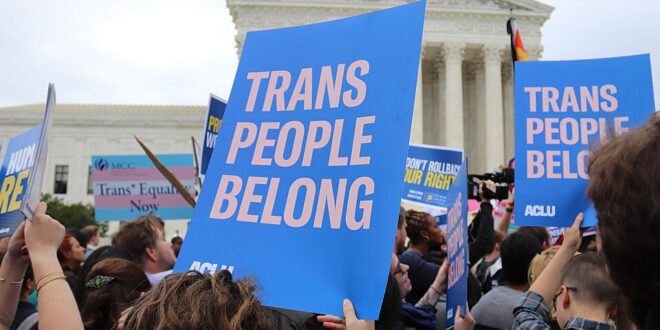
LGBTQ advocacy organizations criticized the Supreme Court’s ruling, arguing it excludes transgender youth from educational opportunities and athletics based on gender identity. Supporters of the state laws, however, hailed the decision as preserving fairness and competitive equity in women’s sports.
The ruling further solidifies the Supreme Court’s increasingly conservative approach to transgender rights, leaving future challenges to similar state laws facing significantly steeper legal hurdles.