 Poli Alert Politics & Civics
Related Articles


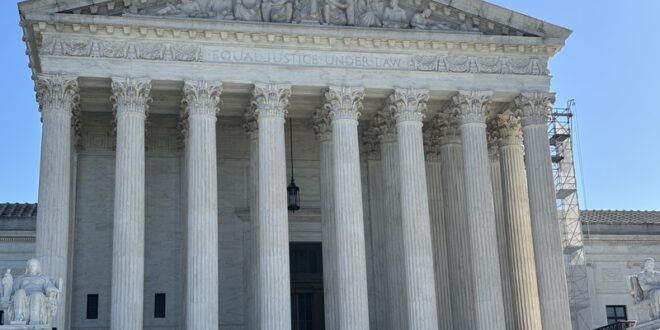
The U.S. Supreme Court on Thursday handed President Donald Trump a major immigration victory, ruling that his administration may proceed with ending Temporary Protected Status (TPS) for more than one million immigrants living in the United States, despite legal challenges arguing the move ignored humanitarian conditions in their home countries.
In a 6-3 decision split along ideological lines, the court determined that Congress largely insulated TPS decisions from judicial review, allowing the administration to terminate protections for immigrants from countries experiencing war, political instability, natural disasters, or other crises.
The ruling affects TPS recipients from 13 countries, including Haiti, Syria, Venezuela, Honduras, Afghanistan, Nepal, and others whose protections have been targeted by the administration as part of Trump’s broader immigration crackdown.
Writing for the majority, Justice Samuel Alito said Congress intentionally limited courts’ authority to review TPS determinations made by the executive branch. While acknowledging concerns about how the authority could be used, Alito argued that any abuse of the program should be addressed by Congress rather than the judiciary.
“Congress would have ample means to stop that abuse,” Alito wrote, pointing to legislative and appropriations powers available to lawmakers.
Liberal Justices Issue Sharp Dissent
The court’s three liberal justices strongly disagreed with the majority’s interpretation.
Justice Elena Kagan, writing in dissent, accused the majority of dramatically expanding the scope of executive authority while improperly restricting judicial oversight.
Kagan argued that courts retain the ability to ensure government agencies follow legally required procedures before making TPS determinations.
She criticized the administration’s consultation process with the U.S. State Department, which immigration advocates said was rushed and insufficient. Court filings highlighted one instance in which the State Department reportedly responded to a TPS-related inquiry regarding Haiti in less than an hour with a brief statement indicating no foreign policy concerns.
Administration Celebrates Decision
Trump administration officials quickly welcomed the ruling.
White House border czar Tom Homan called the decision “the right call” and argued that TPS was always intended to be temporary.
“I’ve been doing this since 1984. TPS has never been temporary,” Homan said during remarks in Florida. “Temporary means temporary. When the condition in that country gets better, they need to go home.”
Ron DeSantis, whose state is home to one of the nation’s largest Haitian-American communities, also praised the decision, describing it as a straightforward application of immigration law.
The administration and immigration hardliners have long argued that TPS has evolved into a quasi-permanent immigration program, with some designations lasting decades. For example, TPS protections for El Salvador have remained in place since devastating earthquakes struck the country in 2001.
Advocates Warn of Humanitarian Consequences
Immigrant rights groups sharply criticized the ruling, arguing that conditions remain dangerous in several affected countries.
Attorneys representing TPS recipients pointed to ongoing State Department travel advisories warning Americans not to travel to Haiti or Syria due to violence, political instability, kidnappings, and armed conflict.
Critics contend the administration has prioritized political objectives over humanitarian realities by declaring certain countries safe despite continuing crises.
The ruling does not automatically result in deportation for all TPS holders. Many have secured permanent legal residency through marriage, employment sponsorship, or other immigration pathways. Others have applications pending for asylum or alternative forms of relief.
However, immigration attorneys note that options for many TPS recipients have narrowed under the Trump administration’s stricter immigration policies.
Broader Immigration Impact
Congress established TPS in 1990 to provide temporary protection to immigrants already living in the United States when extraordinary conditions made returning home unsafe.
Trump and senior adviser Stephen Miller have repeatedly criticized the program, arguing that successive administrations improperly extended protections for political reasons rather than conducting objective reviews of country conditions.
The Supreme Court’s ruling follows earlier decisions allowing the administration to move forward with ending TPS protections for approximately 600,000 Venezuelans.
With Thursday’s decision, the administration now faces few remaining legal barriers to implementing its broader effort to phase out TPS protections across multiple countries, potentially affecting more than one million immigrants who have lived and worked legally in the United States for years.

